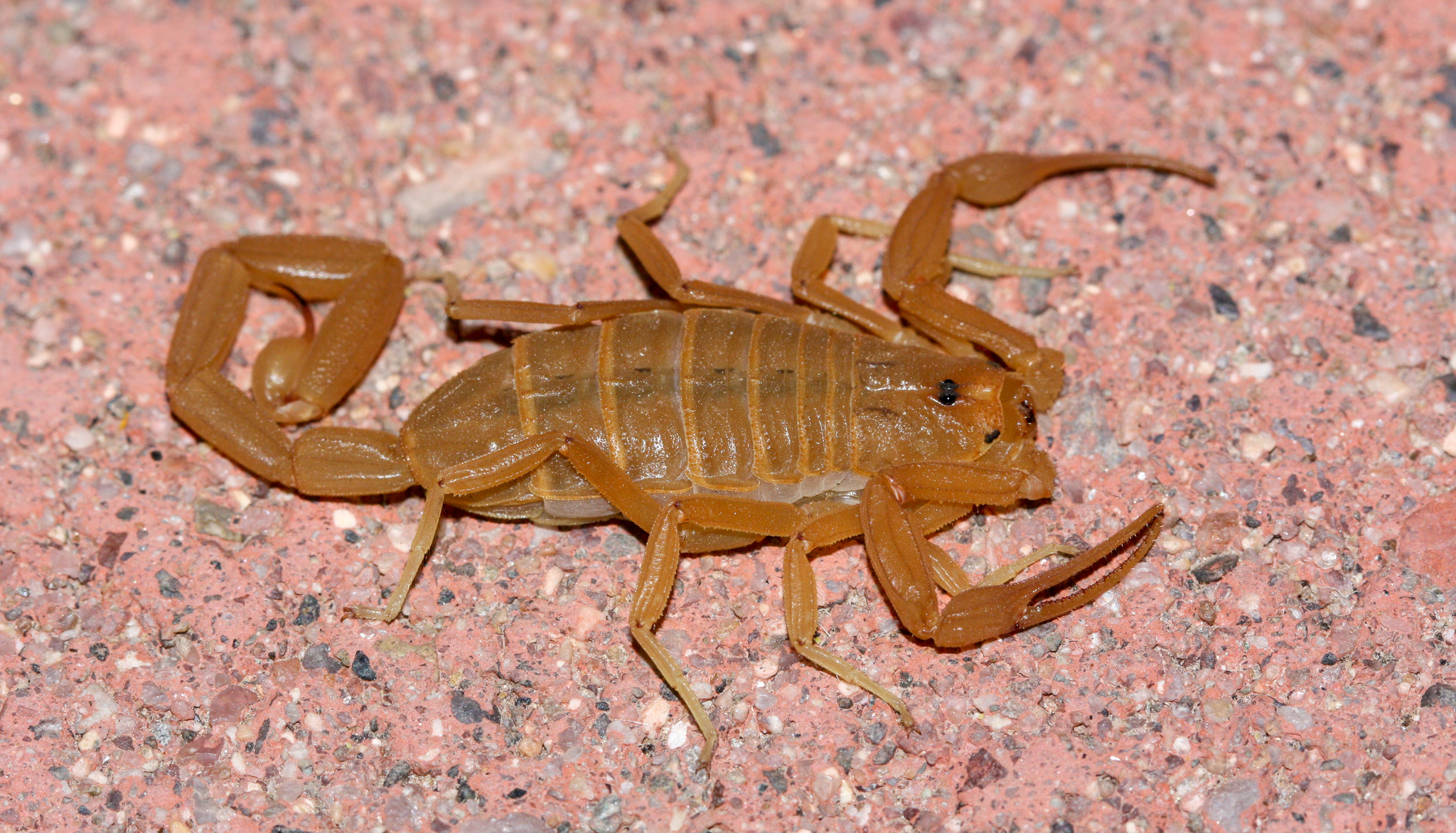
A small pale scorpion — the most venomous in North America. Stings are painful and can require antivenom in young children, but adult fatalities are extremely rare with modern care.
§ Quick facts
§ Encyclopedia
The Arizona bark scorpion is a small light brown scorpion common to the Sonoran Desert in the southwestern United States and northwestern Mexico. An adult male can reach 8 centimetres (3.1 in) of body length, while a female is slightly smaller, with a maximum length of 7 centimetres (2.8 in).
Source: Wikipedia — Arizona bark scorpion Licensed under CC BY-SA 4.0
§ Identification
Field marks. Small slender scorpion with pale tan-yellow body and very thin pincers and tail; tail held curled to side when at rest (vs. straight in other species).
Similar species. Stripe-tailed Scorpion (similar size; broader pincers, much less dangerous). Giant Desert Hairy Scorpion (much larger, less dangerous).
Voice. N/A
§ Diet & behavior
Diet. Crickets, roaches, beetles, other scorpions (including own species), spiders, sometimes small lizards.
Behavior. Most venomous scorpion in North America. Bite/sting is painful (commonly described as "lightning bolt" or "burning needle") and can cause neurological symptoms; deaths are extremely rare with prompt medical care (antivenom available since 2011). Climbs vertical surfaces and overhangs — sometimes found on walls and ceilings. Glows brilliantly blue-green under UV light.
§ Range
Sonoran and Mojave Deserts (AZ, NM, CA, UT, NV, northwestern Mexico)
§ Habitat
Deserts, rocky areas, suburban gardens, occasionally homes
§ Threats
Habitat loss to suburban sprawl, pesticide treatment around homes, public fear.
§ Conservation status
According to the IUCN Red List, the arizona bark scorpion is currently classified as Least Concern.
§ What helps
Shake out shoes and clothing in scorpion country. Use a UV flashlight at night to find them. Skip outdoor pesticides.
§ Further reading
- Wikipedia — Arizona bark scorpion
- www.nwf.org — authoritative profile of Centruroides sculpturatus
- iNaturalist · taxon 121800
- IUCN Red List — search for Centruroides sculpturatus
- GBIF occurrence records
- Encyclopedia of Life — Centruroides sculpturatus
§ Sources cited
- University of Arizona College of Pharmacy (antivenom development)
- Arizona Poison and Drug Information Center
- Arizona Game and Fish Department


