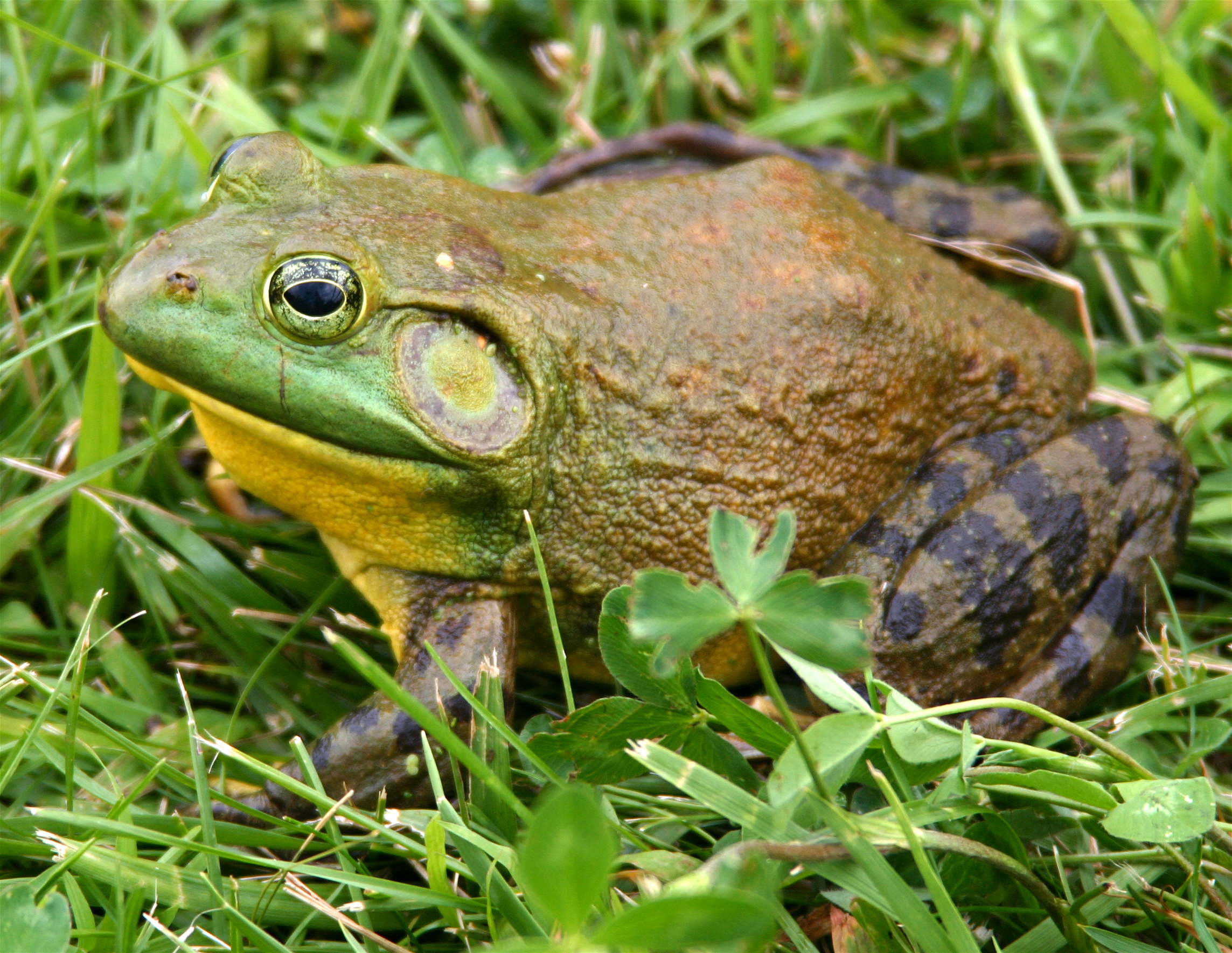
North America's largest native frog — body up to 8 inches with massive hindlegs. Famous for the deep "jug-o-rum" call of summer ponds. Invasive in the West, where they devastate native amphibians.
§ Quick facts
§ Encyclopedia
The American bullfrog, often simply known as the bullfrog in Canada and the United States, is a large true frog native to eastern North America. It typically inhabits large permanent water bodies such as swamps, ponds, and lakes. Bullfrogs can also be found in manmade habitats such as pools, koi ponds, canals, ditches, reservoirs and culverts. The bullfrog gets its name from the sound the male makes during the breeding season, which sounds similar to a bull bellowing. They are generalist carnivores, consuming a wide variety of prey. In turn, they are eaten by predators such as alligators, snakes, and birds.
Source: Wikipedia — American bullfrog Licensed under CC BY-SA 4.0
§ Identification
Field marks. Olive-green to brown; large eardrum (tympanum).
Similar species. Green Frog (smaller). Pig Frog (very similar; pointed snout).
Voice. Deep "jug-o-rum" call.
§ Diet & behavior
Diet. Voracious generalist: insects, smaller frogs, fish, snakes, mice.
Behavior. Largest native US frog. Aggressive ambush predator. Invasive west of native range.
§ Range
Native to eastern North America; invasive across western US
§ Habitat
Ponds, lakes, slow rivers, marshes
§ Threats
In native range: habitat loss, chytrid fungus. In invaded range: they ARE the threat to natives.
§ Conservation status
According to the IUCN Red List, the american bullfrog is currently classified as Least Concern.
§ What helps
In west: report bullfrogs to wildlife agencies. Don't move frogs between waterways. Buy frog legs only from regulated sources.
§ Further reading
- Wikipedia — American bullfrog
- www.nwf.org — authoritative profile of Lithobates catesbeianus
- IUCN Red List · taxon 58565
- iNaturalist · taxon 66317
- GBIF occurrence records
- Encyclopedia of Life — Lithobates catesbeianus
§ Sources cited
- USGS ARMI
- AmphibiaWeb
- iNaturalist
- IUCN Red List 2014


