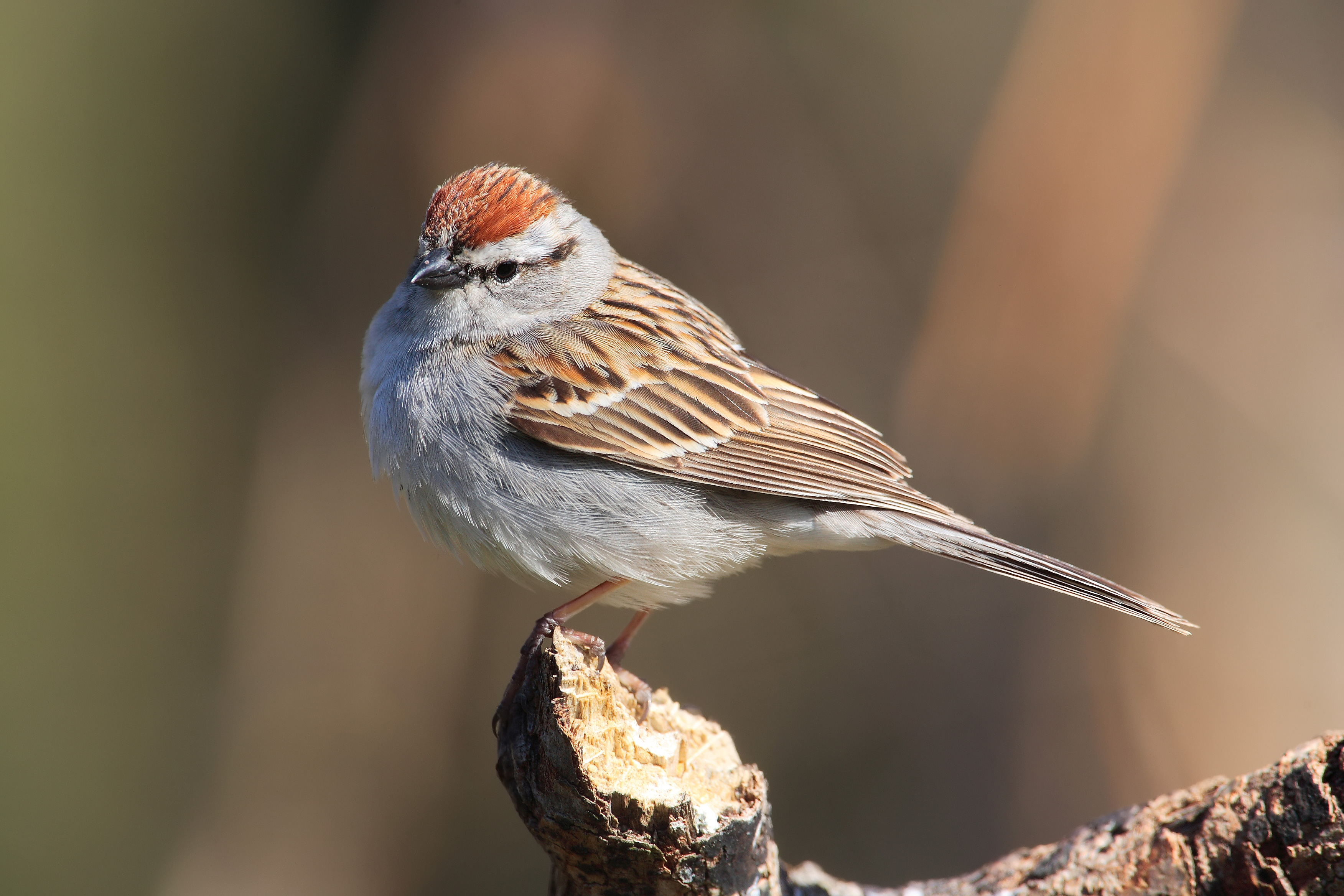
A small clean-marked sparrow with a rusty cap and white eyebrow — the most familiar sparrow of suburban yards and parks across the continent. Trilled song easily confused with a junco's.
§ Quick facts
§ Encyclopedia
The chipping sparrow is a species of New World sparrow, a passerine bird in the family Passerellidae. It is widespread, fairly tame, and common across most of its North American range.
Source: Wikipedia — Chipping sparrow Licensed under CC BY-SA 4.0
§ Identification
Field marks. Small slim sparrow with bright chestnut crown, gray face with black eye line, white eyebrow, gray underparts. Winter birds duller with brown crown.
Similar species. Field Sparrow (pink bill, eye ring, no eye line). American Tree Sparrow (rusty cap, central breast spot). Brewer's Sparrow (no chestnut crown).
Voice. Long mechanical dry trill on one pitch — among the most insect-like bird songs.
§ Diet & behavior
Diet. Seeds (small grass and weed seeds), insects in summer (especially during nesting). Common feeder visitor for millet and sunflower chips.
Behavior. Among the most common backyard sparrows across North America. Historically lined nests almost exclusively with horsehair — earning the folk name "hair bird." With horses now rare, they have switched to dog hair, deer hair, and even synthetic fibers from carpets. Two broods per year over most of range.
§ Range
Across North America in summer; winters in southern US and Mexico
§ Habitat
Open woods with grass, conifer plantings, suburban yards
§ Threats
Lawn-centric yards reducing edge habitat, cat predation, neonic-treated turf.
§ Conservation status
According to the IUCN Red List, the chipping sparrow is currently classified as Least Concern.
§ What helps
Skip lawn neonics. Plant a small conifer or two for nesting. Keep cats indoors.
§ Further reading
- Wikipedia — Chipping sparrow
- www.allaboutbirds.org — authoritative profile of Spizella passerina
- IUCN Red List · taxon 22721180
- iNaturalist · taxon 9755
- eBird · chispa
- GBIF occurrence records
- Encyclopedia of Life — Spizella passerina
§ Sources cited
- Cornell Lab — All About Birds
- Project FeederWatch
- National Audubon Society
- IUCN Red List 2018


