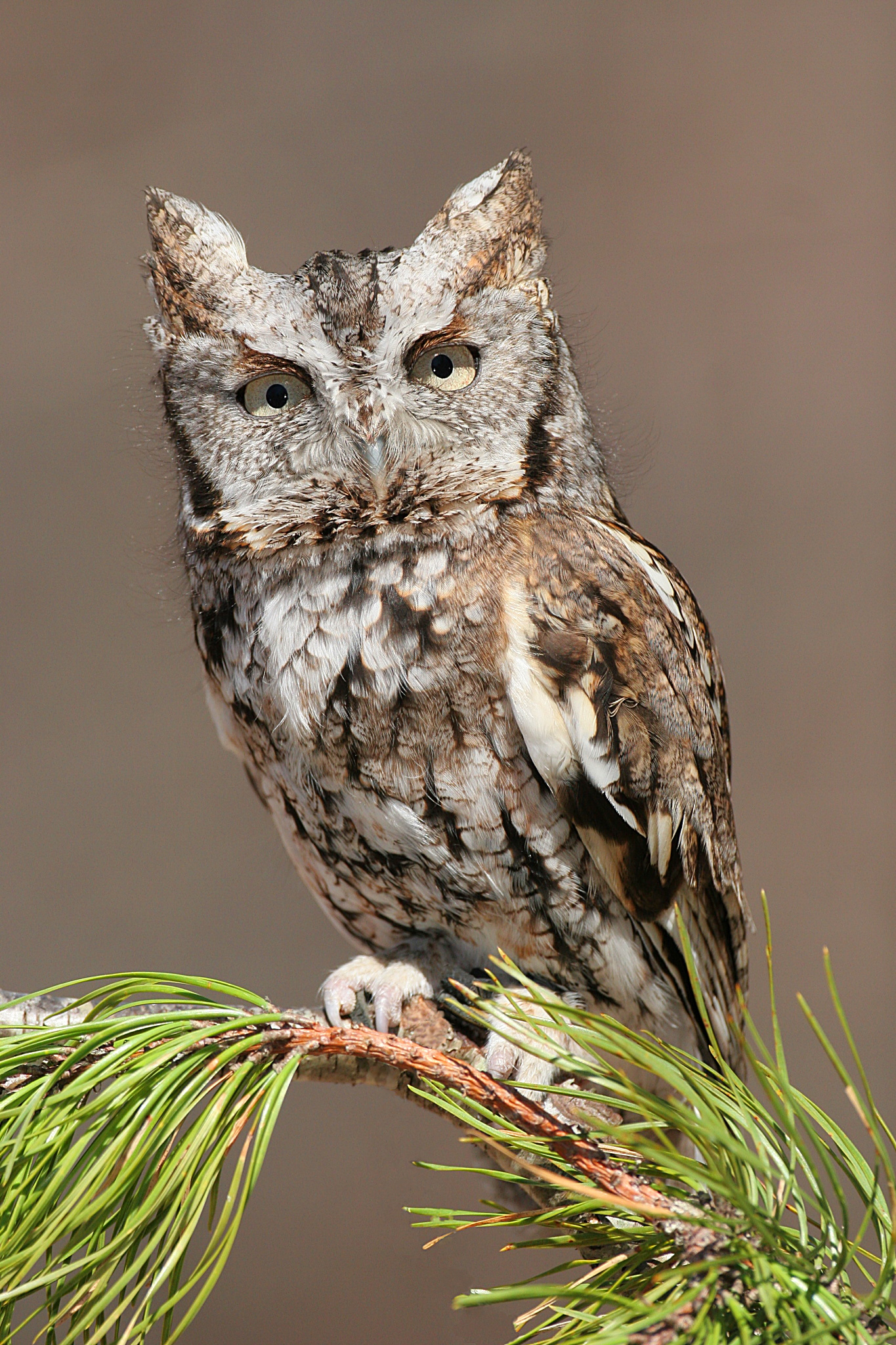
A small (8–9 in) owl with conspicuous ear tufts, found in rufous (red) and gray color morphs. Common but rarely seen — neighbors of countless eastern households without their knowledge.
§ Quick facts
§ Encyclopedia
The eastern screech owl or eastern screech-owl is a stocky, short-tailed owl that is relatively common in Eastern North America, from Mexico to Canada. Mid-sized for a screech owl, the species resides in most types of woodland habitats across its range, and is relatively adaptable to urban and developed areas compared to other owls. Although it often lives in close proximity to humans, the eastern screech owl frequently avoids detection due to its strictly nocturnal habits.
Source: Wikipedia — Eastern screech owl Licensed under CC BY-SA 4.0
§ Identification
Field marks. Small owl with prominent ear tufts; rufous or gray color phases both occur. Yellow eyes.
Similar species. Western Screech-Owl (very similar; different range and song). Northern Saw-whet Owl (smaller, no tufts).
Voice. Soft tremulous whinny; descending trill. Very different from the bird's name.
§ Diet & behavior
Diet. Insects, small mammals, small birds, reptiles, occasionally crayfish.
Behavior. Common but rarely seen. Nests in tree cavities — especially old woodpecker holes. Hunts at dusk and through the night.
§ Range
Eastern North America
§ Habitat
Mixed deciduous forests, suburban yards with mature trees
§ Threats
Habitat fragmentation, rodenticide poisoning, vehicle strikes.
§ Conservation status
According to the IUCN Red List, the eastern screech-owl is currently classified as Least Concern.
§ What helps
Install owl-sized nest boxes. Skip rodenticides. Maintain mature trees in yards.
§ Further reading
- Wikipedia — Eastern screech owl
- www.allaboutbirds.org — authoritative profile of Megascops asio
- IUCN Red List · taxon 22688756
- iNaturalist · taxon 19402
- eBird · easowl1
- GBIF occurrence records
- Encyclopedia of Life — Megascops asio
§ Sources cited
- Cornell Lab — All About Birds
- Owl Research Institute
- iNaturalist
- IUCN Red List 2017


