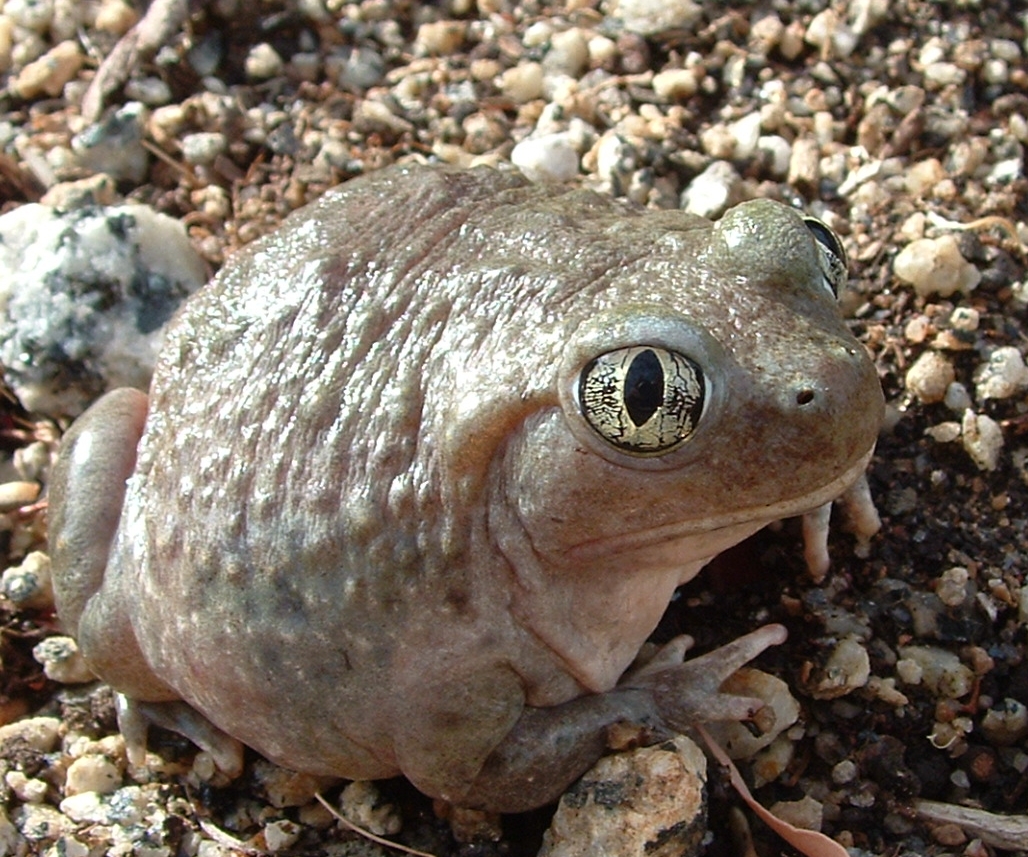
A small toad-like amphibian endemic to California's vernal pool ecosystem. Populations have crashed with development of Central Valley grassland habitats.
§ Quick facts
§ Encyclopedia
Spea hammondii, also known as the western spadefoot, western spadefoot toad, Hammond's spadefoot, or Hammond's spadefoot toad, is a species of amphibian in the family Scaphiopodidae. It is found in western California (USA) and northwestern Baja California (Mexico). The specific name hammondii is in honor of physician and naturalist William Alexander Hammond.
Source: Wikipedia — Spea hammondii Licensed under CC BY-SA 4.0
§ Identification
Field marks. Medium toad with brown or gray skin; vertical pupils; spade on hind foot.
Similar species. Other US Spadefoot species. True toads (different pupils).
Voice. Snoring call.
§ Diet & behavior
Diet. Insects.
Behavior. Burrowing toad of western North America. Vertical pupils. Federally endangered status under consideration for some populations.
§ Range
California and Baja California
§ Habitat
Vernal pools, valley grasslands
§ Threats
Loss of vernal pool habitat, urban development, agriculture.
§ Conservation status
According to the IUCN Red List, the western spadefoot is currently classified as Near Threatened.
§ What helps
Support vernal pool protection in California. Donate to The Nature Conservancy California programs.
§ Further reading
- Wikipedia — Spea hammondii
- www.fws.gov — authoritative profile of Spea hammondii
- IUCN Red List · taxon 59039
- iNaturalist · taxon 66355
- GBIF occurrence records
- Encyclopedia of Life — Spea hammondii
§ Sources cited
- AmphibiaWeb
- USFWS California Field Office
- IUCN Red List 2014


