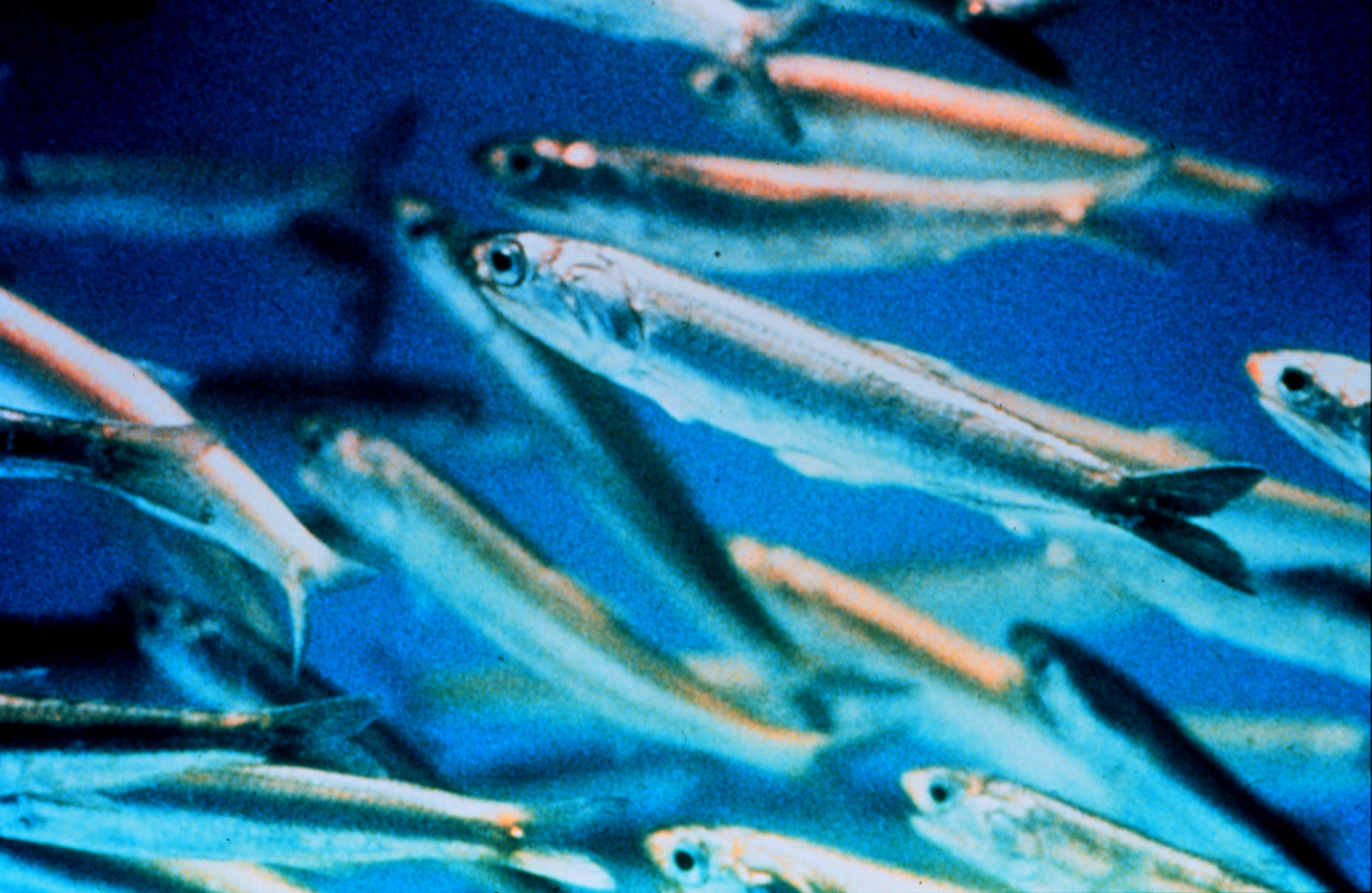
A small schooling fish. Major prey for seabirds and other fish.
§ Quick facts
§ Encyclopedia
The Californian anchovy or northern anchovy is a species of anchovy found in the Eastern Pacific Ocean, ranging from Mexico to British Columbia. It is a small, Clupeoid fish with a large mouth and a long, laterally compressed body, which strongly resembles the European Anchovy with only slight differences in girth and fin position. They have a euryhaline lifestyle defined by regular migrations between bays and open ocean for both spawning and foraging. Like Pacific sardines, they compose a large fraction of the marine biomass in waters off the west coast of North America, where they are a vital keystone species in coastal pelagic waters. However, they are subject to seasonal boom & bust cycles that are chiefly caused by changes in water temperature and food availability; regularly switching places as the forage fish of prominence with the sardine during years defined by colder water temperatures, which makes them vulnerable to climate change. They have a small commercial fishery; mainly used as bait for fishermen or fish meal, with a dedicated small following as a food fish in San Francisco.
Source: Wikipedia — Californian anchovy Licensed under CC BY-SA 4.0
§ Identification
Field marks. Slender silvery fish with bluish back; large eyes; deeply forked tail; small underslung mouth.
Similar species. Pacific Sardine (different scale pattern). Pacific Herring (larger; different proportions).
Voice. Silent.
§ Diet & behavior
Diet. Zooplankton (copepods, krill), small fish larvae.
Behavior. Critical forage fish of California Current ecosystem — supports massive populations of seabirds (especially brown pelicans, common murres), marine mammals (sea lions, dolphins), and predatory fish (tuna, salmon, sharks). Anchovy collapses cascade through the entire food web; 2014–2017 marine heatwave coincided with major anchovy population shifts and devastating impacts on dependent predators.
§ Range
Pacific coast
§ Habitat
Coastal Pacific
§ Threats
Overfishing.
§ Conservation status
According to the IUCN Red List, the anchovy (northern) is currently classified as Least Concern.
§ What helps
Support sustainable forage fish management.
§ Further reading
- Wikipedia — Californian anchovy
- www.nwf.org — authoritative profile of Engraulis mordax
- IUCN Red List · taxon 183824
- iNaturalist · taxon 49419
- GBIF occurrence records
- Encyclopedia of Life — Engraulis mordax
§ Sources cited
- NOAA Fisheries
- Pacific Fishery Management Council
- California Current Integrated Ecosystem Assessment


