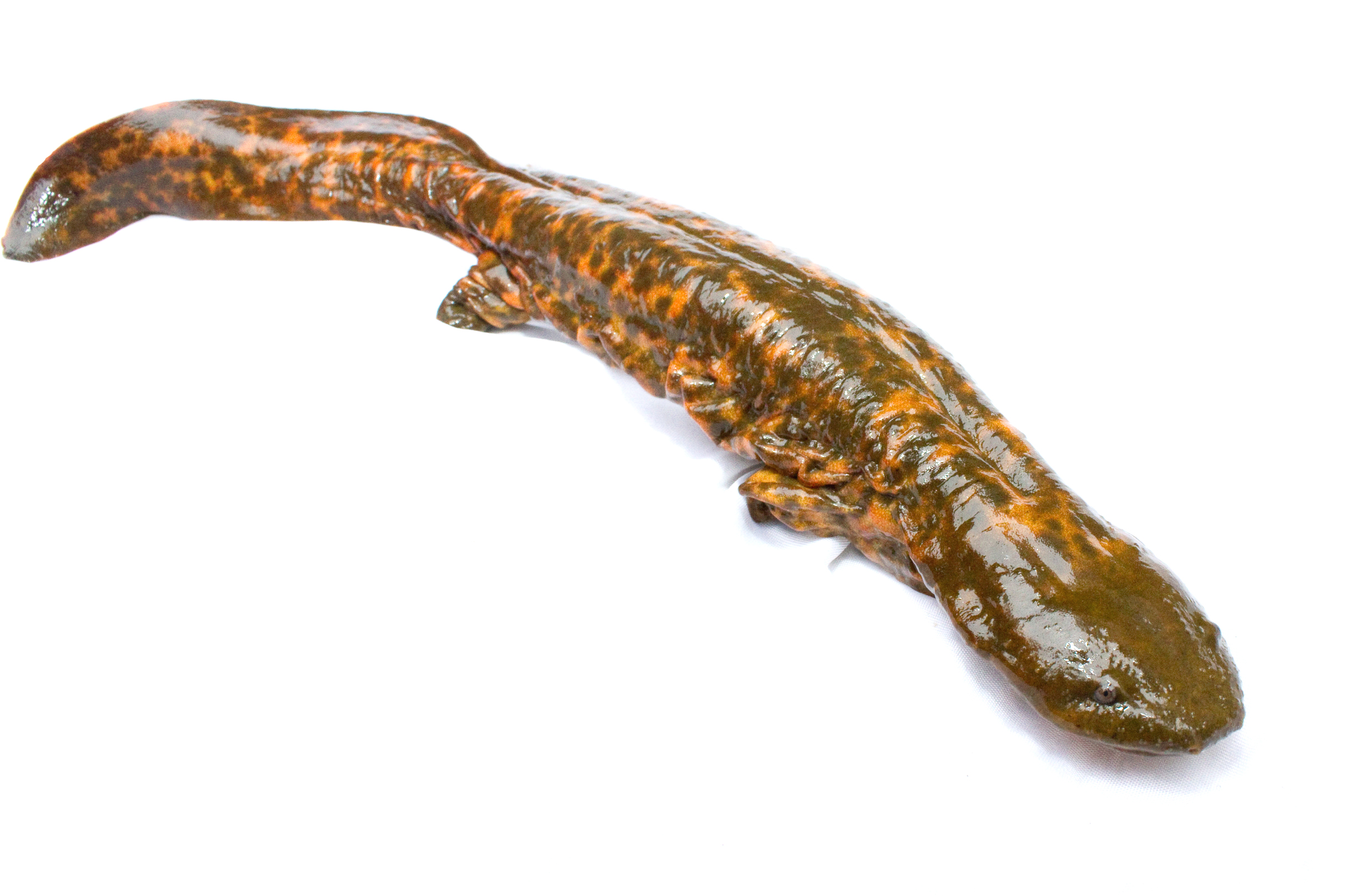
North America's largest salamander at up to 29 inches, hellbenders are sensitive water-quality indicators that breathe primarily through their skin.
§ Quick facts
§ Encyclopedia
The hellbender, also known as the hellbender salamander, is a species of aquatic giant salamander endemic to the eastern and central United States. It is the largest salamander in North America. A member of the family Cryptobranchidae, the hellbender is the only extant member of the genus Cryptobranchus. Other closely related salamanders in the same family are in the genus Andrias, which contains the Japanese and Chinese giant salamanders. The hellbender is much larger than any other salamander in its geographic range, and employs an unusual adaption for respiration through cutaneous gas exchange via capillaries found in its lateral skin folds. It fills a particular niche—both as a predator and prey—in its ecosystem, which either it or its ancestors have occupied for around 65 million years. The species is listed as Vulnerable on the IUCN Red List of Threatened Species due to the impacts of disease and widespread habitat loss and degradation throughout much of its range.
Source: Wikipedia — Hellbender Licensed under CC BY-SA 4.0
§ Identification
Field marks. Massive flattened salamander with wrinkled gray-brown skin, tiny eyes, and broad flat head. Tail laterally flattened for swimming.
Similar species. Mudpuppies (smaller, retain external gills). No other US salamanders approach this size.
Voice. Generally silent; occasionally produces a soft "yelp" if injured.
§ Diet & behavior
Diet. Crayfish (primary), small fish, occasionally other amphibians.
Behavior. Nocturnal and entirely aquatic. Hides under large flat rocks in fast clear streams. Breathes through skin (no lungs as adult); requires high oxygen levels.
§ Range
Mountainous streams of the eastern US (Appalachians and Ozarks)
§ Habitat
Cold, clean, fast-flowing rocky streams and rivers
§ Threats
Sediment pollution, habitat alteration, disease, illegal collection.
§ Conservation status
According to the IUCN Red List, the eastern hellbender is currently classified as Near Threatened.
§ What helps
Reduce sediment runoff from construction and agriculture. Don't lift large rocks in streams. Support clean-water initiatives.
§ Further reading
- Wikipedia — Hellbender
- www.fws.gov — authoritative profile of Cryptobranchus alleganiensis
- IUCN Red List · taxon 59077
- iNaturalist · taxon 27551
- GBIF occurrence records
- Encyclopedia of Life — Cryptobranchus alleganiensis
§ Sources cited
- Saint Louis Zoo
- USFWS Hellbender Recovery
- Hellbender Conservation Alliance
- IUCN Red List 2022


