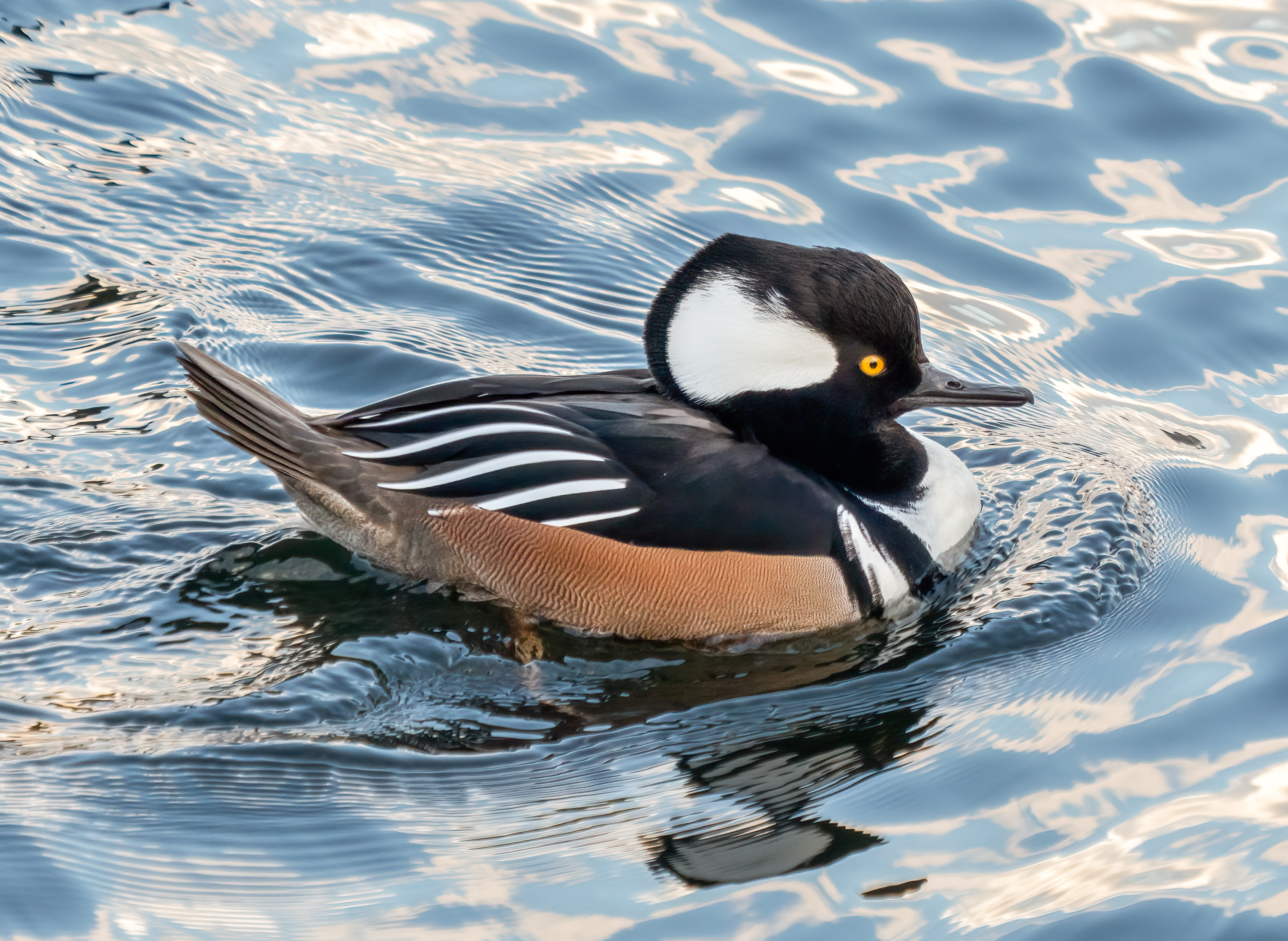
A small diving duck. Males display dramatic black-and-white head crest. Cavity nesters; ducklings leap from tree holes within 24 hours of hatching.
§ Quick facts
§ Encyclopedia
The hooded merganser is a species of fish-eating duck in the subfamily Anatinae. It is the only extant species in the genus Lophodytes. The genus name derives from the Greek language: lophos meaning 'crest', and dutes meaning 'diver'. The bird is striking in appearance; both sexes have crests that they can raise or lower, and the breeding plumage of the male is handsomely patterned and coloured. The hooded merganser has a sawbill but is not classified as a typical merganser.
Source: Wikipedia — Hooded merganser Licensed under CC BY-SA 4.0
§ Identification
Field marks. Male has a black head with a large white fan-shaped crest (raised or lowered), black-and-white body, and cinnamon flanks. Female gray-brown with a shaggy rusty crest.
Similar species. Bufflehead male is smaller with a rounded white head patch; the female's wispy cinnamon crest and thin bill mark a Hooded Merganser.
Voice. Male gives a frog-like, rolling 'crrrooo' in courtship (the 'sawbill' grunt).
§ Diet & behavior
Diet. Varies by species: aquatic plants, seeds, invertebrates, fish.
Behavior. A small fish- and crayfish-eating diving duck of wooded ponds; nests in tree cavities. Males raise and lower a spectacular fan-shaped crest in display.
§ Range
Across North America
§ Habitat
Wooded ponds, slow streams, beaver flowages
§ Threats
Loss of dead trees with cavities for nests, pollution.
§ Conservation status
According to the IUCN Red List, the hooded merganser is currently classified as Least Concern.
§ What helps
Leave dead trees standing where safe. Install nest boxes. Maintain water quality.
§ Further reading
- Wikipedia — Hooded merganser
- www.allaboutbirds.org — authoritative profile of Lophodytes cucullatus
- IUCN Red List — search for Lophodytes cucullatus
- GBIF occurrence records
- Encyclopedia of Life — Lophodytes cucullatus
§ Sources cited
- Cornell Lab of Ornithology — All About Birds
- National Audubon Society
- iNaturalist
- IUCN Red List


