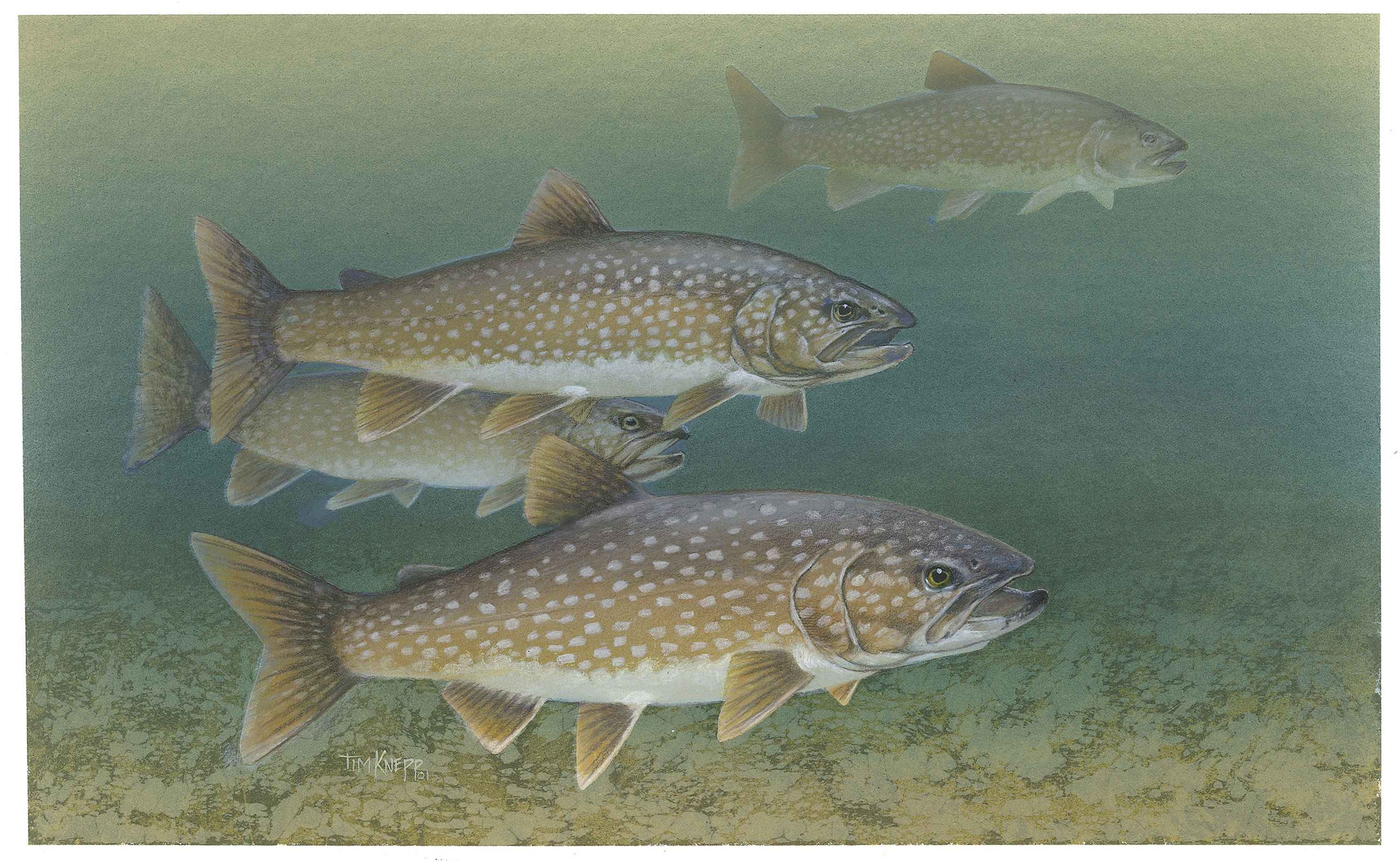
A massive native char of northern lakes — slow-growing, long-lived, and exquisitely vulnerable to overfishing. Verified ages over 60 years; some Great Lakes individuals approach a century.
§ Quick facts
§ Encyclopedia
The lake trout is a freshwater char living mainly in lakes in Northern North America. Other names for it include mackinaw, namaycush, lake char (or charr), touladi, togue, laker, and grey trout. In Lake Superior, it can also be variously known as siscowet, paperbelly and lean. The lake trout is prized both as a game fish and as a food fish. Those caught with dark coloration may be called mud hens.
Source: Wikipedia — Lake trout Licensed under CC BY-SA 4.0
§ Identification
Field marks. Massive char with light spots on dark body; deep-bodied.
Similar species. Brook Trout (smaller). Bull Trout.
Voice. Silent.
§ Diet & behavior
Diet. Smaller fish, invertebrates.
Behavior. Long-lived. Among deepest-diving freshwater fish.
§ Range
Northern US, Canada, Alaska in deep cold lakes
§ Habitat
Deep cold lakes, often below 50 ft in summer
§ Threats
Overfishing, sea lamprey predation, climate-driven warming of deep lakes, contaminants accumulating in long-lived fish.
§ Conservation status
According to the IUCN Red List, the lake trout is currently classified as Least Concern.
§ What helps
Practice strict catch-and-release of trophy fish. Support sea-lamprey control. Reduce mercury emissions.
§ Further reading
- Wikipedia — Lake trout
- www.nwf.org — authoritative profile of Salvelinus namaycush
- IUCN Red List · taxon 62217
- iNaturalist · taxon 49679
- GBIF occurrence records
- Encyclopedia of Life — Salvelinus namaycush
§ Sources cited
- American Fisheries Society
- Trout Unlimited
- IUCN Red List 2008


