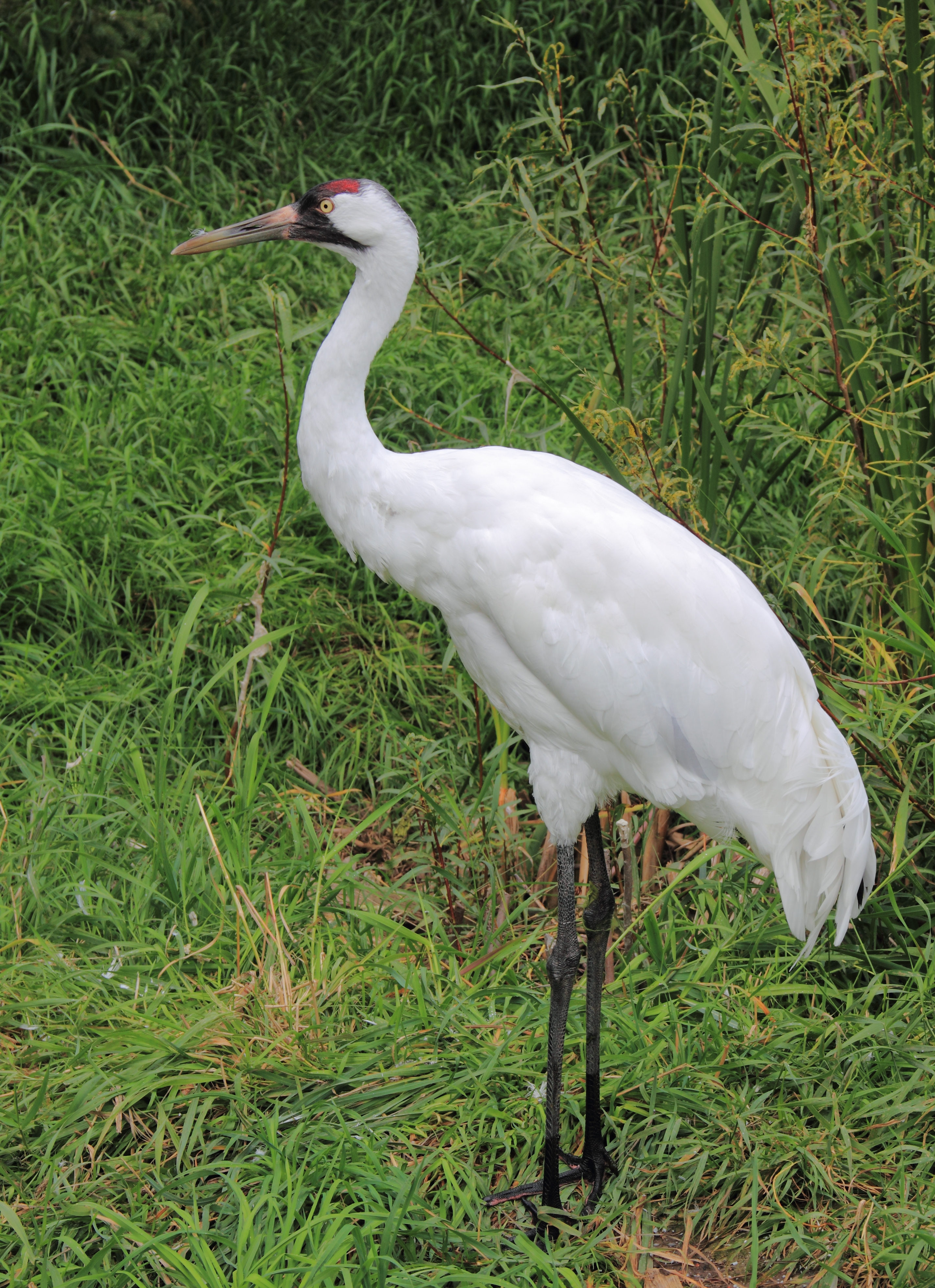
North America's tallest bird at nearly 5 feet, whooping cranes were down to 21 individuals in 1941 and have rebounded to over 800 today.
§ Quick facts
§ Encyclopedia
The whooping crane is an endangered crane species, native to North America, named for its "whooping" calls. Along with the sandhill crane, it is one of only two crane species native to North America, and it is also the tallest North American bird species, with an estimated 22–30+ year life expectancy in the wild. After being pushed to the brink of extinction by unregulated hunting and loss of habitat that left just 21 wild cranes by 1941, the whooping crane made a partial recovery through conservation efforts. The total number of cranes in the surviving migratory population, plus three reintroduced flocks and in-captivity, only slightly exceeds 830 birds as of 2025. This includes about 560 individuals in the remnant population that migrates between coastal Texas, USA, and the Northwest Territories, Canada, which is termed the "Aransas-Wood Buffalo Population" after the protected areas that anchor the population's wintering and breeding ranges, respectively. Additionally, there are about 140 individuals in two reintroduced populations breeding in Wisconsin and Louisiana, USA, and an additional 130 individuals in captivity.
Source: Wikipedia — Whooping crane Licensed under CC BY-SA 4.0
§ Identification
Field marks. Tallest bird in North America. Pure white with black wingtips visible only in flight; red cap; long black legs trailing in flight.
Similar species. Sandhill Crane (gray, smaller, more common). Snow Goose lacks the height and trailing legs.
Voice. Bugling whoop audible 2+ miles, produced by a 5-foot trachea coiled like a French horn.
§ Diet & behavior
Diet. Omnivorous: blue crabs, frogs, snails, berries, acorns, waste grain. On Texas wintering grounds, blue crabs dominate.
Behavior. Pair for life; perform spectacular leaping courtship "unison call" dances. Migrate in family groups up to 4,000 km between Wood Buffalo NP, Canada and Aransas NWR, Texas.
§ Range
Migratory: nests in Wood Buffalo (Canada), winters on Texas coast
§ Habitat
Wetlands, marshes, prairie potholes, coastal estuaries
§ Threats
Habitat loss, illegal shooting, power-line collisions, climate threats to coastal wintering grounds.
§ Conservation status
According to the IUCN Red List, the whooping crane is currently classified as Endangered.
§ What helps
Support coastal Texas conservation. Mark power lines on flyways. Donate to recovery programs.
§ Further reading
- Wikipedia — Whooping crane
- www.fws.gov — authoritative profile of Grus americana
- IUCN Red List · taxon 22692156
- iNaturalist · taxon 3879
- eBird · whocra
- GBIF occurrence records
- Encyclopedia of Life — Grus americana
§ Sources cited
- International Crane Foundation
- USFWS
- Cornell Lab — All About Birds
- IUCN Red List 2018


