A keystone species and conservation success — recovered from endangered status in 1987 and now numbers over a million in Louisiana alone.
§ Quick facts
§ Encyclopedia
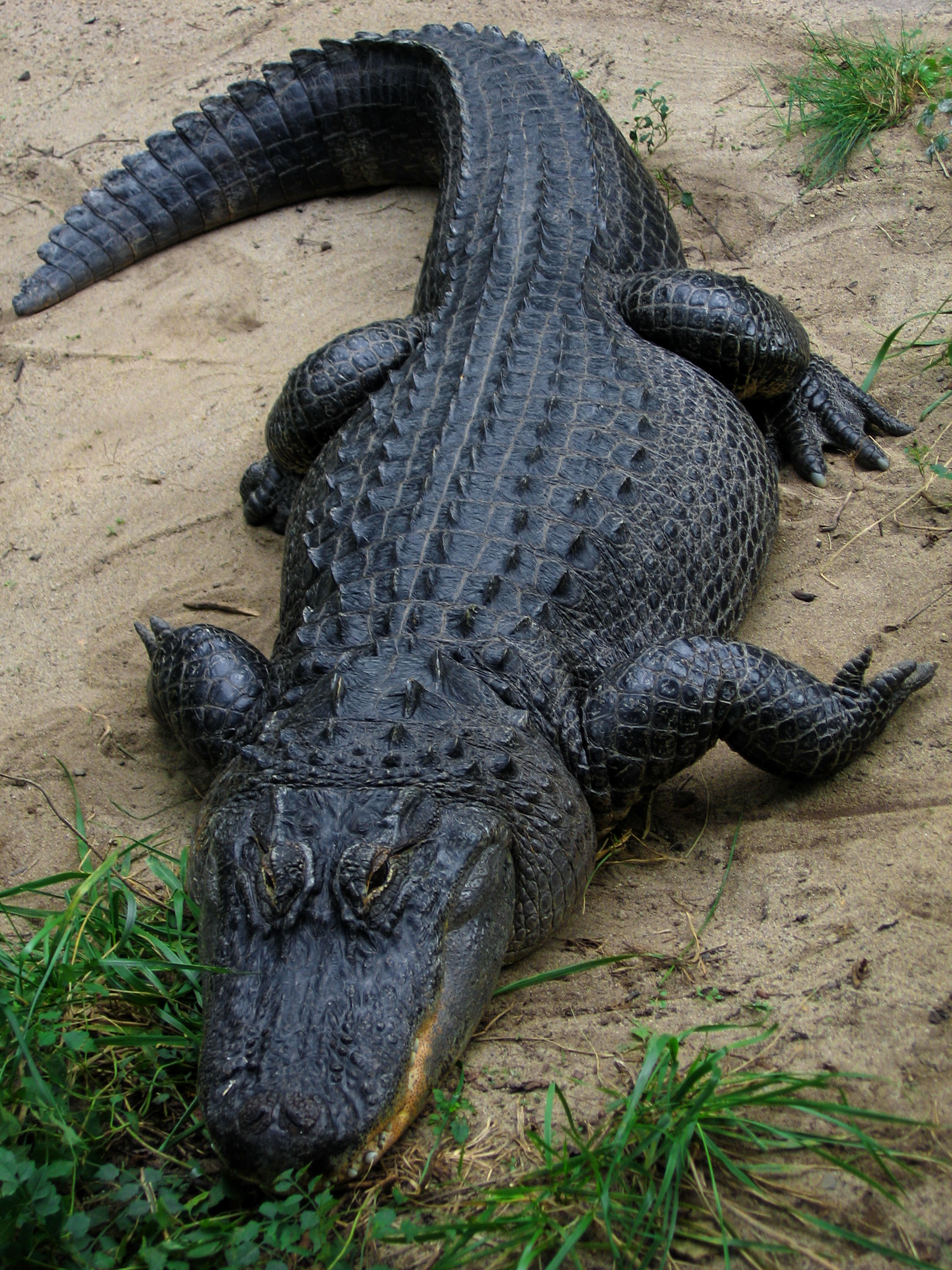
The American alligator, sometimes referred to as a common alligator or just gator, is a large crocodilian reptile native to the Southeastern United States. It is one of the two extant species in the genus Alligator, and is larger than the only other living alligator species, the Chinese alligator.
Source: Wikipedia — American alligator Licensed under CC BY-SA 4.0
§ Identification
Field marks. Broad U-shaped snout (vs. crocodile's narrow V); dark olive-black with white belly. Only upper teeth visible when mouth closed.
Similar species. American Crocodile (narrow snout, lighter color). Other alligator species in Asia.
Voice. Males bellow during summer rut. Hatchlings chirp.
§ Diet & behavior
Diet. Apex predator: fish, birds, mammals, turtles, occasionally large mammals like wild hogs.
Behavior. Solitary except during breeding. Excellent swimmer and ambush hunter. Builds mound nests of vegetation; mothers carry hatchlings to water.
§ Range
Southeastern US, with strongholds in Florida, Louisiana, and Georgia
§ Habitat
Freshwater swamps, marshes, rivers, lakes, and brackish coastal areas
§ Threats
Habitat loss, illegal harvesting, lead from waterfowl hunting, climate impacts on coastal wetlands.
§ Conservation status
According to the IUCN Red List, the american alligator is currently classified as Least Concern.
§ What helps
Never feed alligators. Support wetland protection in the Southeast. Respect their space.
§ Further reading
- Wikipedia — American alligator
- www.fws.gov — authoritative profile of Alligator mississippiensis
- IUCN Red List · taxon 46583
- iNaturalist · taxon 26039
- GBIF occurrence records
- Encyclopedia of Life — Alligator mississippiensis
§ Sources cited
- USFWS American Alligator Recovery
- FWC
- iNaturalist
- IUCN Red List 2018