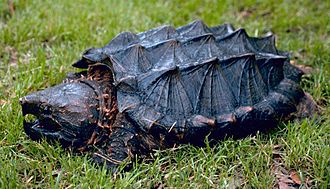
The shyer, narrower-snouted cousin of the alligator — and one of only two places on Earth (south Florida) where alligators and crocodiles coexist. Down to 200 individuals in the US in the 1970s, now ~2,000.
§ Quick facts
§ Encyclopedia
The American crocodile is a species of crocodilian found in the Neotropics. It is the most widespread of the four extant species of crocodiles from the Americas, with populations present from South Florida, the Caribbean islands of Cuba, Jamaica, and Hispaniola, and the coasts of Mexico to as far south as Peru, Ecuador, Colombia, and Venezuela.
Source: Wikipedia — American crocodile Licensed under CC BY-SA 4.0
§ Identification
Field marks. Long V-shaped narrow snout (vs. broad U-shape in alligator). Lighter olive-gray; teeth visible when mouth closed.
Similar species. American Alligator (broad U-snout, no visible teeth, darker). Other crocodile species (different ranges).
Voice. Bellows, grunts. Hatchlings chirp from eggs.
§ Diet & behavior
Diet. Fish (primary), crabs, turtles, water birds, occasionally larger animals.
Behavior. Solitary and territorial. Tolerates saltwater (unlike American alligator). Federally listed as threatened in US since 2007.
§ Range
Southern Florida (the only US population) and from Mexico through northern South America
§ Habitat
Coastal mangroves, brackish estuaries, occasional freshwater wetlands
§ Threats
Habitat loss to coastal development, vehicle strikes on Card Sound Road, climate-driven sea-level rise, contaminants.
§ Conservation status
According to the IUCN Red List, the american crocodile is currently classified as Vulnerable.
§ What helps
Support Everglades restoration. Maintain distance — never feed wildlife. Drive carefully through Florida Keys at night.
§ Further reading
- Wikipedia — American crocodile
- www.fws.gov — authoritative profile of Crocodylus acutus
- IUCN Red List · taxon 5659
- iNaturalist · taxon 26041
- GBIF occurrence records
- Encyclopedia of Life — Crocodylus acutus
§ Sources cited
- USFWS American Crocodile Recovery
- FWC
- Croc Specialist Group
- IUCN Red List 2018