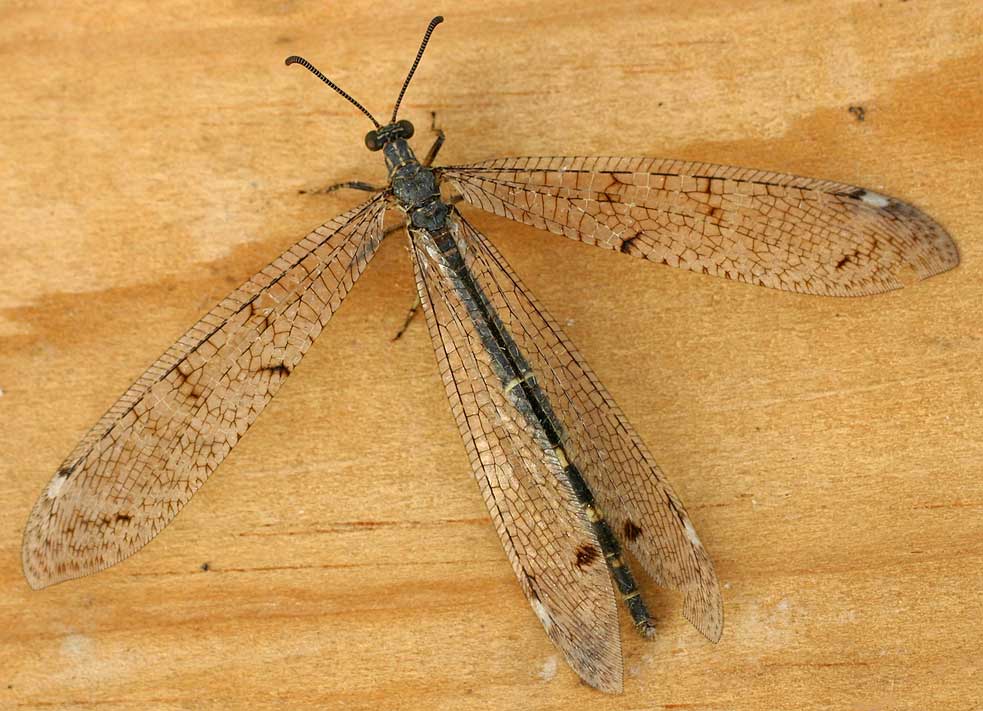
The larva builds conical pits in sand to trap ants. Adults look like delicate damselflies, but the larva (often called "doodlebug") is the famous predator.
§ Quick facts
§ Encyclopedia
The antlions are a group of about 2,000 species of insect in the neuropteran family Myrmeleontidae. They are known for the predatory habits of their larvae, which mostly dig pits to trap passing ants or other prey. In North America, the larvae are sometimes referred to as doodlebugs because of the marks they leave in the sand. The adult insects are less well known due to their relatively short lifespans in comparison with the larvae. Adults, sometimes known as antlion lacewings, mostly fly at dusk or just after dark and may be mistakenly identified as dragonflies or damselflies.
Source: Wikipedia — Antlion Licensed under CC BY-SA 4.0
§ Identification
Field marks. Adults: slender body with long, narrow, lacy wings often patterned with brown or black; knobbed/clubbed antennae. Larvae: stout flat-bodied insect with massive forward-pointing sickle jaws.
Similar species. Damselflies (no club antennae; faster fliers). Lacewings (related; different wing patterns). Owlflies (related; different head shape).
Voice. N/A
§ Diet & behavior
Diet. Larvae: ants and other small insects that fall into pit traps. Adults: dew, pollen, occasional nectar.
Behavior. Among the most distinctive predatory insects in North America. Larvae construct funnel-shaped pits 2–5 cm wide in fine dry soil; the larva buries itself at the bottom with only its huge sickle-shaped jaws exposed. When an ant tumbles in, the antlion flicks sand at it to dislodge its footing; once captured, the antlion injects digestive enzymes and sucks out the liquefied prey. Adults look superficially like damselflies but with knobbed antennae and slower flight.
§ Range
Across North America
§ Habitat
Sandy soils under overhangs, beneath buildings
§ Threats
Habitat disturbance, loss of dry sandy refugia (especially under building overhangs).
§ Conservation status
According to the IUCN Red List, the antlion is currently classified as Least Concern.
§ What helps
Tolerate antlion pits under house eaves. Don't fill sand patches.
§ Further reading
- Wikipedia — Antlion
- www.nwf.org — authoritative profile of Myrmeleon sp.
- iNaturalist · taxon 59477
- IUCN Red List — search for Myrmeleon sp.
- GBIF occurrence records
- Encyclopedia of Life — Myrmeleon sp.
§ Sources cited
- BugGuide
- Bugwood Network
- Texas A&M AgriLife Extension


