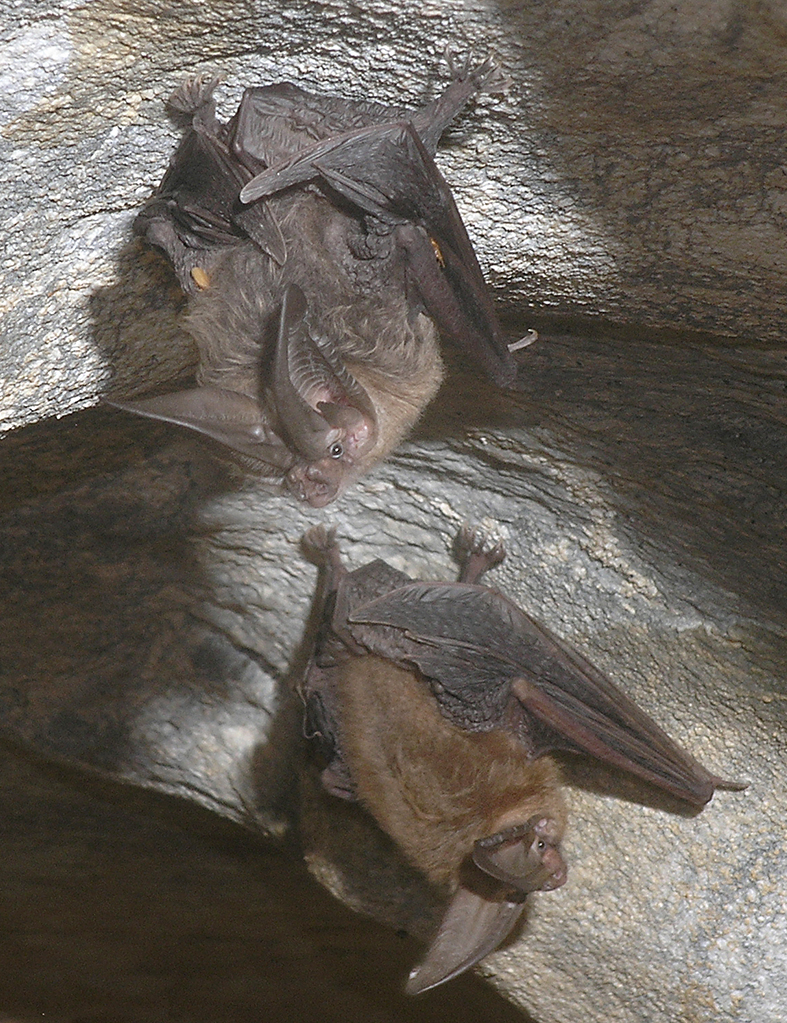
A bat with spectacularly long ears (over half head length) and a soft tan body. Highly cave-dependent and extremely sensitive to disturbance.
§ Quick facts
§ Encyclopedia
Townsend's big-eared bat is a species of vesper bat.
Source: Wikipedia — Townsend's big-eared bat Licensed under CC BY-SA 4.0
§ Identification
Field marks. Medium tan-brown bat with massive ears; large lumps on either side of nose.
Similar species. Other Corynorhinus species.
Voice. Ultrasonic echolocation.
§ Diet & behavior
Diet. Moths.
Behavior. Distinctive bat with extraordinarily long ears (~3.5 cm). Cold-tolerant; some populations don't hibernate. Listed under multiple state and federal protection categories.
§ Range
Western US into Mexico; relict eastern populations
§ Habitat
Caves, mines, lava tubes for roosting
§ Threats
Cave disturbance during hibernation, mine closures destroying roost sites, white-nose syndrome.
§ Conservation status
According to the IUCN Red List, the townsend's big-eared bat is currently classified as Least Concern.
§ What helps
Don't enter bat caves. Support gated mine entrance programs. Reduce light pollution.
§ Further reading
- Wikipedia — Townsend's big-eared bat
- www.nwf.org — authoritative profile of Corynorhinus townsendii
- IUCN Red List · taxon 17596
- iNaturalist · taxon 40157
- GBIF occurrence records
- Encyclopedia of Life — Corynorhinus townsendii
§ Sources cited
- Bat Conservation International
- USFWS
- IUCN Red List 2018


