
Field guide · Species directory
Mammals

American Bison
Bison bison
Once 30 million strong and the keystone species of the Great Plains, American bison were reduced to fewer than 1,000 by 1889. Today around 3…

American Black Bear
Ursus americanus
The most common bear species in North America, with populations rebounding in many states. Color varies from black to cinnamon to white.

American Pika
Ochotona princeps
A small ground-dwelling rabbit relative — basically a hamster-shaped mountaineer. Pikas don't hibernate; they spend summer collecting "haypi…

Arctic Fox
Vulpes lagopus
A small fox built for extreme cold — they tolerate temperatures down to -94°F (-70°C) and are the only canid whose paw pads grow fur in wint…

Bighorn Sheep (Desert subspecies)
Ovis canadensis nelsoni
Subspecies of bighorn sheep adapted to desert habitats. Smaller and lighter colored than Rocky Mountain bighorn.

Black-footed Ferret
Mustela nigripes
North America's only native ferret and once thought extinct. Rediscovered in 1981 in Wyoming, they've been bred and reintroduced — about 350…

Bobcat
Lynx rufus
North America's most widespread wild cat — about twice the size of a housecat with a short "bobbed" tail and tufted ears. Despite their rang…

Caribou
Rangifer tarandus
The North American version of the reindeer — both sexes grow antlers (unique among deer). Vast herds undertake some of the longest land migr…

Channel Islands Fox
Urocyon littoralis
A small fox endemic to California's Channel Islands. Different subspecies on different islands — among the most isolated fox populations on …

Coyote
Canis latrans
One of the most adaptable mammals in the Western Hemisphere. As wolves were extirpated and forests cleared, coyotes filled the void and now …

Eastern Wolf
Canis lycaon
A medium-sized wolf considered a distinct species in 2002. Lives in Ontario and Quebec; hybridizes with coyotes at range edges.

Fisher
Pekania pennanti
A large dark mustelid (no, it doesn't fish) famous as the only North American predator that routinely kills porcupines — flipping them to at…

Florida Panther
Puma concolor coryi
The federally endangered subspecies of mountain lion native to Florida. Population reduced to 20–30 individuals by 1995; recovered to ~200 t…

Gray Wolf
Canis lupus
Apex predators that live in family packs of 6–10 and play a keystone role in ecosystems by regulating elk, deer, and beaver populations.

Grizzly Bear
Ursus arctos horribilis
A subspecies of brown bear adapted to American West landscapes. Once roamed from California to Alaska — now in the Lower 48 only ~2,000 indi…

Hawaiian Monk Seal
Neomonachus schauinslandi
A medium-sized seal — among the rarest seals on Earth with fewer than 1,500 individuals. The only seal endemic to Hawaii, evolved over milli…
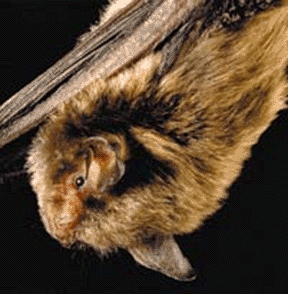
Indiana Bat
Myotis sodalis
A federally Endangered bat known for hibernating in massive social aggregations of tens of thousands. White-nose syndrome has decimated popu…

Jaguar
Panthera onca
The largest cat in the Americas — adult males up to 250+ pounds. A small breeding population reportedly remains in northern Mexico with occa…

Little Brown Bat
Myotis lucifugus
Once one of North America's most common bats, the little brown bat has been devastated by white-nose syndrome — a fungal disease that has ki…
Little Brown Myotis
Myotis lucifugus
A small bat that's been devastated by white-nose syndrome. Was once one of the most abundant US bats.
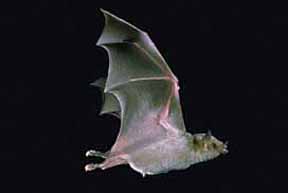
Mexican Long-nosed Bat
Leptonycteris nivalis
A medium-sized nectar-feeding bat critical for pollination of agave and saguaro cacti. Federally endangered.

Mexican Wolf
Canis lupus baileyi
A small subspecies of gray wolf — among the most genetically distinct gray wolves. Extinct in the wild by 1980; brought back via captive bre…

Moose
Alces alces
The largest deer species on Earth. Bull moose stand 7 feet at the shoulder and grow antlers 6 feet across. Calves nearly double in weight ev…

Mt. Graham Red Squirrel
Tamiasciurus hudsonicus grahamensis
A federally endangered subspecies of red squirrel restricted to a single mountain in Arizona. Among the most range-restricted US mammals.

Muskox
Ovibos moschatus
A massive shaggy bovid that survived the ice age. Long outer fur ("qiviut") over dense inner wool keeps them warm at -50°F. When threatened,…

Narwhal
Monodon monoceros
A medium-sized Arctic whale famous for the male's spiral tusk (modified tooth). Tusks up to 10 ft long. Among the most distinctive marine ma…

New England Cottontail
Sylvilagus transitionalis
Smaller darker cousin of eastern cottontail. Endemic to New England; populations crashed dramatically due to forest maturation and habitat f…

North American Beaver
Castor canadensis
Nature's ecosystem engineers, beavers create wetland habitats that benefit hundreds of other species and store water across landscapes.

North Pacific Right Whale
Eubalaena japonica
One of the rarest large whales on Earth — estimated population of 30 in the eastern North Pacific. Western Pacific population larger (~400).

Northern Flying Squirrel
Glaucomys sabrinus
A nocturnal forest mammal that doesn't actually fly but glides up to 150 feet between trees using a furry membrane (patagium) stretched betw…

Northern Long-eared Bat
Myotis septentrionalis
A small bat with relatively long ears. Federally endangered due to white-nose syndrome (~90% decline).

Northern River Otter
Lontra canadensis
A semi-aquatic mustelid that recovered dramatically from near-extinction in the eastern US through reintroduction programs. Playful, social,…

Ocelot
Leopardus pardalis
A small spotted cat about twice the size of a housecat — the dappled patterning gave them historic value in the pet trade. Fewer than 100 oc…

Pacific Pocket Mouse
Perognathus longimembris pacificus
A tiny mouse with external fur-lined cheek pouches. Endemic to a tiny region of coastal Southern California; thought extinct from 1971 to 19…

Polar Bear
Ursus maritimus
The world's largest terrestrial carnivore and an icon of climate change. Polar bears are uniquely dependent on sea ice for hunting seals — a…

Pygmy Rabbit
Brachylagus idahoensis
A small rabbit — among the smallest in North America (~250 g). Restricted to sagebrush habitats. Digs own burrows.

Red Wolf
Canis rufus
A medium-sized canid intermediate between coyotes and gray wolves. Extinct in wild by 1980; rebuilt from captive stock. Down to ~20 wild ind…

Riparian Brush Rabbit
Sylvilagus bachmani riparius
Endangered subspecies of brush rabbit restricted to specific California riparian zones.

Salt Marsh Harvest Mouse
Reithrodontomys raviventris
A federally endangered mouse endemic to San Francisco Bay salt marshes.

Sea Otter (Northern subspecies)
Enhydra lutris kenyoni
Northern subspecies of the iconic sea otter. Populations crashed dramatically in the 1990s and remain depressed — likely from killer whale p…

Sierra Nevada Red Fox
Vulpes vulpes necator
One of the rarest mammals in the United States — fewer than 50 individuals confirmed in the wild. Genetically distinct subspecies of red fox…

Sonoran Pronghorn
Antilocapra americana sonoriensis
Federally endangered subspecies of pronghorn restricted to Sonoran Desert.

Tri-colored Bat
Perimyotis subflavus
A tiny tawny-yellow bat — one of the smallest in North America. Once one of the most common cave bats in the East, now devastated by white-n…

Tule Elk
Cervus canadensis nannodes
A small subspecies of elk endemic to California. Among the smallest elk subspecies. Recovered from <30 individuals in 1870s.

Vancouver Island Marmot
Marmota vancouverensis
A small marmot endemic to Vancouver Island. Critically endangered; population crashed from ~300 to ~30 individuals; captive breeding program…

Virginia Opossum
Didelphis virginiana
North America's only marsupial — and one of its most underappreciated. Opossums are nearly immune to rabies, eat 5,000+ ticks per season per…

Volcano Rabbit
Romerolagus diazi
A small rabbit endemic to high-elevation alpine grasslands on Mexico's volcanoes. Among the smallest rabbits.

Abert's Squirrel
Sciurus aberti
A medium-sized tree squirrel with prominent ear tufts. Endemic to ponderosa pine forests of southwest mountains. Charcoal-gray with white be…

Allegheny Woodrat
Neotoma magister
A medium-sized rodent endemic to Appalachian rocky habitats. Populations have crashed dramatically due to raccoon roundworm and other pressu…

American Badger
Taxidea taxus
A burrowing carnivore famously fierce — they can dig faster than a human can shovel and have been seen hunting cooperatively with coyotes (t…

American Marten
Martes americana
A slender weasel relative the size of a small house cat, with a luxurious brown coat and pale orange throat patch. Arboreal acrobats that hu…

American Mink
Neogale vison
A semi-aquatic mustelid with rich brown waterproof fur. Excellent swimmers and skilled hunters of small mammals, fish, and waterfowl. They'r…

American Mountain Beaver
Aplodontia rufa
Not a true beaver — a primitive rodent in its own family. Among the most evolutionarily isolated North American mammals.

American Red Squirrel
Tamiasciurus hudsonicus
A small bright-rusty squirrel of conifer forests, famous for ferocious territorial chittering from the treetops. They cache conifer cones in…

Antelope Jackrabbit
Lepus alleni
A large desert hare with extraordinarily long ears for heat dissipation. White flanks and underparts.

Appalachian Cottontail
Sylvilagus obscurus
A small cottontail of Appalachian highlands. Distinguished from eastern cottontails by skull and ear-marking details. Range fragmented by cl…

Arctic Ground Squirrel
Urocitellus parryii
A large ground squirrel that hibernates 7–8 months annually. Their body temperatures drop below freezing during hibernation — the most extre…

Arctic Hare
Lepus arcticus
A large white-furred hare of the Arctic — adapted to extreme cold. Among the most physiologically extreme mammals, with thick fur and low su…

Bearded Seal
Erignathus barbatus
A massive Arctic seal with distinctive long whiskers (the "beard"). Primary prey of polar bears. Their declines have driven population press…

Belding's Ground Squirrel
Urocitellus beldingi
A medium-sized ground squirrel of western mountain meadows. Among the most-studied wild mammals for behavioral research.

Big Brown Bat
Eptesicus fuscus
One of the most common bats across North America and one of the species most likely to be encountered in attics. They're voracious insect pr…
Bighorn Sheep
Ovis canadensis
Charismatic icons of the American West with massive curling horns weighing 30 pounds — more than all the bones in their body combined. Reduc…
Black Bear (West Coast)
Ursus americanus californiensis
California subspecies of American black bear. Multiple subspecies exist across North America with subtle variations.

Black-tailed Deer
Odocoileus hemionus columbianus
A small subspecies of mule deer adapted to the wet Pacific Northwest forests. Their tail is solid black on top (mule deer have white with a …

Black-tailed Jackrabbit
Lepus californicus
A massive long-eared hare — not a rabbit — with hindlegs built for explosive escape. Black-tipped ears stand up to 7 inches tall and serve a…

Black-tailed Prairie Dog
Cynomys ludovicianus
A small social ground squirrel whose underground "towns" once covered hundreds of millions of acres. Their colonies are keystones supporting…

Brush Mouse
Peromyscus boylii
A medium small mouse of western brushy habitats.
Brush Rabbit
Sylvilagus bachmani
A small cottontail of Pacific Coast brushy habitats. Smaller and darker than other US cottontails.

Cactus Mouse
Peromyscus eremicus
A small desert mouse. Common in southwestern deserts. Important prey for hawks, owls, and snakes.

California Bat
Myotis californicus
A small bat of California habitats.

California Ground Squirrel
Otospermophilus beecheyi
A common medium-sized ground squirrel of California. Major prey for raptors and snakes.

Canada Lynx
Lynx canadensis
A medium-sized wild cat with oversized snowshoe-like paws and dramatic tufted ears. Their populations rise and fall in dramatic 10-year cycl…
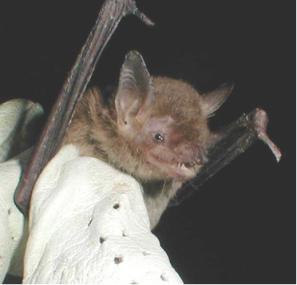
Cave Myotis
Myotis velifer
A bat closely associated with caves.

Cliff Chipmunk
Neotamias dorsalis
A medium chipmunk of southwestern rocky areas.

Collared Peccary (Javelina)
Dicotyles tajacu
A small pig-like mammal — not actually related to pigs. Lives in family bands of 6–30. Distinguished by collar of white hair across the shou…

Common Muskrat
Ondatra zibethicus
A semi-aquatic rodent often confused with beavers — but smaller (~3 lbs vs. ~50), with a thin rope-like tail. They build dome-shaped lodges …

Common Raccoon
Procyon lotor
The masked omnivore famously thriving in human-dominated landscapes. Their hands have four to five times more touch sensors than typical mam…

Cotton Mouse
Peromyscus gossypinus
A medium small mouse common in southeastern habitats.

Dall's Porpoise
Phocoenoides dalli
Among the fastest small cetaceans — can sustain 35+ mph for short bursts. Stocky black-and-white body. Famous for bow-riding ships.

Dall's Sheep
Ovis dalli
A pure-white wild sheep of the Arctic mountains — male rams grow massive curling horns that can take 12 years to complete a full curl. Close…

Deer Mouse
Peromyscus maniculatus
The most widespread mammal in North America — a small bicolored mouse with large dark eyes. Major prey for owls, hawks, foxes, weasels, snak…

Desert Cottontail
Sylvilagus audubonii
A pale cottontail of dry western country with longer ears than eastern cousins for heat dissipation. Often active at dusk and dawn to avoid …

Douglas Squirrel
Tamiasciurus douglasii
A medium chipmunk-like squirrel of Pacific Northwest forests.

Eastern Chipmunk
Tamias striatus
Striped, vocal, and unmistakable. Eastern chipmunks excavate intricate burrow systems with multiple chambers — sleeping room, food cache, la…

Eastern Cottontail
Sylvilagus floridanus
The familiar cottontail of eastern yards and meadows. Despite massive predation pressure, populations stay strong thanks to up to four litte…

Eastern Gray Squirrel
Sciurus carolinensis
Possibly the most familiar mammal of eastern North American backyards. Critical for forest regeneration — they cache thousands of acorns eac…

Eastern Mole
Scalopus aquaticus
A small velvety-gray mole with massive shovel-like front paws and tiny eyes (vision is essentially useless underground). Their tunnel system…

Eastern Red Bat
Lasiurus borealis
A medium-sized bat with rusty-red fur. Roosts in trees rather than caves.

Eastern Spotted Skunk
Spilogale putorius
A small skunk smaller than the more familiar striped skunk, with a complex pattern of stripes broken into spots. Famously performs handstand…

Elk
Cervus canadensis
The "wapiti" of North America — second-largest deer species after moose. Elk were extirpated from most of the eastern US by 1900 but have be…

Eurasian Lynx
Lynx lynx
Larger Eurasian cousin to Canada Lynx — among the largest wild cats in Europe. Successful reintroductions across multiple European countries…
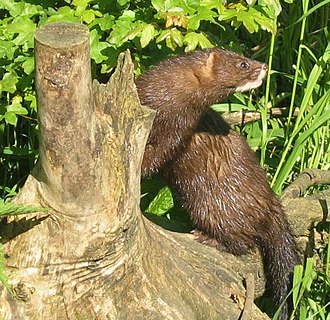
European Mink (extinct in NA — historical relative)
Mustela lutreola
Closely related to North American mink but native to Europe. Historically confused with NA mink which has been introduced to Europe; America…

False Killer Whale
Pseudorca crassidens
A large dark cetacean closely related to orcas. Live in tight family groups; spectacular acrobatic behaviors.

Florida Mouse
Podomys floridanus
A small mouse endemic to Florida's sandhill habitats. Lives in burrows of gopher tortoises — over 200 other species depend on the tortoise's…

Fox Squirrel
Sciurus niger
The largest tree squirrel in North America — body up to 30 inches including tail. Color ranges from bright rusty-orange (Midwest) to silver-…

Fringed Bat
Myotis thysanodes
Western bat with fringed tail membrane.

Gray Fox
Urocyon cinereoargenteus
A salt-and-pepper fox with russet flanks and a black tail tip. Notable as the only North American canid that regularly climbs trees — includ…

Harbor Porpoise
Phocoena phocoena
A small porpoise common in cold coastal waters. Distinguished from dolphins by triangular dorsal fin and lack of beak.

Harbor Seal
Phoca vitulina
A small "earless" seal — the most widespread seal in North America. Often hauls out on rocks, sandbars, and floating ice. Variable color fro…

Hispid Cotton Rat
Sigmodon hispidus
A medium-sized brown rodent with coarse fur. Abundant prey for hawks, owls, snakes, and bobcats across the southeastern US.

Hoary Bat
Lasiurus cinereus
The largest and most widespread bat in North America — a tree-roosting bat with frosted gray-and-brown fur. Migrates long distances annually…

Hoary Marmot
Marmota caligata
A large frosted-gray marmot of high-elevation talus. Their loud whistles echo across alpine cirques — earning them the nickname "whistler" a…

Hog-nosed Skunk
Conepatus mesoleucus
A large skunk with elongated snout (hence name). Foraging by digging.

Hooded Seal
Cystophora cristata
A medium-large seal with inflatable nasal sac in males ("hood") used in displays. Some of the shortest nursing periods of any mammal — only …

Hooded Skunk
Mephitis macroura
A medium-sized skunk with hood-like fur pattern. Distinguished from striped skunk by stripe pattern.

Jaguarundi
Herpailurus yagouaroundi
A small wild cat with an elongated body and tail (more like a weasel than typical cat). Two color phases: dark gray-black and reddish-brown.…

Kit Fox
Vulpes macrotis
A tiny pale fox of the desert with oversized ears for heat dissipation and acute hearing. Kit foxes spend their days in cool burrows and eme…

Least Weasel
Mustela nivalis
The world's smallest carnivore — adult males weigh only 1.5–2 ounces. Despite their size, they kill voles and mice many times their own weig…

Lesser Long-nosed Bat
Leptonycteris yerbabuenae
A medium-sized nectar-feeding bat. Critical pollinator of agave and columnar cacti.

Lodgepole Chipmunk
Neotamias speciosus
A medium chipmunk of western mountain forests.

Long-tailed Shrew
Sorex dispar
A slender dark-gray shrew with a tail nearly as long as its body, specialized for life in rocky slope crevices. Among the most habitat-speci…

Long-tailed Vole
Microtus longicaudus
A medium-sized vole with a longer tail than most voles. Often associated with subalpine streams. Prey for everything from weasels to red-tai…

Long-tailed Weasel
Neogale frenata
A slim, agile mustelid that can pursue prey through tunnel systems too narrow for any rabbit-sized predator. They're also one of the few mam…

Marsh Rabbit
Sylvilagus palustris
A small cottontail relative adapted for wet habitats — they're actually good swimmers, unusual for rabbits. Sometimes seen wading through sh…

Marsh Rice Rat
Oryzomys palustris
A small rat specialized for wetland habitats.

Meadow Vole
Microtus pennsylvanicus
A stocky short-tailed rodent of grassy habitats — the most prolific small mammal in North America. Their tunnels and runways through grass a…

Mexican Free-tailed Bat
Tadarida brasiliensis
One of the world's most abundant bats — a single Texas cave (Bracken Cave) hosts an estimated 15 million individuals. Their nightly emergenc…

Mexican Long-tongued Bat
Choeronycteris mexicana
A medium-sized nectar-feeding bat with an extraordinarily long tongue. Critical pollinator of agave, saguaro, and other desert plants.

Mount Rose Chipmunk
Neotamias ochrogenys
A medium-sized chipmunk endemic to specific California mountain ranges. Distinguished from other chipmunks by subtle features.
Mountain Beaver
Aplodontia rufa
Not a true beaver — a primitive rodent in its own family that's evolutionarily isolated from all other living rodents. Burrows extensively i…

Mountain Cottontail
Sylvilagus nuttallii
A medium-sized cottontail of western mountain and sage habitats.

Mountain Goat
Oreamnos americanus
Despite the name, they're not true goats but unique to North America. Pure white shaggy double-layered coats; sharp black horns in both sexe…

Mountain Hare
Lepus timidus
Large lagomorph of northern boreal and arctic regions, distinguished from snowshoe hare by larger body, longer ears, and Eurasian–Beringian …

Mountain Lion
Puma concolor
The most widely distributed wild cat in the Americas, mountain lions are solitary apex predators essential to deer population control.

Mountain Pocket Gopher
Thomomys monticola
A pocket gopher of mountain habitats.

Mule Deer
Odocoileus hemionus
Large western deer with distinctive enormous mule-like ears and a rope-like black-tipped tail. Famous for "stotting" — bounding with all fou…

Nine-banded Armadillo
Dasypus novemcinctus
The only armadillo in North America — a small mammal in a leathery shell of bony plates. Famous for their odd habit of giving birth to four …

North American Porcupine
Erethizon dorsatum
A slow-moving herbivore armored with about 30,000 quills — modified hairs with microscopic barbs that anchor in flesh on contact. Despite th…
North American River Otter
Lontra canadensis
Playful semi-aquatic carnivores that act as indicator species for clean water — their presence signals a healthy aquatic ecosystem.

Northern Bog Lemming
Synaptomys borealis
A small short-tailed rodent endemic to North American sphagnum bogs. Extremely specific habitat requirements have made them indicators of pr…
Northern Flying Squirrel (Subspecies)
Glaucomys sabrinus fuscus
Endangered subspecies of northern flying squirrel restricted to coastal plain forests of NE US. Habitat loss has reduced populations signifi…

Northern Fur Seal
Callorhinus ursinus
A medium-sized "eared seal" with thick under-fur historically prized for fur trade. Pribilof Island rookeries have been declining for unclea…

Northern Gray Squirrel
Sciurus griseus
A large Pacific Coast tree squirrel. Endemic to specific California habitats.

Northern Pocket Gopher
Thomomys talpoides
Northern subspecies of pocket gopher.

Northern Short-tailed Shrew
Blarina brevicauda
A small stout shrew — gray above with a short tail. One of very few venomous mammals in North America, with a paralytic saliva used to subdu…

Olympic Marmot
Marmota olympus
A medium-sized marmot endemic to Olympic National Park.

Ord's Kangaroo Rat
Dipodomys ordii
A tiny desert rodent built like a miniature kangaroo — enormous hindlegs, tiny forelimbs, long tufted tail for balance. They never drink wat…

Pacific Marten
Martes caurina
Pacific Coast subspecies of American marten.

Pallid Bat
Antrozous pallidus
A medium-sized pale bat. Catches large insects and even scorpions by capturing them off the ground.

Pilot Whale (Long-finned)
Globicephala melas
A large dark cetacean closely related to short-finned pilot whale. Lives in colder northern waters.
Pilot Whale (Short-finned)
Globicephala macrorhynchus
A large dark cetacean named for swimming in tight family groups. Lives in matrilineal pods of 15-30 individuals.

Pinyon Mouse
Peromyscus truei
A small mouse specialized for pinyon-juniper habitats.

Plains Pocket Gopher
Geomys bursarius
A small burrowing rodent rarely seen above ground — most people know them only from the soil mounds along their tunnels. External fur-lined …

Pocket Gopher (Eastern)
Geomys bursarius
A small burrowing rodent.

Preble's Meadow Jumping Mouse
Zapus hudsonius preblei
A tiny rodent with extraordinarily long hindlegs and tail — can leap 5+ feet. Federally listed since 1998 due to habitat loss along Front Ra…

Pronghorn
Antilocapra americana
The fastest land mammal in the Americas at 60 mph and the second-fastest in the world — pronghorn evolved alongside an extinct American chee…

Red Fox
Vulpes vulpes
A familiar russet-and-cream canid with the largest natural range of any wild carnivore. Their hearing is sharp enough to detect a mouse movi…
Reindeer (Domesticated)
Rangifer tarandus tarandus
Domesticated reindeer; close relative to wild caribou.

Ringed Seal
Pusa hispida
A small Arctic seal — smallest in the Arctic. Primary prey of polar bears. Excavates breathing holes in sea ice and birthing dens in snow dr…

Ringtail
Bassariscus astutus
A slender nocturnal mammal related to raccoons — large eyes, big ears, and a spectacular fluffy black-and-white ringed tail nearly as long a…

Short-tailed Weasel (Eastern)
Mustela erminea
Eastern subspecies of short-tailed weasel. Brown in summer, white in winter except for black tail tip.

Short-tailed Weasel (Ermine)
Mustela richardsonii
A tiny ferocious predator that turns from brown to pure white (except a black tail tip) in winter. Ermine furs were once worn by European ro…

Silver-haired Bat
Lasionycteris noctivagans
A medium bat with silver-tipped dark fur. Highly migratory.

Smoky Shrew
Sorex fumeus
A small dark gray shrew of eastern forests. High metabolism — must eat almost continuously.

Snowshoe Hare
Lepus americanus
The snowshoe hare is famous for its dramatic seasonal color change (white in winter, brown in summer) and its 10-year population cycle that …

Southern Bog Lemming
Synaptomys cooperi
A small rodent of wet northern habitats. Restricted to bogs and fens; population fluctuations in sync with food cycles.

Southern Flying Squirrel
Glaucomys volans
A small flying squirrel — smaller than northern counterpart. Strictly nocturnal; rarely seen but locally common.

Spotted Bat
Euderma maculatum
A medium-sized bat with distinctive white spots on black body. Among the most distinctive-looking US bats.

Star-nosed Mole
Condylura cristata
A small dark mole with an unmistakable star of 22 pink fleshy tentacles around its snout. The star contains over 100,000 nerve fibers — maki…

Striped Skunk
Mephitis mephitis
A familiar night-roaming omnivore best known for its potent chemical defense — a sulfur-based spray accurate to 10 feet that deters virtuall…

Swamp Rabbit
Sylvilagus aquaticus
A medium-sized rabbit adapted for wetland habitats.

Swift Fox
Vulpes velox
A small fox of open prairie — about the size of a house cat — that nearly vanished from US grasslands by 1930. Successful reintroductions an…

Thirteen-lined Ground Squirrel
Ictidomys tridecemlineatus
A small ground squirrel marked with 13 alternating brown and tan stripes down its back, hence the name. Hibernates 6+ months, lowering body …

Townsend's Big-eared Bat
Corynorhinus townsendii
A bat with spectacularly long ears (over half head length) and a soft tan body. Highly cave-dependent and extremely sensitive to disturbance…

Townsend's Chipmunk
Neotamias townsendii
A medium-sized chipmunk with dark stripes on dark face. Endemic to Pacific Northwest coniferous forests.

Townsend's Mole
Scapanus townsendii
A large mole of Pacific Northwest habitats. Largest US mole.

Trowbridge's Shrew
Sorex trowbridgii
A medium-sized shrew of Pacific Northwest forests.

Tundra Vole
Microtus oeconomus
A small Arctic vole that's the dominant rodent of wet tundra. Major food for Arctic predators (gyrfalcons, jaegers, foxes, owls).

Vagrant Shrew
Sorex vagrans
A small shrew of western wet habitats. Excellent indicator species for healthy riparian areas.

Western Jumping Mouse
Zapus princeps
A small rodent with extraordinarily long hindlegs — can leap 6+ feet horizontally to escape predators. Hibernates 6–8 months annually.

Western Long-eared Bat
Myotis evotis
A small bat with relatively long ears.

Western Long-legged Myotis
Myotis volans
A small bat with relatively long legs.

Western Mole
Scapanus latimanus
Western counterpart to eastern mole.
Western Mountain Lion (recolonizing east)
Puma concolor
Western mountain lions are slowly recolonizing parts of the Midwest. Connecticut documented its first male in 2011 (after a 1,500-mile journ…

Western Pocket Gopher
Thomomys talpoides
Western pocket gopher.

Western Red Bat
Lasiurus blossevillii
Western red bat. Roosts in trees.

Western Small-footed Myotis
Myotis ciliolabrum
A small bat with relatively small feet.

Western Spotted Skunk
Spilogale gracilis
Western counterpart to eastern spotted skunk. Performs handstand displays before spraying.

White-footed Mouse
Peromyscus leucopus
A small bicolored mouse — warm brown above, white below — and the dominant native mouse of eastern forests. They're also the primary natural…

White-nosed Coati
Nasua narica
A relative of raccoons with a long upturned snout and a long banded tail held vertically. Female coatis live in noisy "bands" of 10–25 indiv…

White-tailed Deer
Odocoileus virginianus
The most widely distributed deer in the Americas, recognizable by the bright white underside of their tail raised when alarmed.

White-tailed Jackrabbit
Lepus townsendii
A medium-sized prairie hare that turns white in winter (except for the white-tipped ears). Major prey for prairie predators.

White-tailed Prairie Dog
Cynomys leucurus
A larger paler prairie dog of intermountain west valleys. Unlike black-tailed cousins, they hibernate through winter and live in looser colo…

Wild Boar (invasive)
Sus scrofa
Introduced from Europe for hunting; now invasive across much of the US. Highly destructive to crops, native wildlife habitats.

Wolverine
Gulo gulo
The largest land-dwelling member of the weasel family and one of North America's rarest carnivores. Estimated US population in the lower 48 …

Wood Rat (Southern)
Neotoma micropus
A medium-sized rodent that builds elaborate stick nests.

Yellow-bellied Marmot
Marmota flaviventris
A stocky golden-brown marmot of western mountains, often called the "rock chuck." Their colonies are among the most-studied mammals on earth…

Yellow-pine Chipmunk
Neotamias amoenus
A medium chipmunk of Pacific Northwest pine forests. Among the most common chipmunks in its range.

Yuma Bat
Myotis yumanensis
A small bat of western habitats.
Looking for something specific?