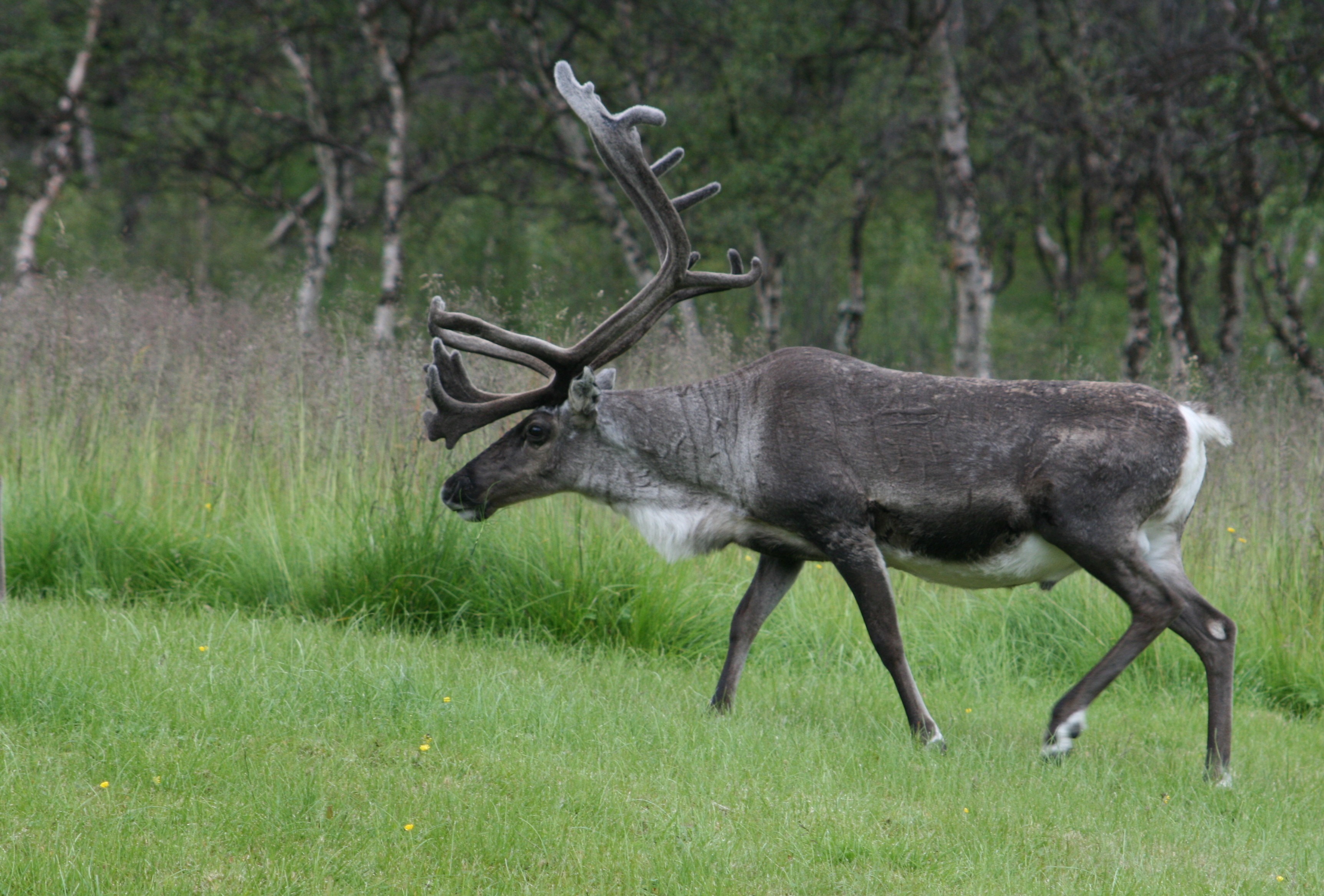
The North American version of the reindeer — both sexes grow antlers (unique among deer). Vast herds undertake some of the longest land migrations on Earth, traveling 3,000+ miles annually between calving grounds and winter range.
§ Quick facts
§ Encyclopedia
The reindeer or caribou is a species of deer with circumpolar distribution, native to Arctic, subarctic, tundra, boreal, and mountainous regions of Northern Europe, Siberia, and North America. It is the only representative of the genus Rangifer. More recent studies suggest the splitting of reindeer and caribou. "All caribou and reindeer throughout the world are considered to be the same species, but there are 7 subspecies."
Source: Wikipedia — Reindeer Licensed under CC BY-SA 4.0
§ Identification
Field marks. Medium-sized deer with broad muzzle, large hooves, and white throat and tail. Coat ranges from white to deep brown.
Similar species. Mule Deer and Elk (no antlers in females; different ecology). Moose (much larger, palmate antlers).
Voice. Grunts, clicks (from leg tendons rolling over bones — like castanets), bellows during rut.
§ Diet & behavior
Diet. Lichens (winter primary food), grasses, sedges, willows, mushrooms.
Behavior. Forms migratory herds of thousands. Both sexes grow antlers (unique among deer). Annually migrates 1,200–3,000 miles between calving and wintering grounds — among the longest mammal migrations on Earth.
§ Range
Canada, Alaska, historically northern US (now extirpated from lower 48)
§ Habitat
Tundra, boreal forest, mountain woodland
§ Threats
Resource extraction (oil, gas, mining) disrupting migration corridors, wolves following moose into caribou range, climate change.
§ Conservation status
According to the IUCN Red List, the caribou is currently classified as Vulnerable.
§ What helps
Support boreal forest conservation. Donate to Caribou Conservation Alliance. Oppose Arctic drilling.
§ Further reading
- Wikipedia — Reindeer
- www.fws.gov — authoritative profile of Rangifer tarandus
- IUCN Red List · taxon 29742
- iNaturalist · taxon 42233
- GBIF occurrence records
- Encyclopedia of Life — Rangifer tarandus
§ Sources cited
- USFWS Woodland Caribou Recovery
- Caribou Conservation Alliance
- Hinterland Who's Who
- IUCN Red List 2016


