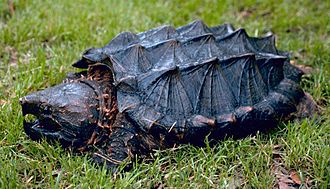
A massive anole — up to 19 inches — introduced to South Florida and now widespread. Displaces native green anoles and is occasionally seen eating other lizards, birds, and even small mammals.
§ Quick facts
§ Encyclopedia
The knight anole is the largest species of anole in the Dactyloidae family. Other common names include Cuban knight anole or Cuban giant anole, highlighting its native country, but it has also been introduced to Florida. In its native Cuba, this large anole is called chipojo or chupacocote.
Source: Wikipedia — Knight anole Licensed under CC BY-SA 4.0
§ Identification
Field marks. Large green lizard with yellow lateral stripe and large head; bright dewlap (throat fan) in males.
Similar species. Native Green Anole (smaller). Brown Anole (introduced; smaller).
Voice. N/A (visual displays).
§ Diet & behavior
Diet. Insects, smaller anoles, occasional small vertebrates.
Behavior. Native to Cuba; introduced to South Florida via pet trade. Largest anole in Florida; outcompetes native green anoles and small native lizards.
§ Range
Native to Cuba; established in southern Florida
§ Habitat
Trees, parks, urban areas in southern Florida
§ Threats
In native Cuba: habitat loss. In Florida: they're the threat to native fauna.
§ Conservation status
According to the IUCN Red List, the cuban knight anole is currently classified as Least Concern.
§ What helps
In Florida: report sightings to invasive species programs. Don't release pet anoles.
§ Further reading
- Wikipedia — Knight anole
- www.nwf.org — authoritative profile of Anolis equestris
- IUCN Red List · taxon 178243
- iNaturalist · taxon 36504
- GBIF occurrence records
- Encyclopedia of Life — Anolis equestris
§ Sources cited
- Florida FWC
- USGS Nonindigenous Aquatic Species
- IUCN Red List 2010