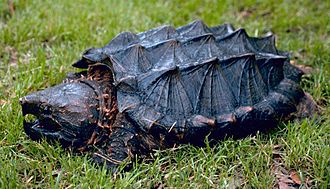
A pale gray-tan lizard with a rounded snout and dark-banded tail. Among the most heat-tolerant North American lizards, active at body temperatures over 110°F when most lizards have retreated to shade.
§ Quick facts
§ Encyclopedia
The desert iguana is an iguana species found in the Sonoran and Mojave Deserts of the Southwestern United States and northwestern Mexico, as well as on several Gulf of California islands.
Source: Wikipedia — Desert iguana Licensed under CC BY-SA 4.0
§ Identification
Field marks. Pale gray-tan body with dark-banded tail; rounded snout.
Similar species. Other lizards in same habitat. Chuckwalla (larger, stocker).
Voice. N/A
§ Diet & behavior
Diet. Insects, flowers, fruits, plant matter.
Behavior. Diurnal; among most heat-tolerant of US lizards.
§ Range
Mojave and Sonoran deserts
§ Habitat
Sandy desert flats, creosote scrub, dune fields
§ Threats
Habitat loss to development and solar energy, off-road vehicle traffic, climate-driven range shifts.
§ Conservation status
According to the IUCN Red List, the desert iguana is currently classified as Least Concern.
§ What helps
Support desert protection. Don't drive off-road. Plant native creosote in desert landscaping.
§ Further reading
- Wikipedia — Desert iguana
- www.nwf.org — authoritative profile of Dipsosaurus dorsalis
- IUCN Red List · taxon 64038
- iNaturalist · taxon 32383
- GBIF occurrence records
- Encyclopedia of Life — Dipsosaurus dorsalis
§ Sources cited
- Mojave Desert Land Trust
- iNaturalist
- IUCN Red List 2007