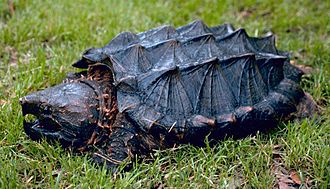
A specialized salt-marsh turtle with concentric "diamond" patterns on each shell scute. Once harvested for soup to near-extinction, they remain threatened by crab traps and shoreline development.
§ Quick facts
§ Encyclopedia
The diamondback terrapin or simply terrapin is a species of terrapin native to the brackish coastal tidal marshes of the East Coast of the United States and the Gulf of Mexico coast, as well as in Bermuda. It belongs to the monotypic genus Malaclemys. It has one of the largest ranges of all turtles in North America, stretching as far south as the Florida Keys and as far north as Cape Cod.
Source: Wikipedia — Diamondback terrapin Licensed under CC BY-SA 4.0
§ Identification
Field marks. Distinctive diamond-pattern shell; gray-brown coloration; small head.
Similar species. Other turtle species. Map Turtles (different ranges).
Voice. Hisses defensively.
§ Diet & behavior
Diet. Omnivorous: insects, fish, plants.
Behavior. Brackish water specialist. Among very few US turtles that live in salt marshes.
§ Range
Atlantic and Gulf coasts from Cape Cod to Texas
§ Habitat
Coastal salt marshes and estuaries — the only US turtle adapted to brackish water
§ Threats
Crab pot drowning (a major mortality source), loss of marsh edge to sea-level rise, road mortality on coastal causeways.
§ Conservation status
According to the IUCN Red List, the diamondback terrapin is currently classified as Vulnerable.
§ What helps
Support BRDs (bycatch reduction devices) in crab traps. Maintain coastal marsh buffer zones. Drive carefully on causeway roads in nesting season.
§ Further reading
- Wikipedia — Diamondback terrapin
- www.nwf.org — authoritative profile of Malaclemys terrapin
- IUCN Red List · taxon 12695
- iNaturalist · taxon 39860
- GBIF occurrence records
- Encyclopedia of Life — Malaclemys terrapin
§ Sources cited
- USFWS
- iNaturalist
- IUCN Red List 2010