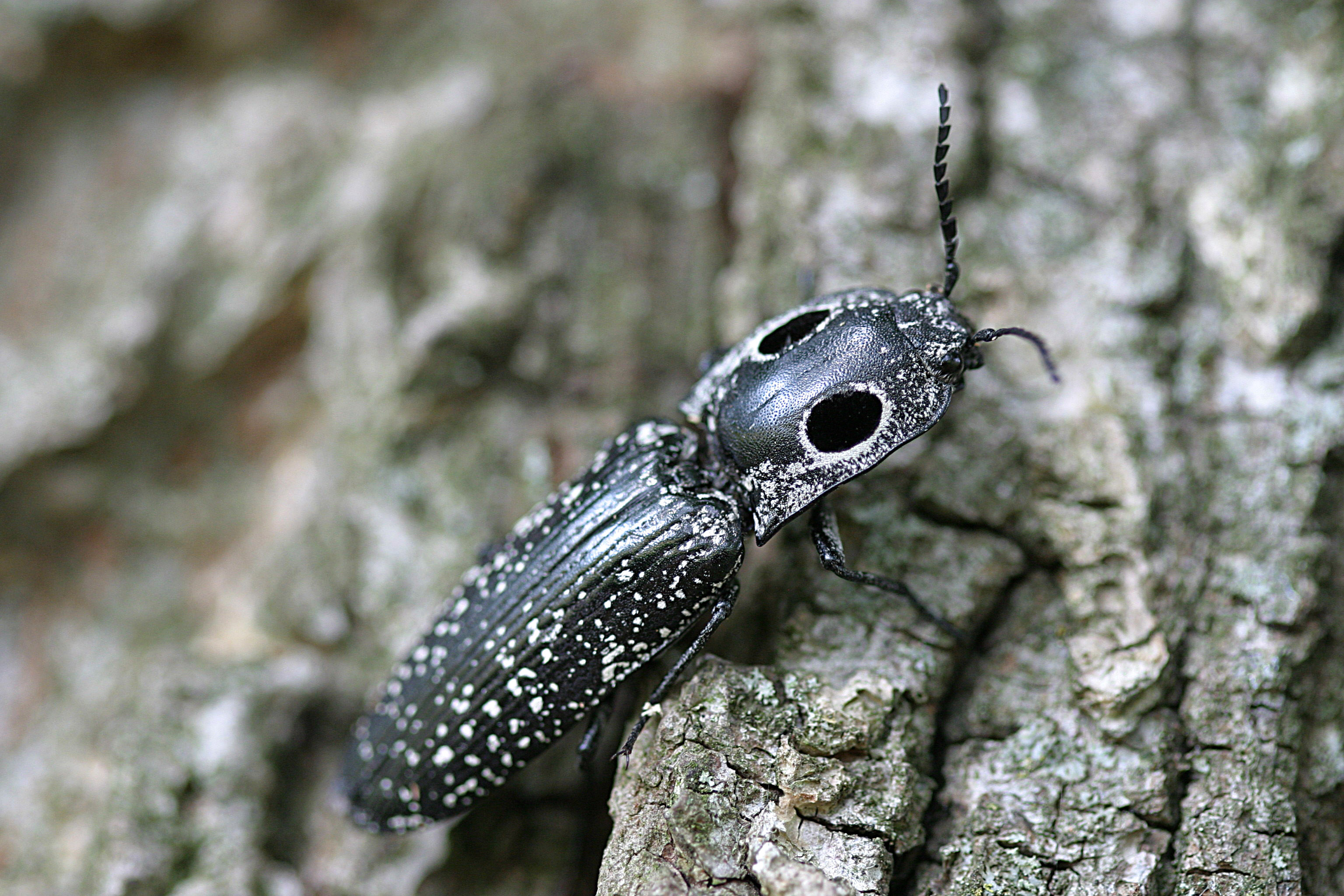
A spectacular black-and-white click beetle with two large prominent eyespots on the pronotum. Among the most photogenic North American beetles.
§ Quick facts
§ Encyclopedia
Alaus oculatus, commonly called the eastern eyed click beetle or eyed elater, is a species of click beetle.
Source: Wikipedia — Alaus oculatus Licensed under CC BY-SA 4.0
§ Identification
Field marks. Medium-large flat black beetle with two large striking white-edged eyespots on the thorax; distinctive elongated body shape; loud click mechanism on underside.
Similar species. Other click beetle species (different patterns; smaller). Other beetles with eyespots (rare; different families).
Voice. Loud audible "click" when escaping or righting itself.
§ Diet & behavior
Diet. Adults: nectar, pollen, sap, leaves. Larvae ("wireworms"): wood-decomposing fungi, occasional insect larvae.
Behavior. Among the most distinctive North American beetles. Famous "eyespot" pattern (large false eyes on thorax) likely deters predators by mimicking a much larger animal. When threatened, can "click" by snapping a specialized spine; the mechanism flips the beetle into the air (up to 25 cm high), startling predators and giving an escape route. Larvae live in rotted hardwood, feeding on wood-decay fungi and helping decompose forest debris.
§ Range
Eastern US
§ Habitat
Mature deciduous forests
§ Threats
Forest loss, removal of dead wood from forests.
§ Conservation status
According to the IUCN Red List, the eastern eyed click beetle is currently classified as Least Concern.
§ What helps
Leave dead wood in forests. Maintain mature woodlands.
§ Further reading
- Wikipedia — Alaus oculatus
- www.nwf.org — authoritative profile of Alaus oculatus
- iNaturalist · taxon 49284
- IUCN Red List — search for Alaus oculatus
- GBIF occurrence records
- Encyclopedia of Life — Alaus oculatus
§ Sources cited
- BugGuide
- University of Florida IFAS Extension
- iNaturalist


