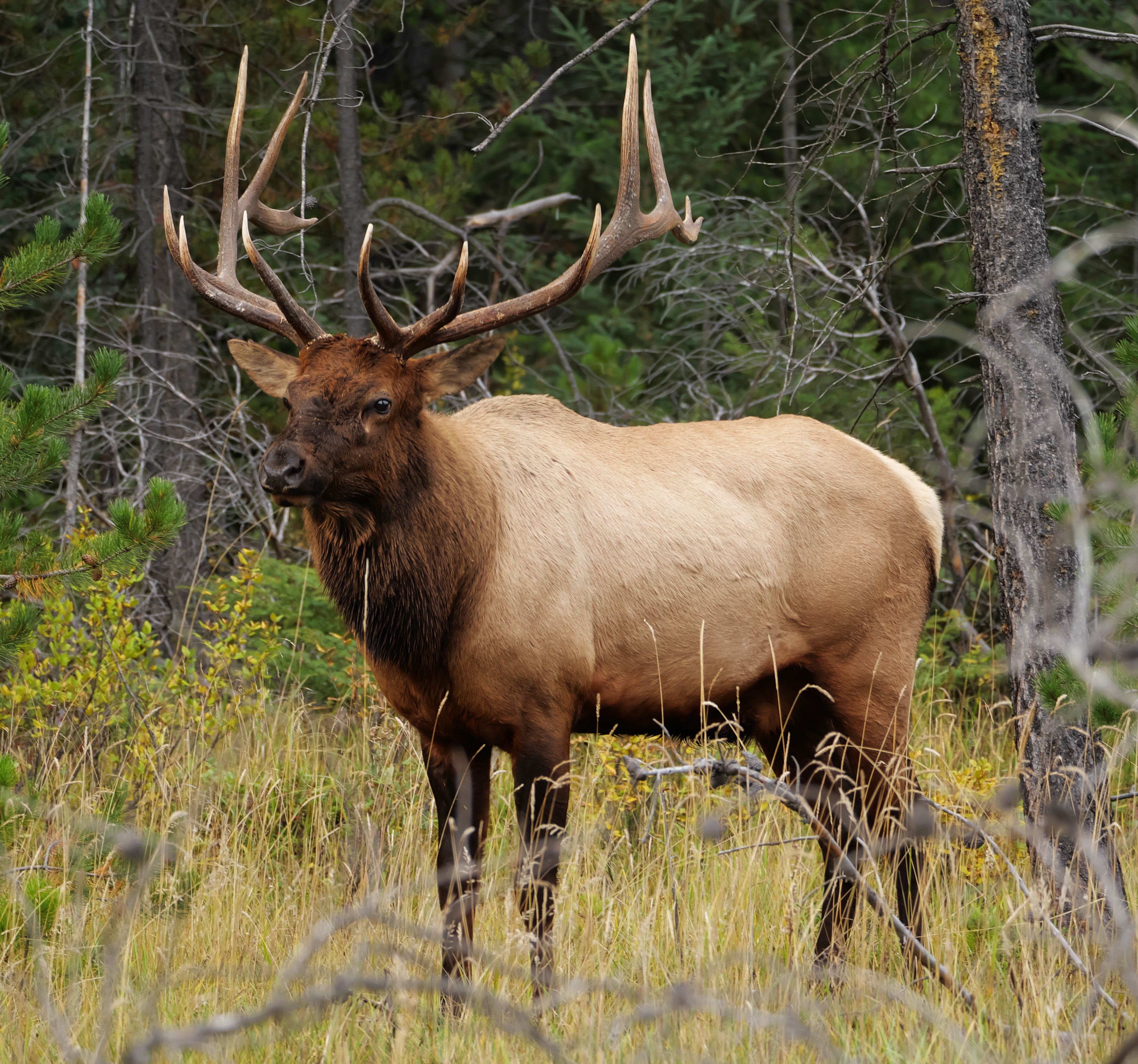
The "wapiti" of North America — second-largest deer species after moose. Elk were extirpated from most of the eastern US by 1900 but have been successfully restored to states like Pennsylvania, Kentucky, and Tennessee.
§ Quick facts
§ Encyclopedia
The elk or wapiti is the second largest species within the deer family, Cervidae, and one of the largest terrestrial mammals in its native range of North America and Central and East Asia. The word "elk" originally referred to the European variety of the moose, Alces alces, but was transferred to Cervus canadensis by North American colonists.
Source: Wikipedia — Elk Licensed under CC BY-SA 4.0
§ Identification
Field marks. Large light brown deer with darker brown neck and legs; pale rump patch; massive branching antlers on bulls (shed and regrown annually).
Similar species. Moose (much larger, palmate antlers, no pale rump). Red Deer (Old World; nearly identical, was once considered the same species). White-tailed and Mule Deer (much smaller).
Voice. Famous bull "bugle" during rut; cows bark when alarmed.
§ Diet & behavior
Diet. Grasses, forbs, sedges in summer; shrubs and woody browse in winter. Adult eats ~9 kg (20 lb) of forage per day.
Behavior. Second-largest deer in North America (after moose). Historically across most of US; extirpated from the East by 1900, surviving only in remote western mountains. Successful reintroductions have established populations in MI, WI, KY, TN, NC, PA, and elsewhere. Distinctive "bugling" calls of bull elk during fall rut — eerie ascending whistle followed by deep grunting — among the most evocative sounds in western wilderness.
§ Range
Western US, parts of the Midwest and East via reintroductions
§ Habitat
Open forests, mountain meadows, river bottoms, sagebrush
§ Threats
Chronic wasting disease, vehicle strikes, brucellosis in feeding-ground populations, habitat fragmentation.
§ Conservation status
According to the IUCN Red List, the elk is currently classified as Least Concern.
§ What helps
Support disease research. Report sick elk to state wildlife agencies. Drive carefully in elk country at dawn/dusk.
§ Further reading
- Wikipedia — Elk
- www.nwf.org — authoritative profile of Cervus canadensis
- IUCN Red List · taxon 55997823
- iNaturalist · taxon 42220
- GBIF occurrence records
- Encyclopedia of Life — Cervus canadensis
§ Sources cited
- Rocky Mountain Elk Foundation
- National Park Service
- IUCN Red List 2018


