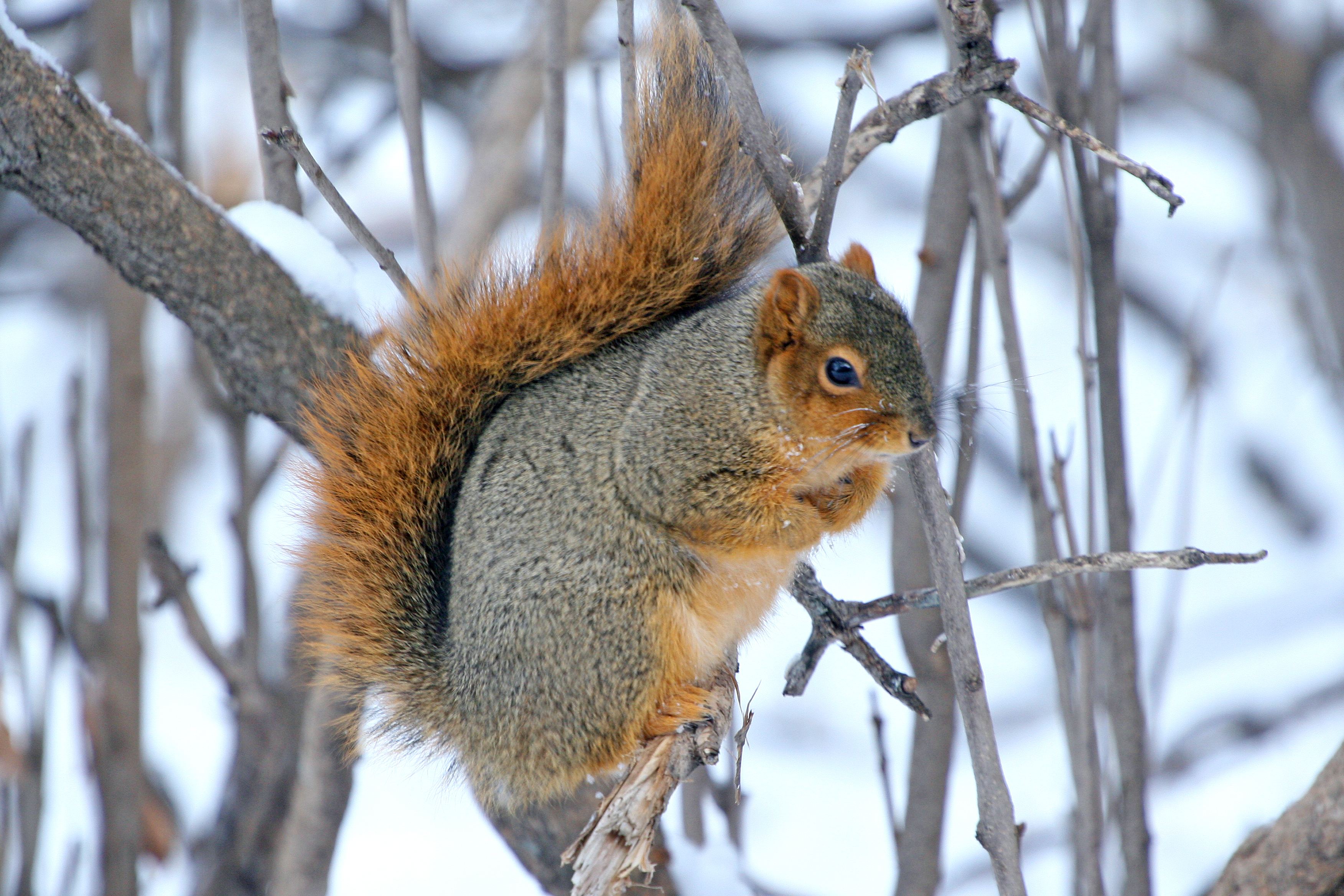
The largest tree squirrel in North America — body up to 30 inches including tail. Color ranges from bright rusty-orange (Midwest) to silver-gray with black masks (southeast). The state mammal of nothing yet — but they're unmistakable.
§ Quick facts
§ Encyclopedia
The fox squirrel, also known as the eastern fox squirrel or Bryant's fox squirrel, is the largest species of tree squirrel native to North America. It is sometimes mistaken for the American red squirrel or eastern gray squirrel in areas where the species coexist, though they differ in size and coloration.The word Sciurus came from the ancient Greek words, ‘skia’ meaning shade and ‘oura’ meaning tail. Niger refers to the black coloration.
Source: Wikipedia — Fox squirrel Licensed under CC BY-SA 4.0
§ Identification
Field marks. Large tree squirrel with reddish-orange belly (most populations); long bushy tail (often blackish at base, orange at tip). Geographic color variation extreme.
Similar species. Eastern Gray Squirrel (smaller, gray with white belly). Red Squirrel (much smaller, rusty back, white belly).
Voice. Slower chuck-chuck calls; quieter than red squirrels.
§ Diet & behavior
Diet. Acorns, hickory nuts, walnuts, pecans, beech nuts (caches thousands each fall); tree buds, fruits, fungi, occasional bird eggs and nestlings.
Behavior. Largest tree squirrel in North America. Color varies dramatically across range — most populations brick-red with orange belly; southeastern populations black with white face and ears ("Sherman's" fox squirrel); midwestern populations gray with orange belly. Delmarva Peninsula subspecies was federally listed (delisted 2015 after recovery). Less arboreal than gray squirrels — spends more time foraging on ground in mature open woodlands.
§ Range
Eastern and central US into southern Canada
§ Habitat
Open deciduous forests, oak savannas, parks
§ Threats
Loss of mature oak-hickory forest, urban habitat loss, vehicle strikes.
§ Conservation status
According to the IUCN Red List, the fox squirrel is currently classified as Least Concern.
§ What helps
Maintain mature oak forests. Plant large hardwoods in yards. Drive slowly in squirrel country.
§ Further reading
- Wikipedia — Fox squirrel
- www.nwf.org — authoritative profile of Sciurus niger
- IUCN Red List · taxon 20557
- iNaturalist · taxon 46028
- GBIF occurrence records
- Encyclopedia of Life — Sciurus niger
§ Sources cited
- American Society of Mammalogists
- USFWS Delmarva Fox Squirrel Recovery
- IUCN Red List 2016


