A keystone species: their burrows up to 40 feet long shelter over 350 other species including snakes, frogs, mice, and burrowing owls.
§ Quick facts
§ Encyclopedia
The gopher tortoise is a species of tortoise in the family Testudinidae. The species is native to the Southeastern United States. The gopher tortoise is seen as a keystone species because it digs burrows that provide shelter for at least 360 other animal species. G. polyphemus is threatened by predation and habitat destruction. The IUCN Red List of Threatened Species lists the gopher tortoise as "vulnerable", primarily because of habitat fragmentation and loss, and human exploitation; the animals are considered threatened in some states, while they are endangered in others.
Source: Wikipedia — Gopher tortoise Licensed under CC BY-SA 4.0
§ Identification
Field marks. Large tan-to-brown terrestrial turtle with dome-shaped shell; broad shovel-like front legs; columnar elephant-like back legs.
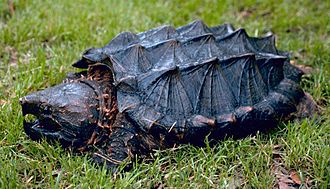
Similar species. Desert Tortoise (southwestern range, different shell shape). Eastern Box Turtle (much smaller, hinged shell). Snapping Turtle (aquatic, totally different shape).
Voice. Hisses defensively.
§ Diet & behavior
Diet. Grasses, forbs, prickly pear, gopher apple, palmetto berries, fruits.
Behavior. Keystone species of southeastern US pine flatwoods and sandhills. Digs extensive underground burrows averaging 4.5 m long and 2 m deep — over 350 other species ("burrow commensals") use abandoned and active tortoise burrows for shelter, including the federally endangered Eastern Indigo Snake, Florida mouse, and gopher frog. Listed as threatened in western range; petitioned for federal listing throughout range.
§ Range
Coastal Plain from southern South Carolina through Florida to Louisiana
§ Habitat
Sandy, well-drained uplands like longleaf pine sandhills
§ Threats
Habitat loss to development and fire suppression, road mortality, illegal harvesting.
§ Conservation status
According to the IUCN Red List, the gopher tortoise is currently classified as Vulnerable.
§ What helps
Support prescribed burns of longleaf pine. Never disturb a burrow. Watch for tortoises crossing roads.
§ Further reading
- Wikipedia — Gopher tortoise
- www.fws.gov — authoritative profile of Gopherus polyphemus
- IUCN Red List · taxon 9403
- iNaturalist · taxon 39808
- GBIF occurrence records
- Encyclopedia of Life — Gopherus polyphemus
§ Sources cited
- USFWS Gopher Tortoise Recovery
- Gopher Tortoise Council
- The Orianne Society
- IUCN Red List 2011