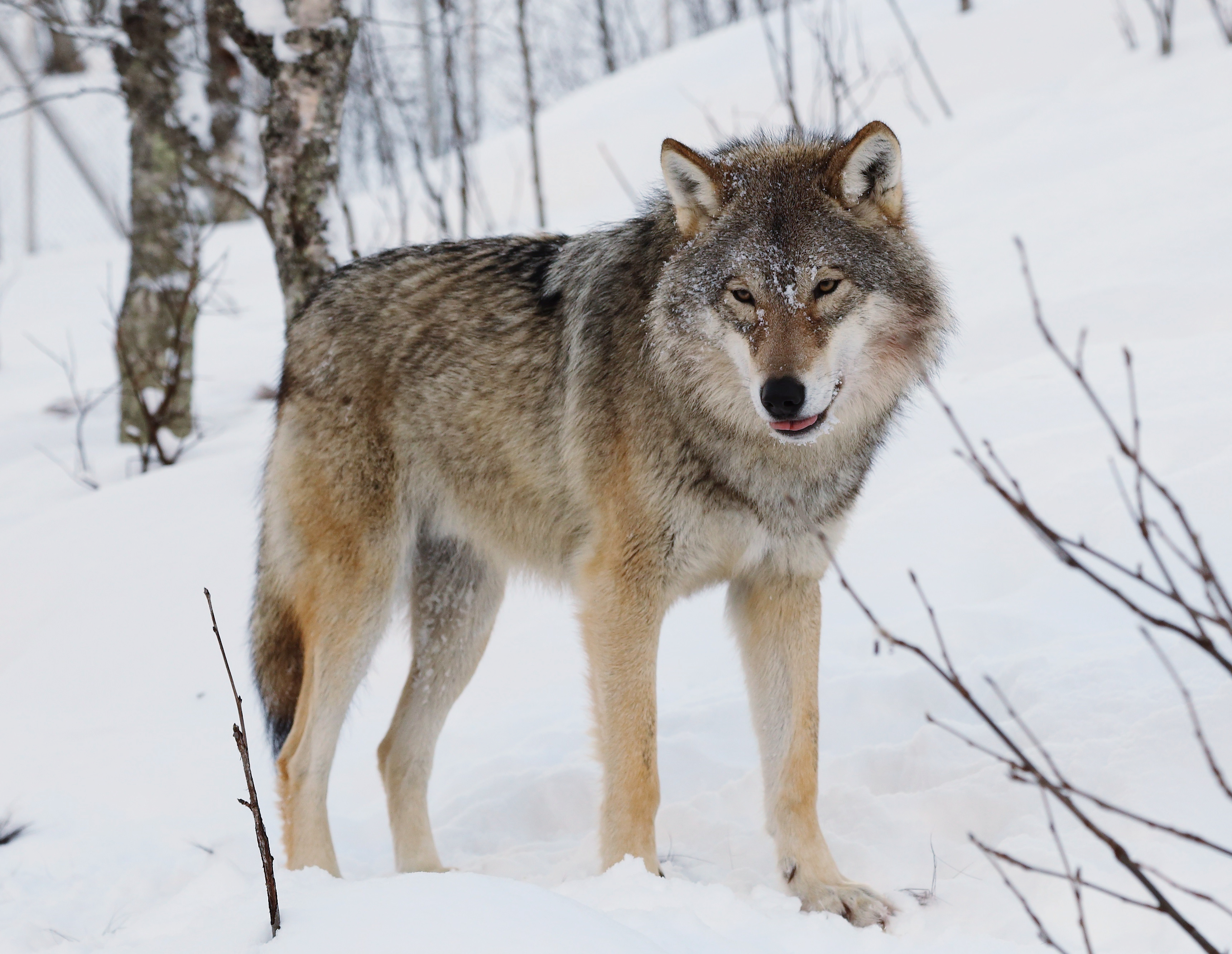
Apex predators that live in family packs of 6–10 and play a keystone role in ecosystems by regulating elk, deer, and beaver populations.
§ Quick facts
§ Encyclopedia
The wolf, also known as the grey wolf or gray wolf, is a canine native to Eurasia and North America. More than thirty subspecies of Canis lupus have been recognized, including the dog and dingo, though grey wolves, as popularly understood, include only naturally occurring wild subspecies. The wolf is the largest wild extant member of the family Canidae, and is further distinguished from other Canis species by its less pointed ears and muzzle, as well as a shorter torso and a longer tail. The wolf is nonetheless related closely enough to smaller Canis species, such as the coyote and the golden jackal, to produce fertile hybrids with them. The wolf's fur is usually mottled white, brown, grey, and black, although subspecies in the arctic region may be nearly all white.
Source: Wikipedia — Wolf Licensed under CC BY-SA 4.0
§ Identification
Field marks. Largest wild canid in North America. Long legs, large head, bushy tail held straight (not curled). Color varies from black to white; gray most common.
Similar species. Coyote (smaller, narrow muzzle, yipping). Domestic dogs can resemble wolves but with curled tails and shorter legs.
Voice. Howls, barks, growls, whines. Pack howls coordinate hunts and announce territory; audible 10+ km.
§ Diet & behavior
Diet. Primarily large ungulates: elk, deer, moose, bison. Also beaver, hare, and carrion. Take prey through coordinated pack hunting.
Behavior. Social, living in packs of 5–12 typically built around a breeding pair. Defend territories of 130–600 km². Howl to maintain pack cohesion and territorial boundaries.
§ Range
Northern Rockies, Great Lakes, Pacific NW; recovering ranges
§ Habitat
Forests, mountains, tundra, and grasslands with adequate prey
§ Threats
Habitat fragmentation, conflict with livestock owners, illegal poaching, varying state-level protections.
§ Conservation status
According to the IUCN Red List, the gray wolf is currently classified as Least Concern.
§ What helps
Support science-based wolf management. Advocate for connected habitat corridors. Fund coexistence programs.
§ Further reading
- Wikipedia — Wolf
- www.fws.gov — authoritative profile of Canis lupus
- IUCN Red List · taxon 3746
- iNaturalist · taxon 42048
- GBIF occurrence records
- Encyclopedia of Life — Canis lupus
§ Sources cited
- USFWS Gray Wolf Recovery
- International Wolf Center
- Yellowstone Wolf Project
- IUCN Red List 2018


