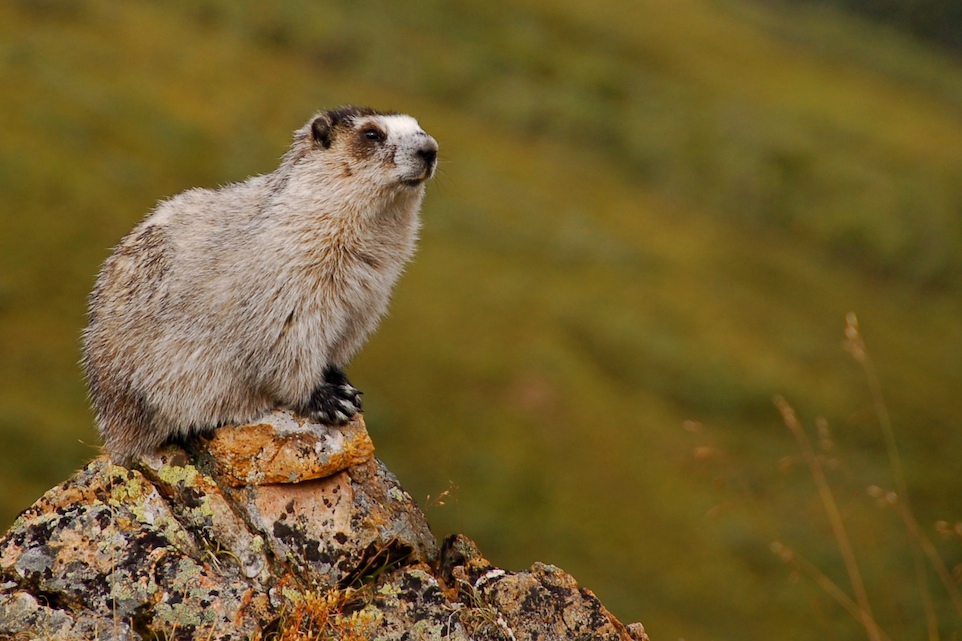
A large frosted-gray marmot of high-elevation talus. Their loud whistles echo across alpine cirques — earning them the nickname "whistler" and lending their name to Whistler, BC.
§ Quick facts
§ Encyclopedia
The hoary marmot is a species of marmot that inhabits the mountains of northwest North America. Hoary marmots live near the tree line on slopes with grasses and forbs to eat and rocky areas for cover.
Source: Wikipedia — Hoary marmot Licensed under CC BY-SA 4.0
§ Identification
Field marks. Large stocky marmot with frosted gray coat; black-tipped tail.
Similar species. Other marmots (yellow-bellied, Olympic, Vancouver Island).
Voice. Loud whistles, especially as alarm calls.
§ Diet & behavior
Diet. Grasses, sedges, flowers, occasional insects.
Behavior. Among the largest US marmots. Hibernates 8–9 months annually. State mammal of Alaska.
§ Range
Alaska, Yukon, BC, Alberta, northern Cascades
§ Habitat
Alpine and subalpine meadows, talus slopes
§ Threats
Climate-driven alpine habitat shifts, ski-area development, increased recreational pressure.
§ Conservation status
According to the IUCN Red List, the hoary marmot is currently classified as Least Concern.
§ What helps
Support alpine wilderness protection. Stay on trails to avoid disturbing burrows. Support climate action.
§ Further reading
- Wikipedia — Hoary marmot
- www.nwf.org — authoritative profile of Marmota caligata
- IUCN Red List · taxon 12826
- iNaturalist · taxon 46035
- GBIF occurrence records
- Encyclopedia of Life — Marmota caligata
§ Sources cited
- Alaska Department of Fish and Game
- American Society of Mammalogists
- IUCN Red List 2016


