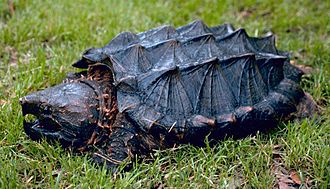
A small desert rattlesnake that moves in a unique sideways "sidewinding" motion. Body makes an S-curve while only two points touch the ground at any moment.
§ Quick facts
§ Encyclopedia
Crotalus cerastes, also known commonly as the horned rattlesnake, the sidewinder, and the sidewinder rattlesnake, is a species of pit viper, a venomous snake in the subfamily Crotalinae of the family Viperidae. The species is native to desert regions of the Southwestern United States and adjacent northwestern Mexico. Three subspecies are recognized as being valid.
Source: Wikipedia — Crotalus cerastes Licensed under CC BY-SA 4.0
§ Identification
Field marks. Small to medium rattlesnake with broad triangular head and small "horn" scales over each eye; sandy gray to tan body with darker markings.
Similar species. Other small desert rattlesnakes. Mojave Rattlesnake (larger; no horns).
Voice. Loud rattling buzz.
§ Diet & behavior
Diet. Small mammals (rodents), lizards.
Behavior. Famous "sidewinding" movement — coils body in S-shape and only two points touch hot desert sand at any time, allowing high-speed movement across loose sand surfaces. Specialized "horn" scales over eyes shade the eyes during sidewinding. Venomous; bites painful but rarely fatal.
§ Range
Mojave and Sonoran Deserts
§ Habitat
Sandy desert habitats
§ Threats
Habitat loss, off-road vehicle damage.
§ Conservation status
According to the IUCN Red List, the sidewinder rattlesnake is currently classified as Least Concern.
§ What helps
Support desert conservation. Stay on designated roads.
§ Further reading
- Wikipedia — Crotalus cerastes
- www.nwf.org — authoritative profile of Crotalus cerastes
- IUCN Red List · taxon 64322
- iNaturalist · taxon 30750
- GBIF occurrence records
- Encyclopedia of Life — Crotalus cerastes
§ Sources cited
- Arizona Game and Fish
- The Orianne Society
- IUCN Red List 2007