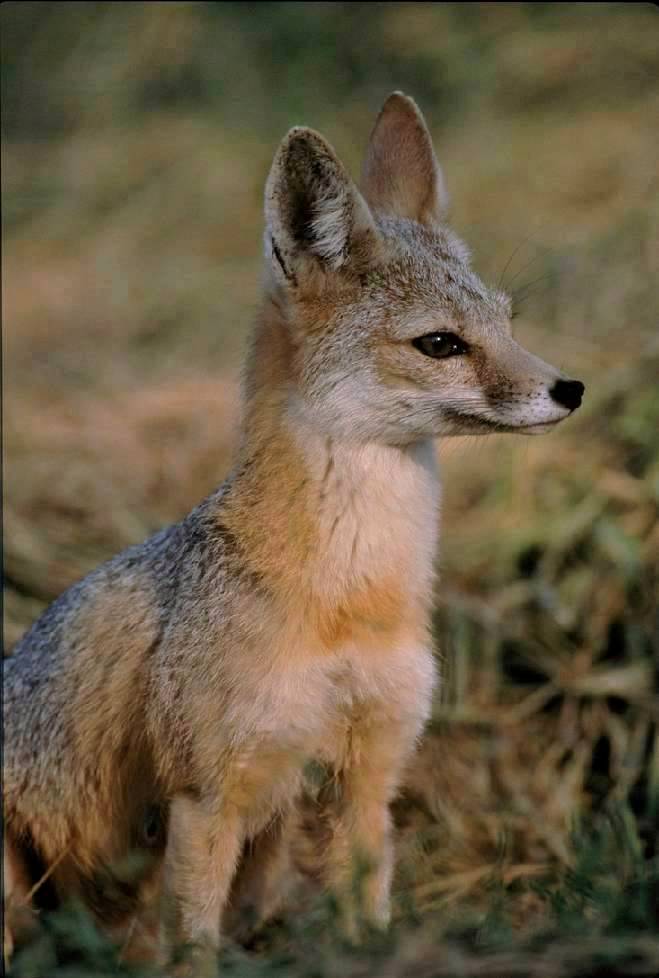
A tiny pale fox of the desert with oversized ears for heat dissipation and acute hearing. Kit foxes spend their days in cool burrows and emerge at dusk to hunt kangaroo rats and lizards.
§ Quick facts
§ Encyclopedia
The kit fox is a fox species that inhabits arid and semi-arid regions of the Southwestern United States and northern and central Mexico. These foxes are the smallest of the four species of Vulpes occurring in North America and are among the smallest of the vulpines worldwide. It has also been called a North American counterpart of the fennec fox due to its large ears.
Source: Wikipedia — Kit fox Licensed under CC BY-SA 4.0
§ Identification
Field marks. Small slender fox with massive ears for heat dissipation; pale gray-tan coat; black-tipped tail.
Similar species. Swift Fox (similar; different range edge). Red Fox (much larger).
Voice. Barks; yips.
§ Diet & behavior
Diet. Small mammals (kangaroo rats, mice), reptiles, insects.
Behavior. Smallest North American fox. Federally endangered San Joaquin subspecies.
§ Range
Desert southwest US and northern Mexico
§ Habitat
Desert grasslands, scrub, alkali sinks
§ Threats
Habitat conversion to row crops and solar energy, secondary rodenticide poisoning, vehicle strikes.
§ Conservation status
According to the IUCN Red List, the kit fox is currently classified as Least Concern.
§ What helps
Support careful solar siting outside kit fox range. Skip rodenticides. Slow down on rural desert roads.
§ Further reading
- Wikipedia — Kit fox
- www.fws.gov — authoritative profile of Vulpes macrotis
- IUCN Red List · taxon 41587
- iNaturalist · taxon 42064
- GBIF occurrence records
- Encyclopedia of Life — Vulpes macrotis
§ Sources cited
- USFWS San Joaquin Kit Fox Recovery
- IUCN Red List 2016


