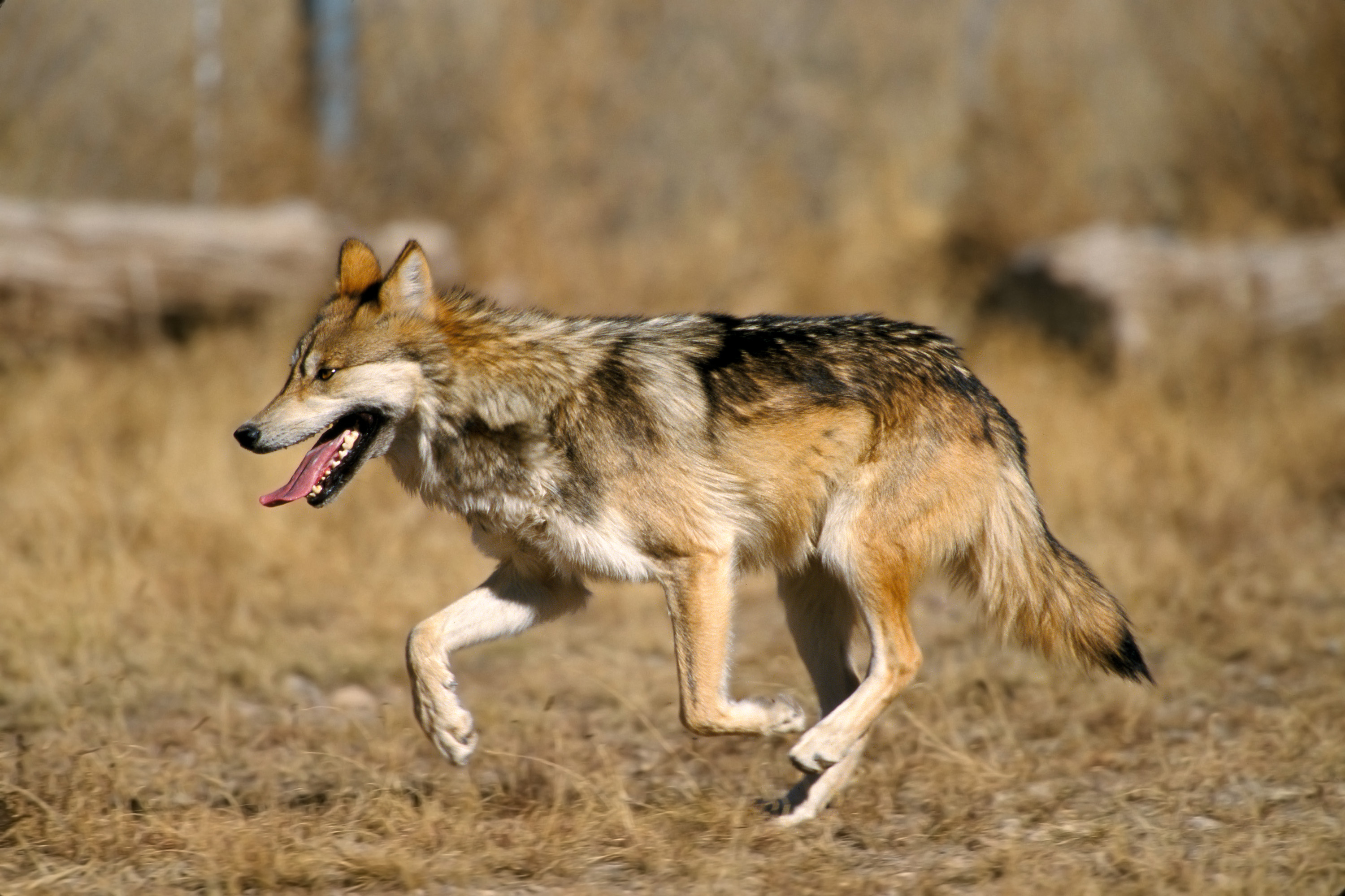
A small subspecies of gray wolf — among the most genetically distinct gray wolves. Extinct in the wild by 1980; brought back via captive breeding.
§ Quick facts
§ Encyclopedia
The Mexican wolf, also known as the lobo mexicano is a subspecies of gray wolf native to eastern and southeastern Arizona and western and southern New Mexico and fragmented areas of northern Mexico. Historically, the subspecies ranged from Southern California south into Baja California, east through the Sonora and Chihuahua Deserts and into West Texas.
Source: Wikipedia — Mexican wolf Licensed under CC BY-SA 4.0
§ Identification
Field marks. Small gray wolf with buff, gray, and rust mottling; relatively short ears; long legs.
Similar species. Coyote (much smaller, narrow muzzle). Other gray wolf subspecies (larger, different colors).
Voice. Howls, whines, barks similar to other gray wolves but generally higher-pitched.
§ Diet & behavior
Diet. Elk, mule deer, smaller mammals, livestock (a source of conflict).
Behavior. El Lobo — the smallest, most genetically distinct gray wolf subspecies. Extinct in the wild by 1980; brought back from just seven founders in a captive-breeding program. As of 2024, the wild population in Arizona/New Mexico exceeds 240 individuals — the result of one of the most intensive carnivore recovery efforts in US history. Genetic management is critical due to the small founder population.
§ Range
Southwest US, northern Mexico
§ Habitat
Mountain forests, oak-juniper woodlands
§ Threats
Habitat fragmentation, illegal killing, lack of public acceptance.
§ Conservation status
According to the IUCN Red List, the mexican wolf is currently classified as Endangered.
§ What helps
Support Mexican wolf recovery. Donate to Defenders of Wildlife or USFWS.
§ Further reading
- Wikipedia — Mexican wolf
- www.fws.gov — authoritative profile of Canis lupus baileyi
- IUCN Red List · taxon 3746
- iNaturalist · taxon 42048
- GBIF occurrence records
- Encyclopedia of Life — Canis lupus baileyi
§ Sources cited
- USFWS Mexican Wolf Recovery
- Mexican Wolf Interagency Field Team
- Defenders of Wildlife
- IUCN Red List 2018


