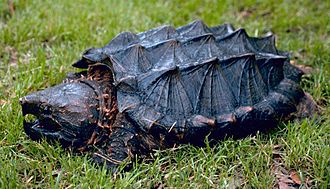
A small nocturnal gecko endemic to southwestern deserts. Among the smallest native US lizards.
§ Quick facts
§ Encyclopedia
The western banded gecko is a species of lizard in the family Eublepharidae. The species is native to the southwestern United States and adjacent northwestern Mexico. Five subspecies are recognized.
Source: Wikipedia — Western banded gecko Licensed under CC BY-SA 4.0
§ Identification
Field marks. Small slender lizard with translucent pink-tan skin and brown bands across body; large dark eyes with vertical pupils; thin tail with banded pattern (or regenerated as a thick, less-patterned blob).
Similar species. Other Coleonyx geckos (different ranges/patterns). Introduced Mediterranean Gecko (no eyelids, urban-associated).
Voice. High-pitched squeaks when handled.
§ Diet & behavior
Diet. Small insects (crickets, ants, termites), spiders, scorpions, occasional small lizards.
Behavior. Nocturnal; spends days under rocks, in rodent burrows, or in crevices. One of the few US geckos with movable eyelids (most geckos lack them and lick their eyes clean instead). Tail readily breaks off (autotomy) as escape mechanism; regrows shorter and less ornately patterned. Often vocalizes when handled — unusual among lizards.
§ Range
Southwestern US deserts
§ Habitat
Rocky desert habitats
§ Threats
Habitat loss, climate change.
§ Conservation status
According to the IUCN Red List, the banded gecko is currently classified as Least Concern.
§ What helps
Support southwestern desert conservation.
§ Further reading
- Wikipedia — Western banded gecko
- www.nwf.org — authoritative profile of Coleonyx variegatus
- IUCN Red List · taxon 63689
- iNaturalist · taxon 36465
- GBIF occurrence records
- Encyclopedia of Life — Coleonyx variegatus
§ Sources cited
- Arizona Game and Fish Department
- California Herps
- iNaturalist
- IUCN Red List 2007