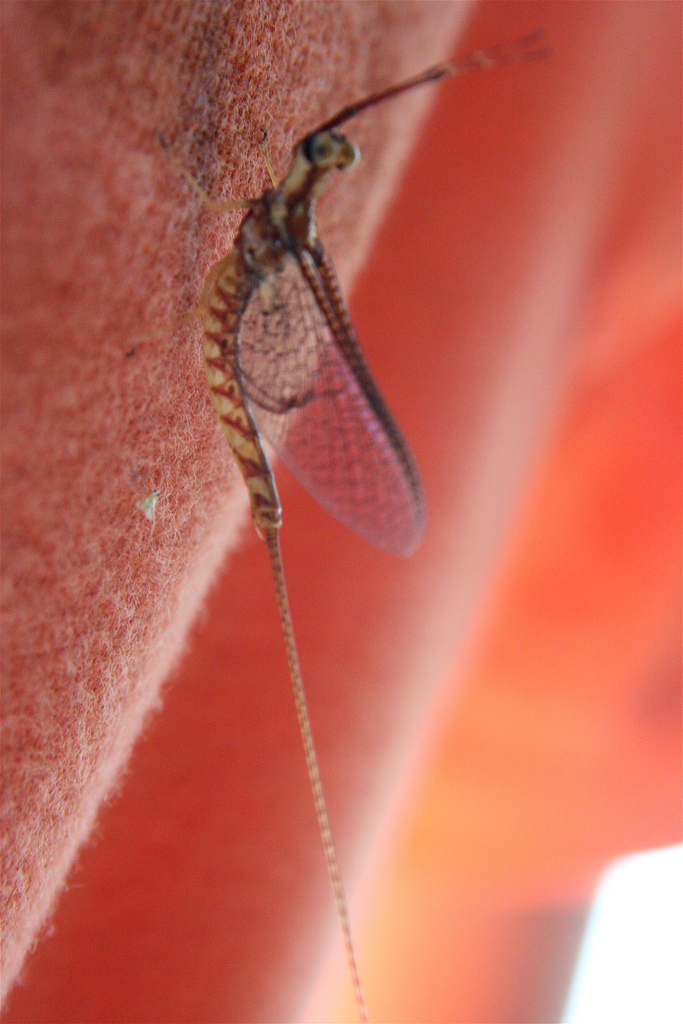
A medium-sized mayfly that emerges in spectacular synchronized swarms from the Great Lakes and Mississippi River — sometimes dense enough to show up on weather radar.
§ Quick facts
§ Encyclopedia
Hexagenia limbata, the giant mayfly, is a species of mayfly in the family Ephemeridae. It is native to North America where it is distributed widely near lakes and slow-moving rivers. The larvae, known as nymphs, are aquatic and burrow in mud and the adult insects have brief lives. They are often referred to as fish flies around the Great Lakes as they tend to cause the areas around water to smell like rotten fish.
Source: Wikipedia — Hexagenia limbata Licensed under CC BY-SA 4.0
§ Identification
Field marks. Large mayfly with yellowish body and translucent wings; long pair of "tails" (cerci) extending behind the body; nymphs with prominent burrow-digging legs and feathery gills.
Similar species. Other Ephemera species (different patterns). Other mayfly families (different sizes, shapes).
Voice. N/A
§ Diet & behavior
Diet. Adults: do not feed. Larvae: detritus, algae filtered from stream and lake bottom sediments.
Behavior. Among the largest mayflies in North America. Famous synchronized emergences ("hatches") on the Mississippi River, Great Lakes, and other major waterways can be so massive that they show up on weather radar — millions of mayflies emerging within hours of each other, mating in the air, then dying in piles thick enough to require snowplows on bridges. Sensitive to pollution; presence is a biological indicator of clean water.
§ Range
Northern US and Canada
§ Habitat
Clean lakes and rivers with soft mud or silt bottoms
§ Threats
Pollution destroying lake/river larvae, light pollution disorienting swarms, dam construction.
§ Conservation status
According to the IUCN Red List, the eastern burrowing mayfly is currently classified as Least Concern.
§ What helps
Support clean water laws. Reduce shoreline lighting during emergence. Tolerate swarms (they're brief).
§ Further reading
- Wikipedia — Hexagenia limbata
- www.nwf.org — authoritative profile of Hexagenia limbata
- iNaturalist · taxon 61450
- IUCN Red List — search for Hexagenia limbata
- GBIF occurrence records
- Encyclopedia of Life — Hexagenia limbata
§ Sources cited
- Aquatic Insect Ecology
- In-Fisherman Magazine
- iNaturalist


