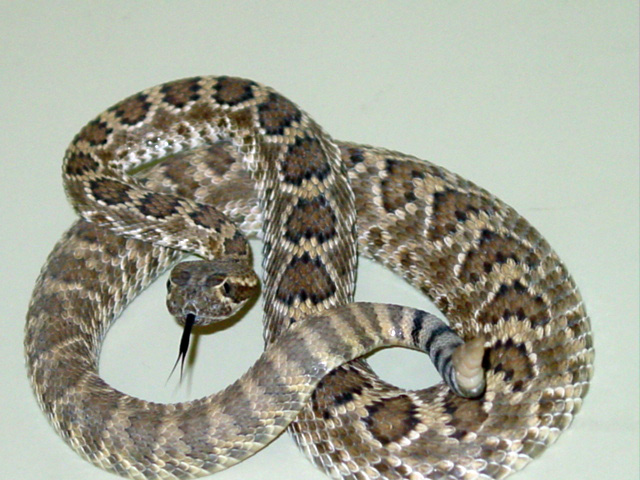
A medium-sized rattlesnake similar to western diamondback but with greener tones. Among the most venomous North American snakes — venom contains potent neurotoxins not found in most other rattlesnakes.
§ Quick facts
§ Encyclopedia
Crotalus scutulatus is species of rattlesnake, a venomous pitviper in the family Viperidae.
Source: Wikipedia — Crotalus scutulatus Licensed under CC BY-SA 4.0
§ Identification
Field marks. Medium-bodied gray-brown rattlesnake with darker diamond patterns. Often greenish tones.
Similar species. Western Diamondback (similar, different range edge). Sidewinder (much smaller, sideways movement).
Voice. Loud rattle warning.
§ Diet & behavior
Diet. Small mammals (especially rodents), birds, lizards.
Behavior. Among the most dangerous US rattlesnakes due to neurotoxic venom. Aggressive when cornered.
§ Range
Mojave and Sonoran deserts (CA, NV, UT, AZ, NM, TX, Mexico)
§ Habitat
Deserts, dry grasslands, scrub
§ Threats
Habitat loss, vehicle strikes, killing on sight, climate-driven range shifts.
§ Conservation status
According to the IUCN Red List, the mojave rattlesnake is currently classified as Least Concern.
§ What helps
Watch step on desert trails. Wear sturdy boots. Don't kill on sight — most bites are from handling.
§ Further reading
- Wikipedia — Crotalus scutulatus
- www.nwf.org — authoritative profile of Crotalus scutulatus
- IUCN Red List · taxon 64328
- iNaturalist · taxon 30750
- GBIF occurrence records
- Encyclopedia of Life — Crotalus scutulatus
§ Sources cited
- Arizona Game and Fish Department
- The Orianne Society
- iNaturalist
- IUCN Red List 2007