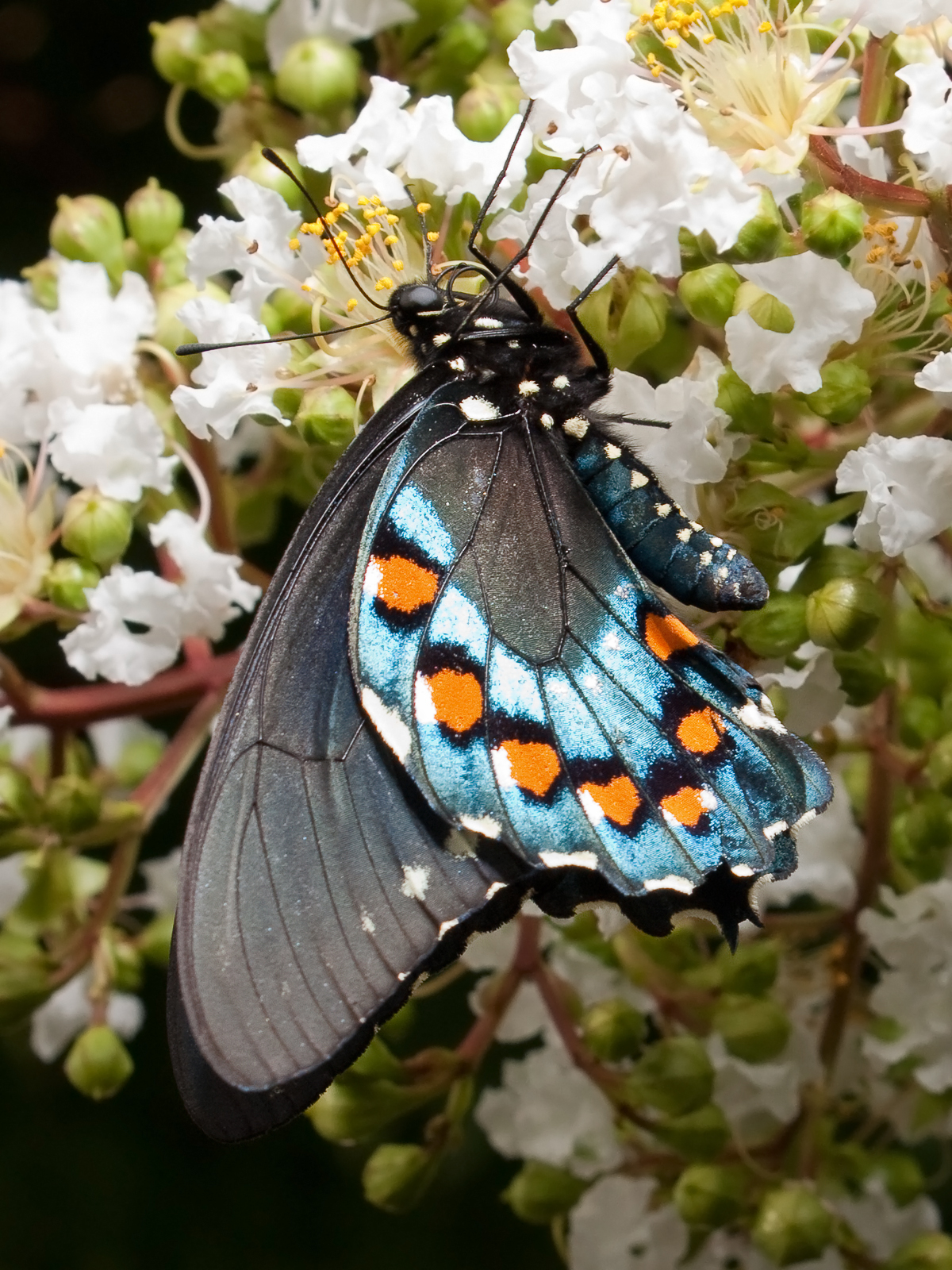
An iridescent blue-green butterfly whose toxic caterpillars feed on pipevine (Aristolochia spp.) — the toxins make adults inedible to birds. Several other species (including the dark form of female tiger swallowtail) mimic them for protection.
§ Quick facts
§ Encyclopedia
Battus philenor, the pipevine swallowtail or blue swallowtail, is a swallowtail butterfly found in North America and Central America. This butterfly is black with iridescent-blue hindwings. They are found in many different habitats, but are most commonly found in forests. Caterpillars are often black or red, and feed on compatible plants of the genus Aristolochia. They are known for sequestering acids from the plants they feed on in order to defend themselves from predators by being poisonous when consumed. The adults feed on the nectar of a variety of flowers. Some species of Aristolochia are toxic to the larvae, typically tropical varieties. While enthusiasts have led citizen efforts to conserve pipevine swallowtails in their neighborhoods on the West coast, the butterfly has not been the subject of a formal program in conservation or protected in legislation. The butterfly is however of "Special Concern" in Michigan, which is on the Northern limit of its range.
Source: Wikipedia — Battus philenor Licensed under CC BY-SA 4.0
§ Identification
Field marks. Black butterfly with iridescent blue hindwings. Pearl spots on underside.
Similar species. Black Swallowtail (yellow markings). Spicebush Swallowtail (similar look-alike).
Voice. N/A
§ Diet & behavior
Diet. Adults: nectar. Caterpillars: pipevines (toxic plants).
Behavior. Caterpillars sequester pipevine toxins. Adults are model species — many other butterflies mimic them.
§ Range
Eastern and southwestern US, parts of Mexico
§ Habitat
Open woodlands, gardens with native pipevine
§ Threats
Loss of native pipevine, garden focus on non-native plants, herbicide drift.
§ Conservation status
According to the IUCN Red List, the pipevine swallowtail is currently classified as Least Concern.
§ What helps
Plant native pipevine (Aristolochia macrophylla) as host. Skip herbicides. Support native plant nurseries.
§ Further reading
- Wikipedia — Battus philenor
- www.nwf.org — authoritative profile of Battus philenor
- iNaturalist · taxon 49274
- IUCN Red List — search for Battus philenor
- GBIF occurrence records
- Encyclopedia of Life — Battus philenor
§ Sources cited
- Butterflies and Moths of North America
- Xerces Society
- BugGuide
- iNaturalist


