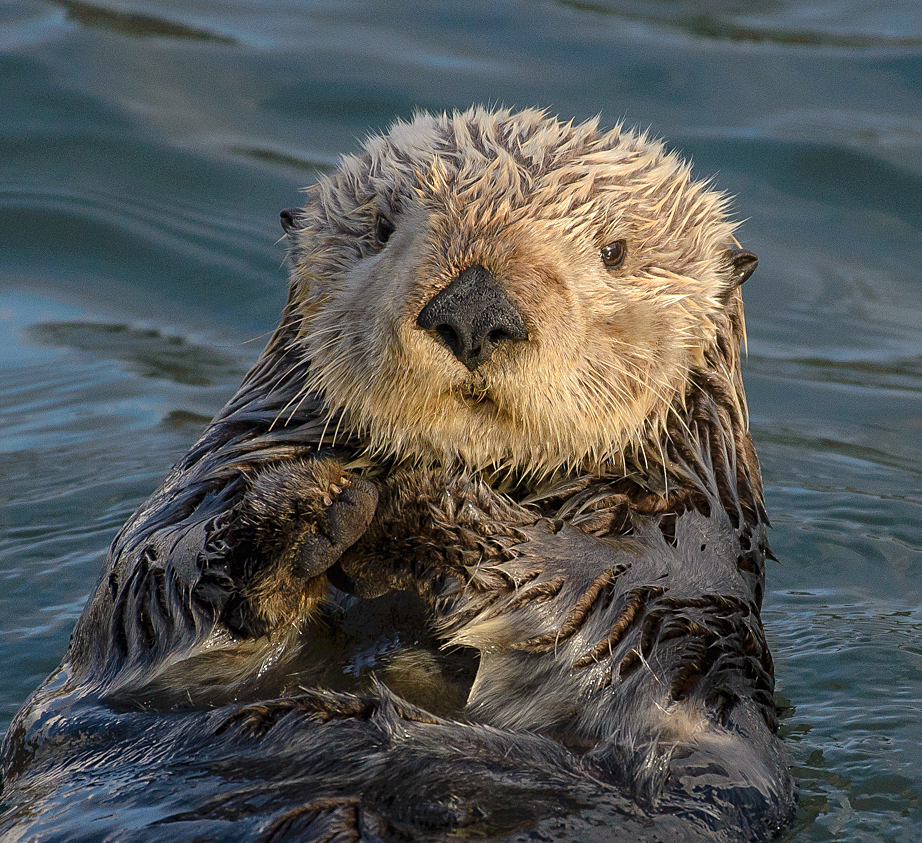
Northern subspecies of the iconic sea otter. Populations crashed dramatically in the 1990s and remain depressed — likely from killer whale predation switching due to other marine mammal declines.
§ Quick facts
§ Encyclopedia
The sea otter is a marine mammal native to the coasts of the northern and eastern North Pacific Ocean. Adult sea otters typically weigh between 14 and 45 kg (30–100 lb), making them the heaviest members of the weasel family, but among the smallest marine mammals. Unlike most marine mammals, the sea otter's primary form of insulation is an exceptionally thick coat of fur, the densest in the animal kingdom. Although it can walk on land, the sea otter is capable of living exclusively in the ocean.
Source: Wikipedia — Sea otter Licensed under CC BY-SA 4.0
§ Identification
Field marks. Medium otter with brown back, paler face; thick fur (densest mammal fur known).
Similar species. River Otter (smaller; freshwater).
Voice. Various coos and chirps.
§ Diet & behavior
Diet. Sea urchins, crabs, clams, mussels, sea stars.
Behavior. Pacific Northwest subspecies of sea otter. Federally threatened. Critical kelp forest keystone species (sea urchins eat kelp; sea otters eat sea urchins).
§ Range
Aleutian Islands, southern Alaska, BC
§ Habitat
Coastal marine waters with kelp forests
§ Threats
Killer whale predation, oil spills, climate change, kelp forest loss.
§ Conservation status
According to the IUCN Red List, the sea otter (northern subspecies) is currently classified as Endangered.
§ What helps
Support kelp forest protection. Reduce ocean plastic pollution. Donate to Aleutian conservation.
§ Further reading
- Wikipedia — Sea otter
- www.fws.gov — authoritative profile of Enhydra lutris kenyoni
- IUCN Red List · taxon 7750
- iNaturalist · taxon 41770
- GBIF occurrence records
- Encyclopedia of Life — Enhydra lutris kenyoni
§ Sources cited
- USFWS Sea Otter Recovery
- National Park Service
- IUCN Red List 2021


