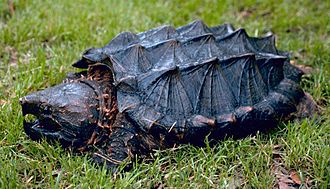
A small abundant western lizard with a dark blotch behind each foreleg. Among the most ecologically important small reptiles of western deserts — major food for snakes, hawks, and predatory mammals.
§ Quick facts
§ Encyclopedia
The common side-blotched lizard is a species of side-blotched lizard in the family Phrynosomatidae. The species is native to dry regions of the western United States and northern Mexico. It is notable for having a unique form of polymorphism wherein each of the three different male morphs utilizes a different strategy in acquiring mates. The three morphs compete against each other following a pattern of rock paper scissors, where one morph has advantages over another but is outcompeted by the third.
Source: Wikipedia — Common side-blotched lizard Licensed under CC BY-SA 4.0
§ Identification
Field marks. Small lizard with distinctive dark blotch behind front leg ("side blotch" — diagnostic); coloration variable (orange, blue, or yellow throats in males); tan to gray-brown body.
Similar species. Tree Lizard (no side blotch). Sagebrush Lizard (different throat pattern). Western Fence Lizard (larger, no side blotch).
Voice. N/A
§ Diet & behavior
Diet. Small insects (ants, beetles, flies), spiders, occasional smaller lizards.
Behavior. Among the most-studied lizards in the world — famous for "rock-paper-scissors" mating game documented by Sinervo & Lively (1996). Three male color morphs (orange, blue, yellow) follow a rock-paper-scissors dynamic: orange males beat blue (orange controls large territories, evicts blues), blue males beat yellow (blues defend small mates from sneakers), yellow males beat orange (yellow sneakers exploit orange males' large territories). Population frequencies of the morphs cycle over multiple years.
§ Range
Western US and Mexico
§ Habitat
Deserts, rocky areas, dry grasslands
§ Threats
Habitat loss to development, off-road vehicle damage, outdoor cats.
§ Conservation status
According to the IUCN Red List, the common side-blotched lizard is currently classified as Least Concern.
§ What helps
Maintain rocky desert habitats. Stay on designated trails. Keep cats indoors.
§ Further reading
- Wikipedia — Common side-blotched lizard
- www.nwf.org — authoritative profile of Uta stansburiana
- IUCN Red List · taxon 64248
- iNaturalist · taxon 36502
- GBIF occurrence records
- Encyclopedia of Life — Uta stansburiana
§ Sources cited
- Sinervo & Lively (1996, Nature)
- UC Santa Cruz Sinervo lab
- National Park Service
- IUCN Red List 2007