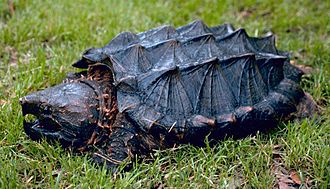
A small endangered rattlesnake of eastern wetland habitats. Federally listed since 2016.
§ Quick facts
§ Encyclopedia
Sistrurus is a genus of pit vipers in the subfamily Crotalinae of the family Viperidae. The genus is endemic to Canada, the United States, and Mexico. Its generic name is a Latinized form of the Greek word for "tail rattler" and shares its root with the ancient Egyptian musical instrument, the sistrum, a type of rattle. Three species are currently recognized.
Source: Wikipedia — Sistrurus Licensed under CC BY-SA 4.0
§ Identification
Field marks. Small gray-brown rattlesnake with dark blotches; black belly; small rattle producing distinctive insect-like buzz.
Similar species. Timber Rattlesnake (much larger, banded). Pygmy Rattlesnake (different range). Northern Water Snake (no rattle, different head shape).
Voice. Soft buzzing rattle — quieter than larger rattlesnake species.
§ Diet & behavior
Diet. Small mammals (especially voles), frogs, occasional small birds, small snakes. Ambush hunter.
Behavior. Smallest rattlesnake in eastern North America. Federally threatened (2016). Highly secretive; spends most of life in wetland habitats — wet meadows, fens, sedge marshes. Hibernates singly in crayfish burrows or muskrat lodges (vs. communal dens of most rattlesnakes). Live births of 5–20 young.
§ Range
Eastern US Great Lakes region
§ Habitat
Wet prairies, fens, sedge meadows
§ Threats
Wetland drainage, road mortality, persecution.
§ Conservation status
According to the IUCN Red List, the massasauga (eastern) is currently classified as Endangered.
§ What helps
Support wetland conservation. Don't kill snakes.
§ Further reading
- Wikipedia — Sistrurus
- www.fws.gov — authoritative profile of Sistrurus catenatus catenatus
- IUCN Red List · taxon 64339
- iNaturalist · taxon 30764
- GBIF occurrence records
- Encyclopedia of Life — Sistrurus catenatus catenatus
§ Sources cited
- USFWS Eastern Massasauga Recovery
- The Orianne Society
- Eastern Massasauga Working Group
- IUCN Red List 2016