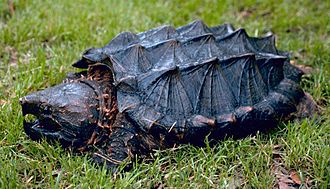
Texas's state reptile and a beloved icon — popularly called "horny toads" though they're lizards. Specialized to eat almost exclusively harvester ants. They've declined dramatically in their core range due to invasive fire ants displacing harvester ants.
§ Quick facts
§ Encyclopedia
The Texas horned lizard is one of about 21 North American species of spikey-bodied reptiles called horned lizards, all belonging the genus Phrynosoma. It occurs in south-central regions of the US and northeastern Mexico, as well as several isolated introduced records and populations from Southern United States. Though some populations are stable, severe population declines have occurred in many areas of Texas and Oklahoma. The Texas spiny lizard may be confused for a Texas horned lizard due to its appearance and overlapping habitat. Texas horned lizard populations show strong genetic structuring across their range, with limited gene flow between regions. Because the Texas horned lizard is listed as a threatened species in the state, it is illegal to pick up, touch, or possess them in Texas.
Source: Wikipedia — Texas horned lizard Licensed under CC BY-SA 4.0
§ Identification
Field marks. Flat-bodied with prominent horns on head; tan or red-brown.
Similar species. Other Phrynosoma species. True iguanas (much larger).
Voice. N/A
§ Diet & behavior
Diet. Ants, beetles, small insects.
Behavior. Cryptic diurnal lizard. Famous for firing blood from eye sockets.
§ Range
Texas, Oklahoma, New Mexico, Arizona, parts of Mexico
§ Habitat
Sandy, sparsely vegetated open desert and grassland
§ Threats
Fire ant displacement of harvester ants (their food), pesticides, illegal collection, habitat loss.
§ Conservation status
According to the IUCN Red List, the texas horned lizard is currently classified as Least Concern.
§ What helps
Support invasive ant management. Don't use broad-spectrum insecticides. Plant native bunchgrasses to support harvester ant populations.
§ Further reading
- Wikipedia — Texas horned lizard
- www.nwf.org — authoritative profile of Phrynosoma cornutum
- IUCN Red List · taxon 64077
- iNaturalist · taxon 36510
- GBIF occurrence records
- Encyclopedia of Life — Phrynosoma cornutum
§ Sources cited
- Horned Lizard Conservation Society
- Texas Parks and Wildlife
- iNaturalist
- IUCN Red List 2007