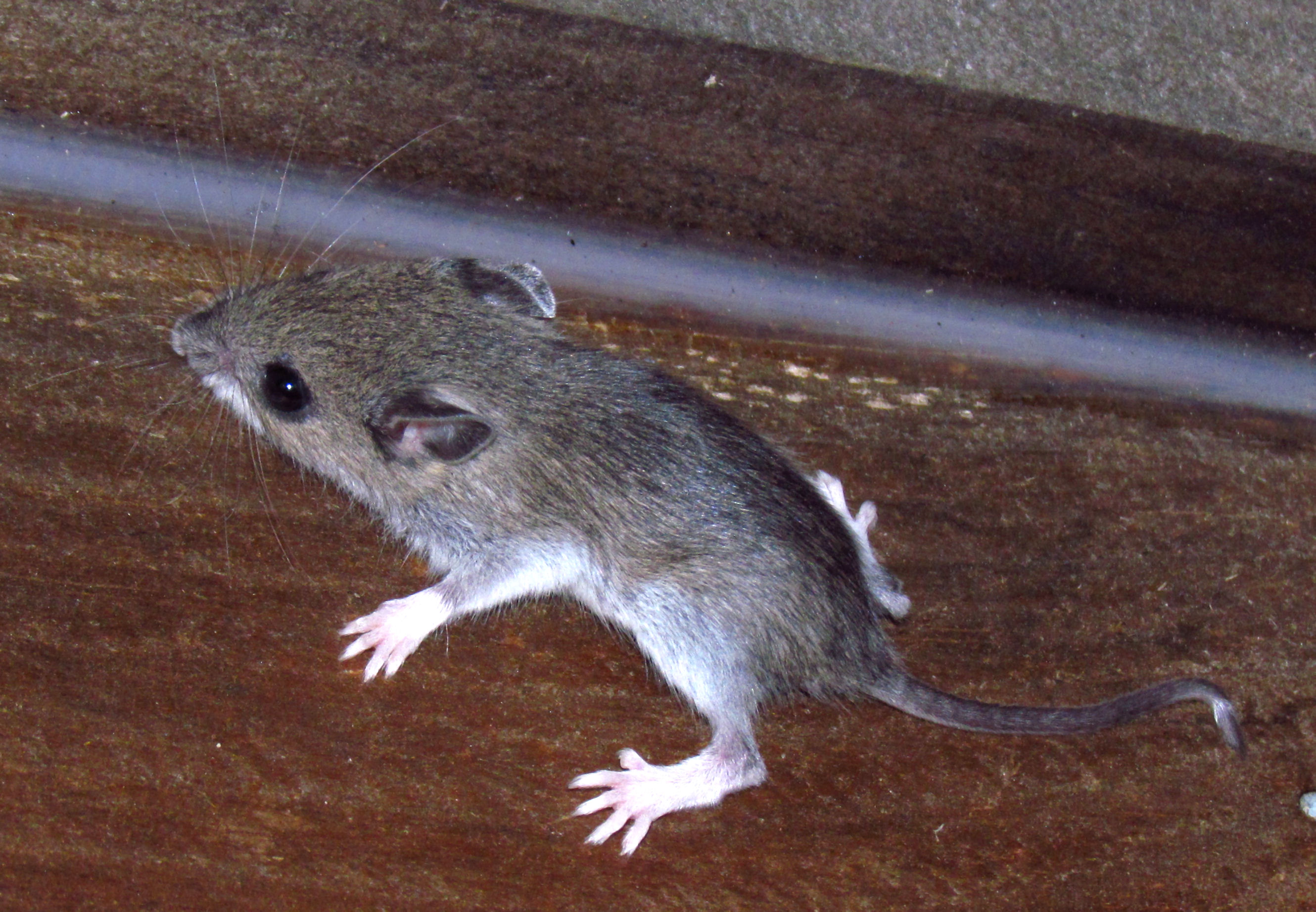
A small bicolored mouse — warm brown above, white below — and the dominant native mouse of eastern forests. They're also the primary natural reservoir of Lyme-disease bacteria in the East.
§ Quick facts
§ Encyclopedia
The white-footed mouse is a rodent native to North America from southern Canada to the southwestern United States and Mexico. It is a species of the genus Peromyscus, a closely related group of New World mice often called "deermice". In the Maritimes, its only location is a disjunct population in southern Nova Scotia. It is also erroneously known as the woodmouse, a name which instead describes the unrelated Apodemus sylvaticus, particularly in Texas.
Source: Wikipedia — White-footed mouse Licensed under CC BY-SA 4.0
§ Identification
Field marks. Small mouse with brown back; white belly; white feet.
Similar species. Deer Mouse (similar; range overlap). Other Peromyscus species.
Voice. Squeaks.
§ Diet & behavior
Diet. Seeds, nuts, insects.
Behavior. Common mouse of eastern North American forests. Primary Lyme disease reservoir in eastern US.
§ Range
Eastern and central US, southern Canada, into Mexico
§ Habitat
Diverse: forests, brushy areas, suburban edges
§ Threats
Forest fragmentation actually FAVORS them (and Lyme amplification); rodenticide poisoning impacts predators above them.
§ Conservation status
According to the IUCN Red List, the white-footed mouse is currently classified as Least Concern.
§ What helps
Maintain large unfragmented forest blocks (favors competitors). Skip rodenticides — predators control them naturally.
§ Further reading
- Wikipedia — White-footed mouse
- www.nwf.org — authoritative profile of Peromyscus leucopus
- IUCN Red List · taxon 16669
- iNaturalist · taxon 42953
- GBIF occurrence records
- Encyclopedia of Life — Peromyscus leucopus
§ Sources cited
- American Society of Mammalogists
- CDC Lyme disease
- IUCN Red List 2016


