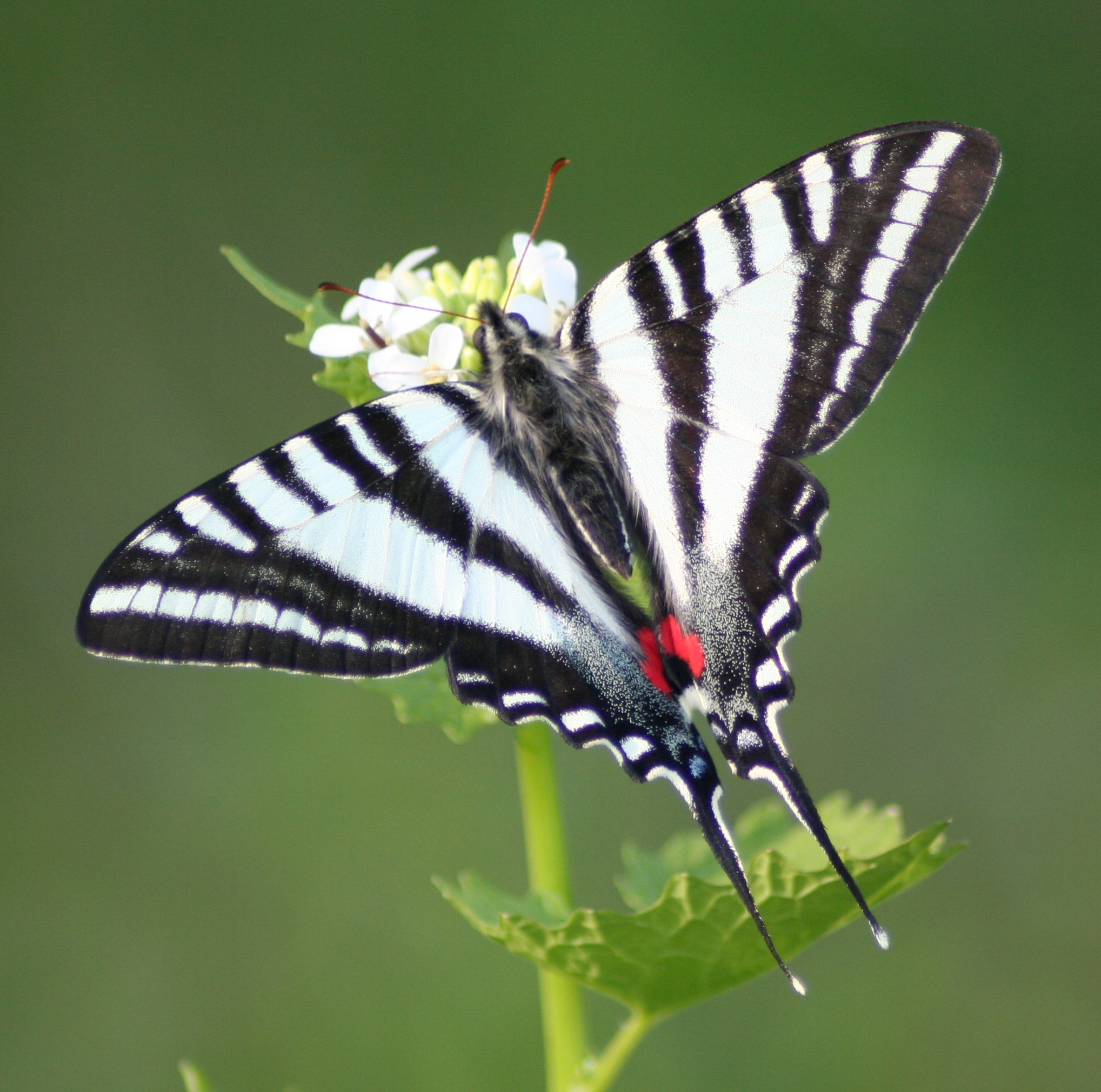
A striking white-and-black butterfly with the longest tails of any North American swallowtail. Caterpillars feed only on pawpaw — making the butterfly a perfect indicator of healthy understory forest.
§ Quick facts
§ Encyclopedia
Eurytides marcellus, the zebra swallowtail, is a swallowtail butterfly native to the eastern United States and south-eastern Canada. It is the state butterfly of Tennessee. Its distinctive wing shape and long tails make it easy to identify, and its black-and-white-striped pattern is reminiscent of a zebra. The butterflies are closely associated with pawpaws, and are rarely found far from these trees. The green or black caterpillars feed on the leaves of various pawpaw species, while the adults feed on flower nectar and minerals from damp soil.
Source: Wikipedia — Eurytides marcellus Licensed under CC BY-SA 4.0
§ Identification
Field marks. White wings with dark vertical stripes and dramatic blue and red tail-streamers.
Similar species. No other US butterfly looks similar. Some swallowtails share the tail pattern.
Voice. N/A
§ Diet & behavior
Diet. Adults: nectar (especially red and pink flowers). Caterpillars: pawpaw leaves exclusively (single-genus specialist).
Behavior. Slow gliding flight in dappled forest. Females select pawpaw trees by chemical cues. Pawpaw decline directly impacts zebra populations.
§ Range
Eastern US, especially southern Appalachians and Coastal Plain
§ Habitat
Open woodlands and edges where pawpaw trees grow
§ Threats
Loss of pawpaw understory in deer-overbrowsed forests, deer overpopulation, herbicide drift.
§ Conservation status
According to the IUCN Red List, the zebra swallowtail is currently classified as Least Concern.
§ What helps
Plant pawpaw trees in your yard. Support deer management programs. Don't mow forest understory.
§ Further reading
- Wikipedia — Eurytides marcellus
- www.nwf.org — authoritative profile of Eurytides marcellus
- iNaturalist · taxon 49274
- IUCN Red List — search for Eurytides marcellus
- GBIF occurrence records
- Encyclopedia of Life — Eurytides marcellus
§ Sources cited
- Butterflies and Moths of North America
- Xerces Society
- BugGuide
- iNaturalist


