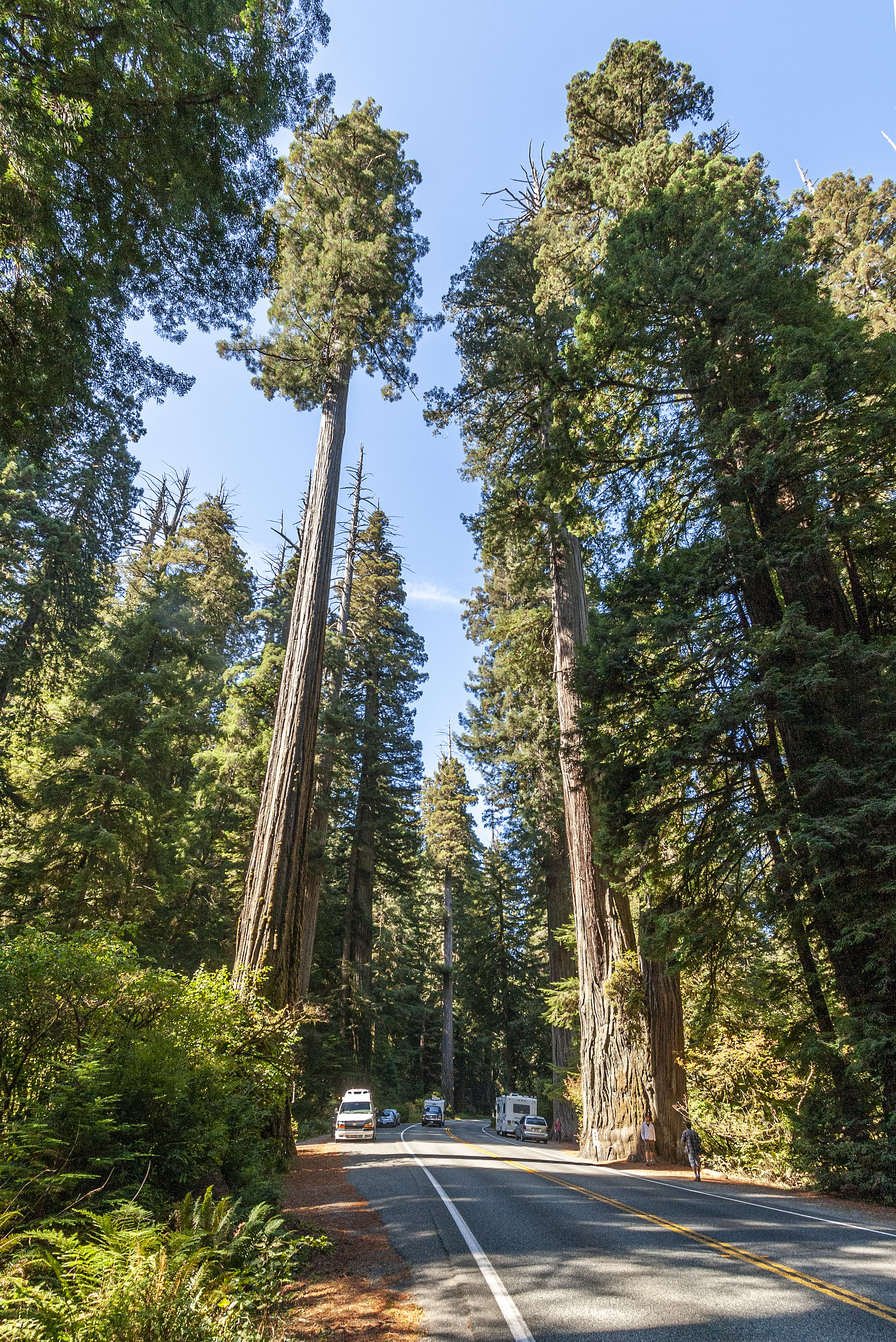
The tallest tree species on Earth — record holders top 380 feet. Old-growth coast redwoods can live over 2,200 years and host their own canopy ecosystems with soils, ferns, and salamanders that never touch the ground.
§ Quick facts
§ Encyclopedia
Sequoia sempervirens is the sole living species of the genus Sequoia in the cypress family Cupressaceae. Common names include coast redwood, coastal redwood and California redwood. It is an evergreen, long-lived, monoecious tree living 1,200–2,200 years or more. This species includes the tallest living trees on Earth, reaching up to 116.22 m (381.3 ft) in height and up to 8.9 m (29 ft) in diameter at breast height. These trees are also among the longest-living trees on Earth. Before commercial logging and clearing began by the 1850s, this massive tree occurred naturally in an estimated 810,000 ha along much of coastal California and the southwestern corner of coastal Oregon within the United States. Being the tallest tree species, with a small range and an extremely long lifespan, many redwoods are preserved in various state and national parks; many of the largest specimens have their own official names.
Source: Wikipedia — Sequoia sempervirens Licensed under CC BY-SA 4.0
§ Identification
Field marks. Massive single-trunked conifer with reddish fibrous bark and flat needle-like leaves.
Similar species. Giant Sequoia (broader, only Sierra Nevada). Douglas Fir (shorter, different bark).
Voice. N/A
§ Diet & behavior
Diet. N/A — photosynthesis
Behavior. Reproduces from seed AND from basal sprouts. Coastal fog provides 40% of moisture.
§ Range
A narrow ~450-mile fog belt along the Pacific coast from southern Oregon to central California
§ Habitat
Coastal valleys with summer fog, deep alluvial soils, year-round moisture
§ Threats
Historic logging (95%+ of old-growth gone), climate-driven fog reduction, sudden oak death pathogen, fire intensity.
§ Conservation status
According to the IUCN Red List, the coast redwood is currently classified as Endangered.
§ What helps
Support Save the Redwoods League. Visit and donate to redwood state parks. Reduce greenhouse-gas emissions to preserve fog patterns.
§ Further reading
- Wikipedia — Sequoia sempervirens
- www.fws.gov — authoritative profile of Sequoia sempervirens
- IUCN Red List · taxon 34051
- iNaturalist · taxon 51793
- GBIF occurrence records
- Encyclopedia of Life — Sequoia sempervirens
§ Sources cited
- Save the Redwoods League
- National Park Service Redwood
- IUCN Red List 2013


