
Field guide · Species directory
Plants

American Ginseng
Panax quinquefolius
A spring ephemeral herb famous for its medicinal root, valued in Chinese medicine. Heavily over-harvested across the Appalachians; commercia…

Bald Cypress
Taxodium distichum
A deciduous conifer (it sheds needles each fall, hence "bald") that thrives where most trees would drown. Their iconic "knees" rising from s…

Black Cherry
Prunus serotina
A medium-sized native tree that hosts more caterpillar species than any other tree in eastern North America (~450 species). Its fruit is an …

Butterfly Weed
Asclepias tuberosa
A native milkweed with brilliant orange flat-topped flower clusters — a magnet for monarchs and a critical host plant for monarch caterpilla…

California Poppy
Eschscholzia californica
California's state flower and the reason whole hillsides turn fluorescent orange after wet winters — a "superbloom" event that draws crowds …

Coast Redwood
Sequoia sempervirens
The tallest tree species on Earth — record holders top 380 feet. Old-growth coast redwoods can live over 2,200 years and host their own cano…

Common Milkweed
Asclepias syriaca
The single most important plant for monarch butterflies — caterpillars eat only milkweed leaves, and milky sap makes them toxic to predators…

Common Pawpaw
Asimina triloba
The largest edible fruit native to North America — sometimes called "Indiana banana" for its tropical-mango taste. Pawpaw groves are clonal,…

Common Sunflower
Helianthus annuus
The native ancestor of all cultivated sunflowers — wild plants are branched and multi-headed rather than the giant single-stalked garden for…

Dense Blazing Star
Liatris spicata
A native prairie perennial with tall spikes of magenta-purple flowers that bloom from the top down — opposite of most spiked flowers. Critic…

Eastern Purple Coneflower
Echinacea purpurea
A native prairie wildflower whose purple-pink ray flowers and orange spiny center cones are pollinator magnets. Famous medicinally as Echina…

Eastern Redbud
Cercis canadensis
A small native tree that blooms with electric magenta-pink flowers along bare branches in early spring — before the leaves emerge. State tre…

Giant Sequoia
Sequoiadendron giganteum
The largest tree species on Earth by volume — General Sherman in Sequoia National Park weighs an estimated 1,400 tons. Giant sequoias depend…

Great White Trillium
Trillium grandiflorum
A spring wildflower with three leaves, three sepals, and a large three-petaled white flower. Among the most-loved spring ephemerals of easte…

Hoary Mountain Mint
Pycnanthemum incanum
A native mint with frosted silvery-white leaves and dense flat-topped clusters of pink-purple flowers. Among the most pollinator-attractive …
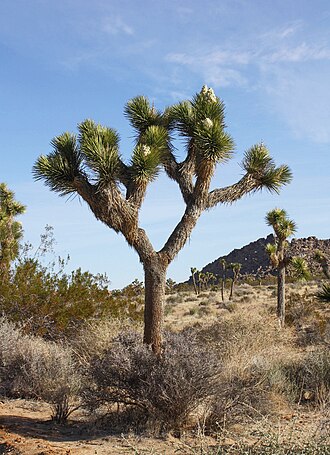
Joshua Tree
Yucca brevifolia
Iconic emblem of the Mojave Desert — actually a giant member of the agave family, not a tree. They depend on a single moth species (the yucc…

Ramps (Wild Leek)
Allium tricoccum
A spring ephemeral wild onion with broad bright green leaves and intensely flavored bulbs. Treasured by foragers; over-harvest has led to po…

Showy Milkweed
Asclepias speciosa
A western milkweed with pinkish flower clusters and broad gray-green leaves. Critical host plant for monarchs in western US.

Southern Magnolia
Magnolia grandiflora
A massive evergreen native tree with huge waxy white fragrant flowers in spring. State tree of Mississippi and Louisiana; iconic southern la…

Spotted Joe-Pye Weed
Eutrochium maculatum
A tall (5–7 ft) wildflower with dusty-pink flowerheads that act as butterfly magnets in late summer — among the most insect-rich nectar sour…

Swamp Milkweed
Asclepias incarnata
A 3–5 ft tall milkweed with rose-pink flower clusters — among the easiest milkweeds to grow in gardens. Critical host plant for monarch cate…

Venus Flytrap
Dionaea muscipula
The carnivorous plant famous for snapping shut on insects. Native only to a small area of the Carolinas. Wild populations threatened by habi…

Virginia Bluebells
Mertensia virginica
A spring ephemeral that paints forest floors blue from late April through May before the canopy leafs out. Pink buds open into nodding bell-…

White Oak
Quercus alba
One of the largest and longest-lived eastern hardwoods — verified specimens over 600 years old. White oaks support over 500 caterpillar spec…

Wild Bergamot
Monarda fistulosa
A native mint with lavender-pink whorled flowers and a strong herbal scent (used in Earl Grey-style teas before the introduction of Asian be…

American Beautyberry
Callicarpa americana
A native shrub with distinctive vibrant purple-magenta berries in autumn clusters. Critical wildlife food source.

American Beech
Fagus grandifolia
A massive forest tree with smooth gray bark, often carved (regrettably) with initials. Beech nuts feed wild turkey, bear, and squirrels; the…

American Elderberry
Sambucus canadensis
A native shrub with flat-topped white flower clusters and dark purple berries. Berries traditionally used for jams, wines, and medicinal pre…

American Hornbeam
Carpinus caroliniana
A small understory tree with distinctive muscle-like fluted trunk. Important wildlife food source.

American Sweetgum
Liquidambar styraciflua
A medium-sized tree with star-shaped leaves and spiked "gumball" seed capsules that litter sidewalks (and toes) every autumn. Despite the li…

American Sycamore
Platanus occidentalis
One of the largest deciduous trees in the eastern US — record specimens have trunk diameters over 12 feet. Their distinctive mottled white-a…

Big Bluestem
Andropogon gerardii
The "monarch of grasses" — the iconic tallgrass prairie grass that once dominated the Great Plains. Reaches 8+ feet tall. Distinctive three-…

Bigleaf Maple
Acer macrophyllum
A massive Pacific Coast maple with extraordinarily large leaves.

Black Chokeberry
Aronia melanocarpa
A native shrub producing dark purple fruits eaten by wildlife.

Black Oak
Quercus velutina
A medium oak with dark bark and yellow tones in wood.

Black Walnut
Juglans nigra
A medium tree with dark wood and edible nuts. Among the most valuable hardwoods in North America.

Black Willow
Salix nigra
A medium-sized tree with shaggy bark and long narrow leaves. Critical species for many native pollinators (bees) and butterflies.

Black-eyed Susan
Rudbeckia hirta
The cheerful yellow flower with a chocolate-brown center that's become a meadow staple across America. State flower of Maryland, host plant …

Bloodroot
Sanguinaria canadensis
A spring ephemeral with a single round leaf wrapped around a brilliant white 8-petaled flower. Cut roots ooze blood-red sap (giving the name…

Bottle Gentian
Gentiana andrewsii
A native plant with distinctive bottle-shaped blue flowers that never open completely.

Box Elder (Eastern)
Acer negundo
A small fast-growing maple with compound leaves (unusual for maples).

Bracken Fern
Pteridium aquilinum
A massive native fern that forms thick stands. One of the most successful plants on earth — found on every continent except Antarctica. Aggr…

Bur Oak
Quercus macrocarpa
A massive long-lived oak with thick fire-resistant bark and the largest acorns of any North American oak (up to 2 inches across). Once a def…

Buttonbush
Cephalanthus occidentalis
A native shrub with distinctive spherical white flower clusters.

Calico Aster
Symphyotrichum lateriflorum
Native aster with delicate flowers in long arching sprays.

Cardinal Flower
Lobelia cardinalis
A spectacularly red wildflower whose long tubular flowers are perfectly engineered for ruby-throated hummingbird bills — virtually no other …

Carolina Rose
Rosa carolina
A small native rose with five-petaled pink flowers and bright red rose hips. Important for pollinator nectar and wildlife food (birds and sm…

Chestnut Oak
Quercus montana
A medium-sized oak with sweet acorns and distinctive coarse-toothed leaves resembling those of American chestnut. Foundational species of Ap…

Christmas Fern
Polystichum acrostichoides
A native evergreen fern. Common in eastern forests; stays green through winter. Common Christmas decoration in early colonial era.

Cinnamon Fern
Osmundastrum cinnamomeum
A native fern with distinctive cinnamon-colored spore-bearing fronds rising from the center of a clump of vegetative fronds.

Common Bladderwort
Utricularia macrorhiza
A free-floating aquatic carnivorous plant with tiny bladder-like traps that suck in microscopic prey. Yellow flowers float above the water o…

Common Boneset
Eupatorium perfoliatum
A medium-tall wetland wildflower with opposite leaves that fuse together (perfoliate) and flat-topped clusters of small white flowers. A pol…

Common Butterwort
Pinguicula vulgaris
A small carnivorous plant with greasy-feeling sticky leaves that trap small insects. Leaves curl around prey to maximize digestion contact.

Common Cattail
Typha latifolia
A tall wetland plant with distinctive cylindrical brown seed-heads. Foundation species of wetland communities; provides nesting habitat for …

Common Persimmon
Diospyros virginiana
A medium tree with rough black bark in alligator-skin pattern and 1–2 inch orange fruits in autumn. Unripe fruits are infamously astringent;…

Compass Plant
Silphium laciniatum
A massive prairie perennial with leaves oriented north-south (hence "compass"). Yellow sunflower-like flowers atop stems reaching 8 feet. Ta…

Dutchman's Breeches
Dicentra cucullaria
A spring ephemeral with delicately divided fern-like leaves and white pantaloon-shaped flowers hanging from arched stems. Common name from t…

Eastern Cottonwood
Populus deltoides
A massive fast-growing tree of river bottoms with broad triangular leaves that flutter constantly in any breeze. Cotton-tufted seeds blanket…

Eastern Gamagrass
Tripsacum dactyloides
A native tallgrass prairie species. Closely related to corn.

Eastern Hemlock
Tsuga canadensis
The "redwood of the East" — a long-lived shade-tolerant conifer that creates uniquely cool, deep-shaded forest microclimates that support br…

Eastern Prickly Pear
Opuntia humifusa
The only cactus native east of the Mississippi River. Yellow flowers in early summer give way to red-purple "tunas" (fruits) that have been …

Eastern Red Cedar
Juniperus virginiana
A native conifer that's actually a juniper. Aggressive colonizer of abandoned fields and grasslands.

Eastern Skunk Cabbage
Symplocarpus foetidus
One of the very first plants to emerge each spring — its purple-mottled spathe pokes through snow as early as February. Generates its own he…

Eastern White Pine
Pinus strobus
New England's tallest native tree (up to 230 feet historically) and the species whose tall straight trunks made the British Royal Navy's mas…

False Solomon's Seal
Maianthemum racemosum
A graceful arching perennial with broad parallel-veined leaves and a terminal cluster of small white flowers in spring, followed by red berr…

Flowering Dogwood
Cornus florida
A small native tree with iconic four-petaled white "flowers" (technically bracts surrounding a tiny cluster of true flowers) in early spring…

Goldenrod (Tall)
Solidago altissima
A common native goldenrod with brilliant yellow plumes in late summer.

Goldenseal
Hydrastis canadensis
A spring ephemeral with a single large palmate leaf and small white flower. Roots are bright yellow and valued in herbal medicine. Over-harv…

Great Basin Bristlecone Pine
Pinus longaeva
The longest-lived non-clonal organisms on Earth. The oldest known bristlecone pine ("Methuselah") is over 4,800 years old — alive when the E…

Great Lobelia
Lobelia siphilitica
A 2–4 ft perennial with tall spikes of striking blue tubular flowers. Companion to red cardinal flower in wet eastern habitats — both are bu…

Green Dragon
Arisaema dracontium
A close relative of jack-in-the-pulpit with a single divided leaf and a long whip-like flower spadix protruding from a green hood. Less comm…

Hackberry (Eastern)
Celtis occidentalis
A medium native tree producing small purple-black fruits.

Hazelnut (American)
Corylus americana
A native shrub producing edible hazelnuts.

Honey Locust
Gleditsia triacanthos
A medium-tall native legume tree with finely divided compound leaves and (in wild form) terrifyingly long branched thorns on the trunk. Long…

Indian Pipe
Monotropa uniflora
A unique plant that lacks chlorophyll. Pure white throughout.

Jack-in-the-pulpit
Arisaema triphyllum
A spring woodland wildflower with a distinctive hooded "pulpit" enclosing a "Jack" (the spadix) — actually a flower cluster pollinated by gn…

Lady Fern
Athyrium filix-femina
A widespread native fern. Delicate and graceful.

Little Bluestem
Schizachyrium scoparium
A short native grass with distinctive blue-green color in summer turning bronze-purple in fall. Foundation prairie species.

Loblolly Pine
Pinus taeda
Most economically important pine of southeastern US plantation forestry.

Longleaf Pine
Pinus palustris
Once dominant across 90 million acres of the Southeast, longleaf pine forests now cover less than 5% of their historic range.

Maidenhair Fern
Adiantum pedatum
A delicate native fern with distinctive fan-shaped fronds.

Marsh Marigold
Caltha palustris
An early-spring perennial with brilliant yellow buttercup-like flowers. One of the very earliest wetland flowers to bloom — sometimes throug…

Mayapple
Podophyllum peltatum
A spring ephemeral with paired umbrella-like leaves shading a single white flower that develops into a yellow "apple." All parts except ripe…

New England Aster
Symphyotrichum novae-angliae
A late-season wildflower with brilliant purple ray flowers around a yellow center. New England asters bloom into November when most other fl…

New York Ironweed
Vernonia noveboracensis
A tall (5–8 ft) wildflower with brilliant purple-magenta flowers in late summer. Among the most pollinator-valuable native plants — bumble b…

Northern Blue Flag
Iris versicolor
A native iris with brilliant blue-violet flowers and tall sword-shaped leaves. Provincial flower of Quebec and a striking native alternative…

Northern Red Oak
Quercus rubra
A fast-growing oak with red autumn color and acorns with shallow caps. Red oaks support over 500 caterpillar species — among the most ecolog…

Osage Orange
Maclura pomifera
A small thorny tree producing large warty green "hedge apples" the size of softballs in fall. Wood is among the densest and hardest of any N…

Ostrich Fern
Matteuccia struthiopteris
A large native fern with tall arching fronds (up to 6 ft) emerging from a central crown. Young rolled fronds ("fiddleheads") are an edible s…

Pacific Madrone
Arbutus menziesii
A striking tree with smooth orange-red bark that peels in papery sheets, glossy evergreen leaves, and clusters of urn-shaped white flowers f…

Pacific Silver Fir
Abies amabilis
A medium-sized native fir of Pacific Northwest mountains.

Paper Birch
Betula papyrifera
A medium-sized pioneer tree with iconic peeling white bark. Indigenous peoples used the bark for canoes, containers, and shelter. The specie…

Partridge Pea
Chamaecrista fasciculata
A small annual legume with yellow flowers and seed-rich pods that feed bobwhite, deer mice, and other wildlife. Roots fix nitrogen, building…

Pin Oak
Quercus palustris
A medium-sized oak with distinctive horizontal branching pattern. Common urban planting; tolerates compacted soils.

Pinesap
Monotropa hypopitys
A pinkish-yellow non-chlorophyllous plant.

Ponderosa Pine
Pinus ponderosa
Iconic western pine. Among the most fire-tolerant pines.

Post Oak
Quercus stellata
A medium oak with cross-shaped leaves and small but reliable acorn crops. Drought-tolerant and fire-resistant; foundational species of Cross…

Quaking Aspen
Populus tremuloides
Famous for the trembling of leaves in the lightest breeze — a single "tree" is often a clonal grove sharing one root system. Pando, an aspen…

Red Chokeberry
Aronia arbutifolia
A native shrub producing red fruits and brilliant red fall color.

Red Maple
Acer rubrum
A widespread native maple with brilliant red fall color.

River Cane
Arundinaria gigantea
A native bamboo of southeastern US bottomland forests. Once dominant in vast canebrakes; reduced 98%+.

Round-lobed Hepatica
Hepatica nobilis var. obtusa
A tiny early-spring wildflower with delicate pink, blue, or white flowers above three-lobed leaves that overwinter beneath snow. Sometimes c…

Roundleaf Sundew
Drosera rotundifolia
A small carnivorous plant with sticky red glandular hairs that trap small insects. Round leaves rosette around a central crown.

Royal Fern
Osmunda regalis
A large native fern with distinctive separated fertile and sterile fronds.

Saguaro Cactus
Carnegiea gigantea
The iconic columnar cactus of the American Southwest, saguaros can grow over 40 feet tall and live 200 years.

Sassafras
Sassafras albidum
A tree famous for its fragrant roots (used in old-school root beer until banned for safrole) and its leaves with three different shapes on t…

Scarlet Oak
Quercus coccinea
A medium oak with brilliant scarlet fall color.

Sensitive Fern
Onoclea sensibilis
A native fern with distinctive broad fronds. Highly sensitive to frost.

Serviceberry
Amelanchier canadensis
A small tree or large shrub valued for early spring white blossoms (one of the first plants to bloom in eastern forests) and edible blue-pur…

Shagbark Hickory
Carya ovata
A tall hickory with unmistakable shaggy peeling bark in long curling strips. Nuts are sweet and edible by humans; the loose bark provides es…

Shumard Oak
Quercus shumardii
A medium oak with extraordinarily long acorns.

Slash Pine
Pinus elliottii
A medium pine of southeastern plantations and natural areas.

Smooth Blue Aster
Symphyotrichum laeve
A native aster with smooth blue-green leaves and pale blue-violet flowers. Long bloom period (August-October) provides crucial late-season n…

Smooth False Foxglove
Aureolaria laevigata
A 2–4 ft perennial with bright yellow tubular flowers. Partially parasitic on oak roots — they can't survive without an oak host nearby.

Snowberry
Symphoricarpos albus
A native shrub with distinctive white berries that persist into winter.

Sourwood
Oxydendrum arboreum
A medium-sized tree with sour-tasting leaves and white flower clusters. Important honey plant.

Southern Live Oak
Quercus virginiana
The "tree" of the American South — sprawling, evergreen, draped in Spanish moss. Live oaks routinely live 200–300 years, with the famous Ang…
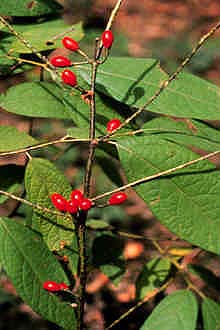
Spicebush
Lindera benzoin
A native shrub with aromatic leaves and bark. Spring yellow flowers. Critical host plant for spicebush swallowtail butterflies.

Spotted Bee Balm
Monarda punctata
A drought-tolerant bee balm with whorled yellow-and-purple-spotted tubular flowers. Among the most attractive native plants for native bees …

Spring Beauty
Claytonia virginica
A small spring ephemeral with delicate pink-veined white flowers.

Sugar Maple
Acer saccharum
The signature tree of New England fall foliage and the source of all genuine maple syrup. Its sap freeze-thaw cycle (cold nights, warm days …

Sugar Pine
Pinus lambertiana
Massive native pine of Pacific Coast mountains. Among the largest pine species in the world.

Sweetbay Magnolia
Magnolia virginiana
Aromatic semi-evergreen magnolia of coastal swamps and wet pinelands of the Atlantic and Gulf Coast plains. Cup-shaped white flowers with a …

Switchgrass
Panicum virgatum
A keystone tallgrass prairie species — a clump-forming grass that grows 6+ feet tall and provides cover and seeds for grassland birds, small…
Tall Goldenrod
Solidago altissima
A late-summer native that supports more pollinator species than nearly any other plant — over 100 species of bees and butterflies depend on …

Trout Lily
Erythronium americanum
A spring ephemeral with mottled leaves and yellow nodding flowers.

Trumpet Creeper
Campsis radicans
A native vine producing brilliant orange-red tubular flowers. Critical hummingbird food.

Tulip Tree
Liriodendron tulipifera
One of the tallest eastern hardwoods — verified specimens over 190 feet. The yellow-and-orange "tulip" flowers in spring are easily missed i…

Tupelo
Nyssa sylvatica
A medium tree with dark glossy leaves and red autumn color. Critical wildlife food and honey plant.

Twinleaf
Jeffersonia diphylla
A spring ephemeral named for paired leaves that look like wings.

Vine Maple
Acer circinatum
A small understory maple with vine-like branches.

Virginia Creeper
Parthenocissus quinquefolia
A native vine with brilliant fall color. Often mistaken for poison ivy.

Wax Myrtle
Morella cerifera
A native shrub producing waxy berries used historically for candle-making.

Western Hemlock
Tsuga heterophylla
Dominant conifer of Pacific Northwest forests.

Western Red Cedar
Thuja plicata
A massive native cedar of Pacific Northwest forests.

White Clover
Trifolium repens
A small clover with rounded white flower heads and three-leaflet leaves. Critical for bumble bees and other pollinators. Fixes nitrogen.

White Wild Indigo
Baptisia alba
A tall native perennial with palmate leaves and spires of white pea-shaped flowers in spring. Host plant for the wild indigo duskywing butte…

Wild Blue Phlox
Phlox divaricata
A spring perennial with five-petaled lavender-blue flowers in airy clusters. Carpets the floor of mature forests in late April-May. Among th…

Wild Geranium
Geranium maculatum
A spring wildflower with brilliant pink-purple flowers.

Wild Ginger
Asarum canadense
A spring perennial with paired heart-shaped leaves and a deep maroon-brown three-lobed flower hidden at ground level. Pollinated by ground-c…

Wild Lupine
Lupinus perennis
A pea-family wildflower with elegant blue-purple spires that's the SOLE host plant for the federally Endangered Karner blue butterfly. Loss …

Winterberry Holly
Ilex verticillata
A native holly producing dramatic red berries that persist into winter.

Yellow Birch
Betula alleghaniensis
A medium yellow-barked birch of northeastern forests.

Yellow Buckeye
Aesculus flava
A medium-sized tree with showy yellow flowers in spring and large mahogany nuts in fall. Closely related to horse chestnut.

Yellow Indiangrass
Sorghastrum nutans
A native warm-season prairie grass with distinctive golden-yellow seed heads in late summer. Excellent for ornamental gardens and pollinator…

Yellow Pitcher Plant
Sarracenia flava
A native carnivorous plant with tall yellow tubular leaves that trap insects. Most spectacular of southeastern pitcher plant species.

Yellow Poplar
Liriodendron tulipifera
A massive native tree with distinctive 4-pointed leaves.

Yellow Skunk Cabbage
Lysichiton americanus
Pacific cousin to eastern skunk cabbage — bright yellow spathe surrounds a club-shaped spadix. Like its eastern cousin, generates heat to me…
Looking for something specific?