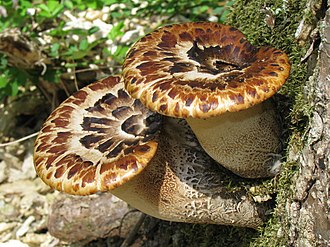
A small brilliant orange-red shelf fungus on fallen wood. Easily identified by its vivid color and small size. Causes white rot of hardwoods, essential to forest decomposition.
§ Quick facts
§ Encyclopedia
Pycnoporus cinnabarinus, also known as the cinnabar polypore, is a saprophytic, white rot decomposer.
Source: Wikipedia — Pycnoporus cinnabarinus Licensed under CC BY-SA 4.0
§ Identification
Field marks. Small bright cinnabar-red to orange-red shelf-shaped fungus growing on dead hardwood twigs and small branches; pore surface same color as upper surface.
Similar species. Other small bright-orange polypores (less vivid color, different host preferences).
Voice. N/A
§ Diet & behavior
Diet. Saprotrophic — decomposes dead hardwood, especially oak.
Behavior. Striking small bright-orange shelf fungus. Among the most easily-identified North American fungi due to its vivid color and small papery thalli. Antimicrobial compounds (cinnabarin and tramesanguin) are being studied for medical applications. Lab cultures readily produce the orange pigment, making this species useful in fungal biochemistry research.
§ Range
Eastern North America
§ Habitat
Decaying hardwood logs and branches
§ Threats
Forest loss, removal of dead wood from forests.
§ Conservation status
According to the IUCN Red List, the cinnabar polypore is currently classified as Least Concern.
§ What helps
Leave dead wood in place. Support old-growth forest. Skip "tidying" fallen branches.
§ Further reading
- Wikipedia — Pycnoporus cinnabarinus
- www.nwf.org — authoritative profile of Pycnoporus cinnabarinus
- iNaturalist · taxon 118042
- IUCN Red List — search for Pycnoporus cinnabarinus
- GBIF occurrence records
- Encyclopedia of Life — Pycnoporus cinnabarinus
§ Sources cited
- North American Mycological Association
- Mycological Society of America
- American Type Culture Collection