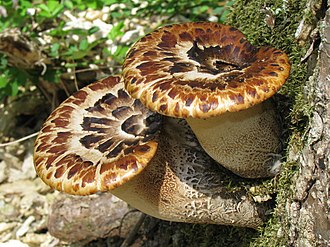
A small dark trumpet-shaped edible mushroom. Highly prized but easy to overlook on forest floor.
§ Quick facts
§ Encyclopedia
Craterellus cornucopioides is a species of fungus commonly known as the horn of plenty, black chanterelle, black trumpet, or trumpet of the dead. It forms a funnel-shaped grayish mushroom, which is found in Eurasia, North America, and Australia. It is edible.
Source: Wikipedia — Craterellus cornucopioides Licensed under CC BY-SA 4.0
§ Identification
Field marks. Small to medium trumpet-shaped or fluted dark gray-to-black mushroom growing in clusters; underside smooth or slightly veined (no true gills); hollow throughout.
Similar species. Devil's Urn (smaller, cup-shaped). Other Craterellus species (similar but different colors/ranges). No toxic look-alikes when ID is clear.
Voice. N/A
§ Diet & behavior
Diet. Mycorrhizal — forms exchange relationships with hardwood roots, especially oak and beech.
Behavior. Despite forbidding name ("Trumpet of Death" in French), highly prized edible mushroom — one of the most expensive wild mushrooms by weight in North American markets. Dark color and trumpet shape make them extremely difficult to spot against leaf litter; experienced foragers often kneel and look horizontally rather than scanning the forest floor. Cannot be cultivated commercially.
§ Range
Eastern North America
§ Habitat
Mature hardwood forests
§ Threats
Forest loss, soil compaction.
§ Conservation status
According to the IUCN Red List, the black trumpet is currently classified as Least Concern.
§ What helps
Support mature forest conservation. Don't over-collect.
§ Further reading
- Wikipedia — Craterellus cornucopioides
- www.nwf.org — authoritative profile of Craterellus cornucopioides
- iNaturalist · taxon 118052
- IUCN Red List — search for Craterellus cornucopioides
- GBIF occurrence records
- Encyclopedia of Life — Craterellus cornucopioides
§ Sources cited
- North American Mycological Association
- Mycological Society of America
- Northeast Mycological Federation