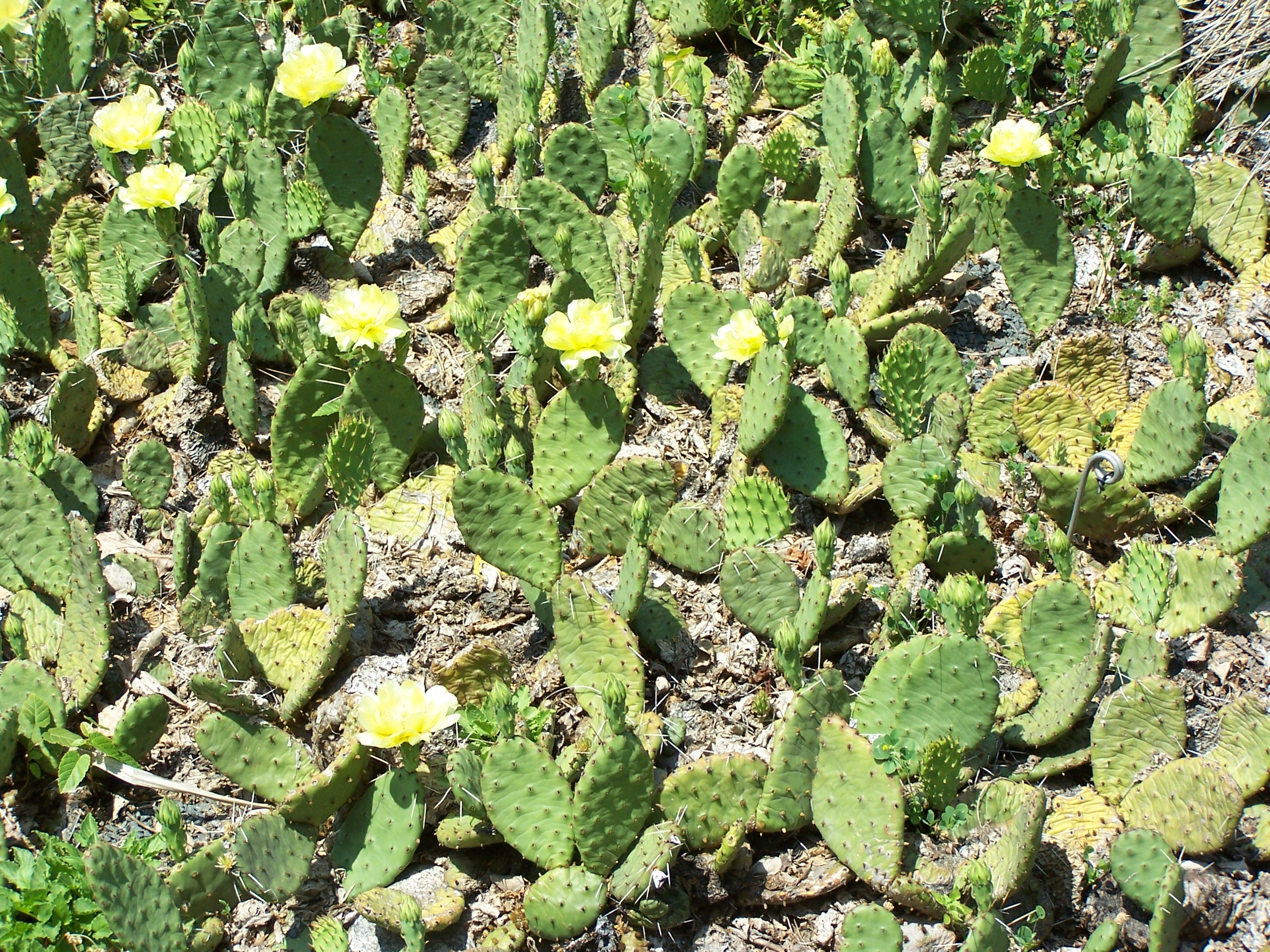
The only cactus native east of the Mississippi River. Yellow flowers in early summer give way to red-purple "tunas" (fruits) that have been edible staples for indigenous peoples and wildlife for thousands of years.
§ Quick facts
§ Encyclopedia
Opuntia humifusa, commonly known as the devil's-tongue, eastern prickly pear or Indian fig, is a cactus of the genus Opuntia present in parts of the eastern United States, southeastern Canada, and northeastern Mexico.
Source: Wikipedia — Opuntia humifusa Licensed under CC BY-SA 4.0
§ Identification
Field marks. Low spreading cactus with flat pad-shaped joints (cladodes) 5–10 cm across; clusters of large yellow spines; tiny barbed glochids in tufts; large yellow flowers in early summer; red-purple fruit in late summer.
Similar species. Western Opuntia species (different shapes and ranges). Cholla cacti (cylindrical, segmented).
Voice. N/A
§ Diet & behavior
Diet. N/A — photosynthesis with CAM metabolism (stomata open at night to conserve water)
Behavior. Only cactus native east of the Mississippi River. Range extends north to Massachusetts and Ontario — among the most cold-tolerant of all cacti, surviving -25°F (-32°C). Flowers self-pollinate but also attract native bees. Fruits ("tunas") were food for Indigenous peoples and remain edible (pulp is sweet; spines must be removed). Glochids (tiny barbed bristles) are arguably more painful than the larger visible spines; they detach in skin and are very difficult to remove.
§ Range
Eastern and central US from Massachusetts to Florida
§ Habitat
Sandy or rocky soil, dry meadows, rock outcrops
§ Threats
Garden trampling, urban development, herbicide drift.
§ Conservation status
According to the IUCN Red List, the eastern prickly pear is currently classified as Least Concern.
§ What helps
Plant prickly pear in rock garden corners. Don't mistake for invasive Opuntia species. Maintain rocky outcrops.
§ Further reading
- Wikipedia — Opuntia humifusa
- www.nwf.org — authoritative profile of Opuntia humifusa
- iNaturalist · taxon 48068
- IUCN Red List — search for Opuntia humifusa
- GBIF occurrence records
- Encyclopedia of Life — Opuntia humifusa
§ Sources cited
- USDA Plants Database
- Native Plant Trust
- Lady Bird Johnson Wildflower Center


