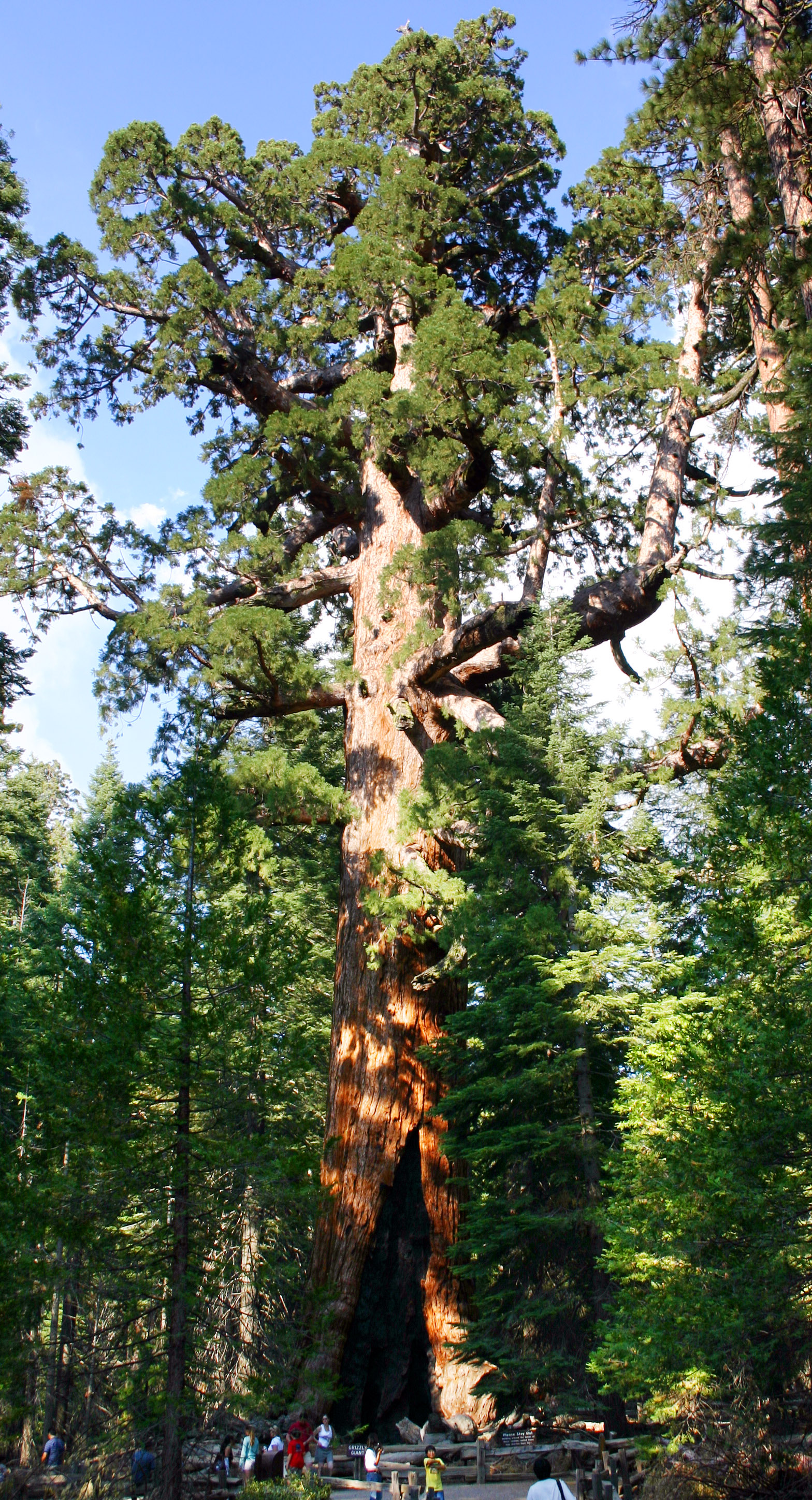
The largest tree species on Earth by volume — General Sherman in Sequoia National Park weighs an estimated 1,400 tons. Giant sequoias depend on fire to release their seeds and clear competing vegetation.
§ Quick facts
§ Encyclopedia
Sequoiadendron giganteum is a species of coniferous tree, classified in the family Cupressaceae in the subfamily Sequoioideae. Giant sequoia specimens are the largest trees on Earth. They are native to the groves on the western slopes of the Sierra Nevada mountain range of California but have been introduced, planted, and grown around the world.
Source: Wikipedia — Sequoiadendron giganteum Licensed under CC BY-SA 4.0
§ Identification
Field marks. Massive single-trunked conifer with red-brown fibrous bark.
Similar species. Coast Redwood (taller, narrower). Bristlecone Pine (much smaller).
Voice. N/A
§ Diet & behavior
Diet. N/A — photosynthesis
Behavior. Fire-dependent. Bark to 90 cm thick. Reproduces only by seed.
§ Range
Western Sierra Nevada of California
§ Habitat
Mid-elevation Sierra Nevada slopes (5,000–7,000 ft)
§ Threats
High-severity wildfires (made worse by fire suppression and climate change), drought stress, public-use trampling at root zones.
§ Conservation status
According to the IUCN Red List, the giant sequoia is currently classified as Endangered.
§ What helps
Support good-fire management. Stay on designated trails near groves. Donate to Save the Redwoods League.
§ Further reading
- Wikipedia — Sequoiadendron giganteum
- www.fs.usda.gov — authoritative profile of Sequoiadendron giganteum
- IUCN Red List · taxon 34023
- iNaturalist · taxon 51792
- GBIF occurrence records
- Encyclopedia of Life — Sequoiadendron giganteum
§ Sources cited
- Save the Redwoods League
- National Park Service
- IUCN Red List 2013


