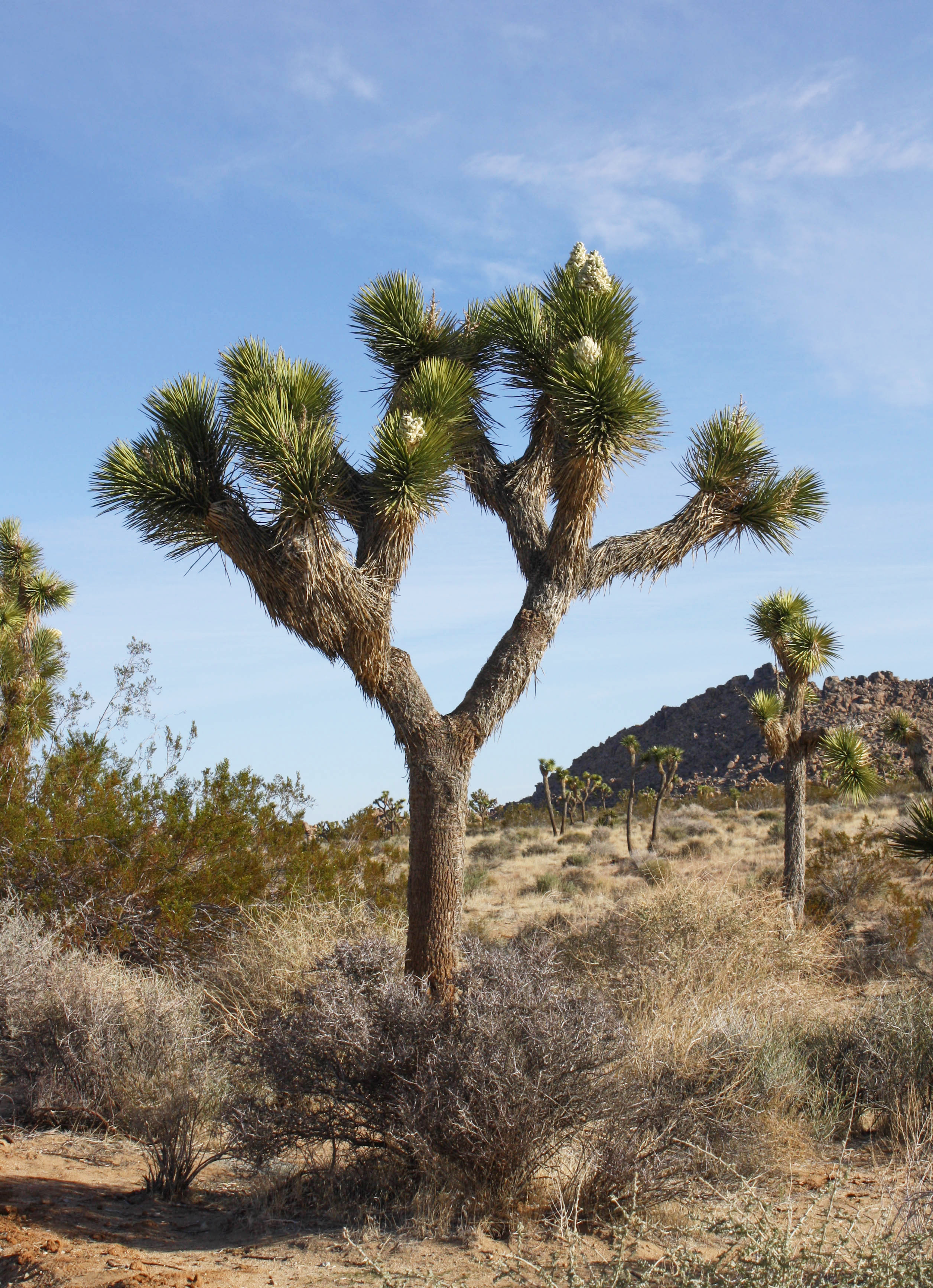
Iconic emblem of the Mojave Desert — actually a giant member of the agave family, not a tree. They depend on a single moth species (the yucca moth) for pollination, and seed germination is highly tied to climate.
§ Quick facts
§ Encyclopedia
Yucca brevifolia is a plant species belonging to the genus Yucca. It is tree-like in appearance, which is reflected in its common names.
Source: Wikipedia — Yucca brevifolia Licensed under CC BY-SA 4.0
§ Identification
Field marks. Multi-trunked yucca with spiky leaves; cream flowers.
Similar species. Joshua Tree (single trunk). Other yuccas.
Voice. N/A
§ Diet & behavior
Diet. N/A — photosynthesis
Behavior. Pollinated by yucca moths. Coevolved mutualism.
§ Range
Mojave Desert of California, Nevada, Arizona, Utah
§ Habitat
High desert, 2,000–6,000 feet elevation, sandy and gravelly soils
§ Threats
Climate-driven drought, fire from invasive grasses, range collapse projected by 2070, illegal removal for landscaping.
§ Conservation status
According to the IUCN Red List, the joshua tree is currently classified as Vulnerable.
§ What helps
Support climate action. Don't buy wild-collected yucca. Donate to Mojave Desert Land Trust.
§ Further reading
- Wikipedia — Yucca brevifolia
- www.nps.gov — authoritative profile of Yucca brevifolia
- iNaturalist · taxon 62811
- IUCN Red List — search for Yucca brevifolia
- GBIF occurrence records
- Encyclopedia of Life — Yucca brevifolia
§ Sources cited
- Joshua Tree National Park
- iNaturalist
- USDA Plants Database


