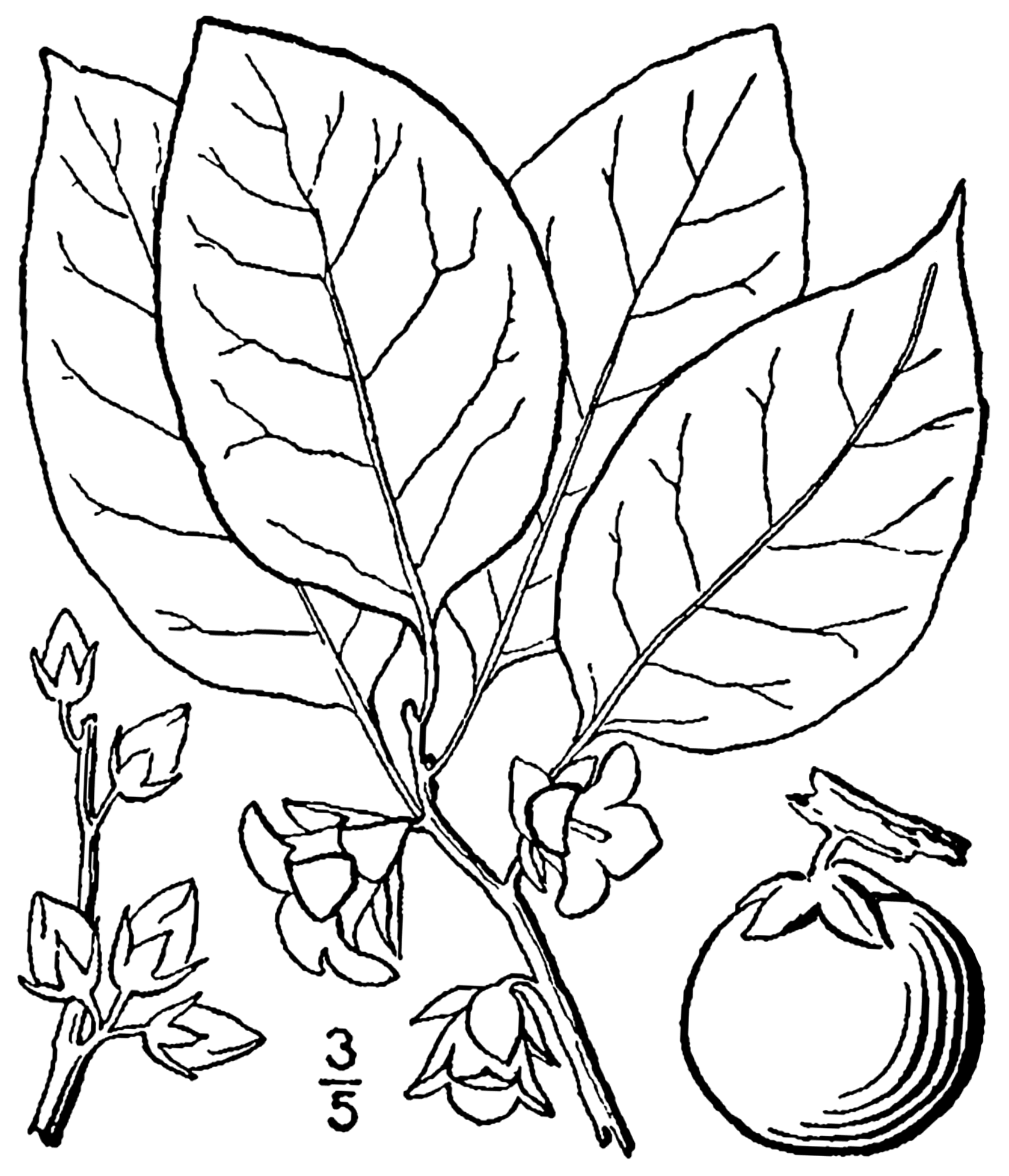
A medium tree with rough black bark in alligator-skin pattern and 1–2 inch orange fruits in autumn. Unripe fruits are infamously astringent; fully ripe fruits are extraordinarily sweet.
§ Quick facts
§ Encyclopedia
Diospyros virginiana is a persimmon species commonly called the American persimmon, common persimmon, eastern persimmon, simmon, possumwood, possum apples, or sugar plum. It ranges from southern Connecticut to Florida, and west to Texas, Louisiana, Oklahoma, Kansas, and Iowa. The tree grows in the wild but has been cultivated for its fruit and wood since prehistoric times by Native Americans. Both the tree and the fruit are referred to as persimmons, with the latter appearing in desserts and cuisine in the U.S. South and Midwest.
Source: Wikipedia — Diospyros virginiana Licensed under CC BY-SA 4.0
§ Identification
Field marks. Medium-sized tree with thick deeply furrowed dark gray-brown bark in distinctive small square blocks ("alligator skin"); ovate dark green leaves; orange-yellow round fruit (2–5 cm) with persistent calyx.
Similar species. Asian Persimmon (D. kaki — larger, sweeter fruit; cultivated). Black Sapote (tropical; entirely different).
Voice. N/A
§ Diet & behavior
Diet. N/A — photosynthesis
Behavior. Native eastern tree producing 2–5 cm round orange-yellow fruits in fall. Unripe fruits are infamously astringent due to high tannin content — chewing one produces an unforgettable mouth-puckering experience. Fully ripe persimmons (after fall frosts) become sweet, custardy, and delicious — historically used in puddings, preserves, and beverages. Important wildlife food: opossums, raccoons, foxes, white-tailed deer, and many birds eat the ripe fruit.
§ Range
Eastern US
§ Habitat
Old fields, forest edges, bottomlands
§ Threats
Forest loss, replacement with non-native ornamentals.
§ Conservation status
According to the IUCN Red List, the common persimmon is currently classified as Least Concern.
§ What helps
Plant native persimmon (or Asian D. kaki for nice fruits). Maintain bottomlands. Wait for full ripeness.
§ Further reading
- Wikipedia — Diospyros virginiana
- www.nwf.org — authoritative profile of Diospyros virginiana
- iNaturalist · taxon 52858
- IUCN Red List — search for Diospyros virginiana
- GBIF occurrence records
- Encyclopedia of Life — Diospyros virginiana
§ Sources cited
- USDA Plants Database
- USDA Forest Service Silvics Manual
- Lady Bird Johnson Wildflower Center


