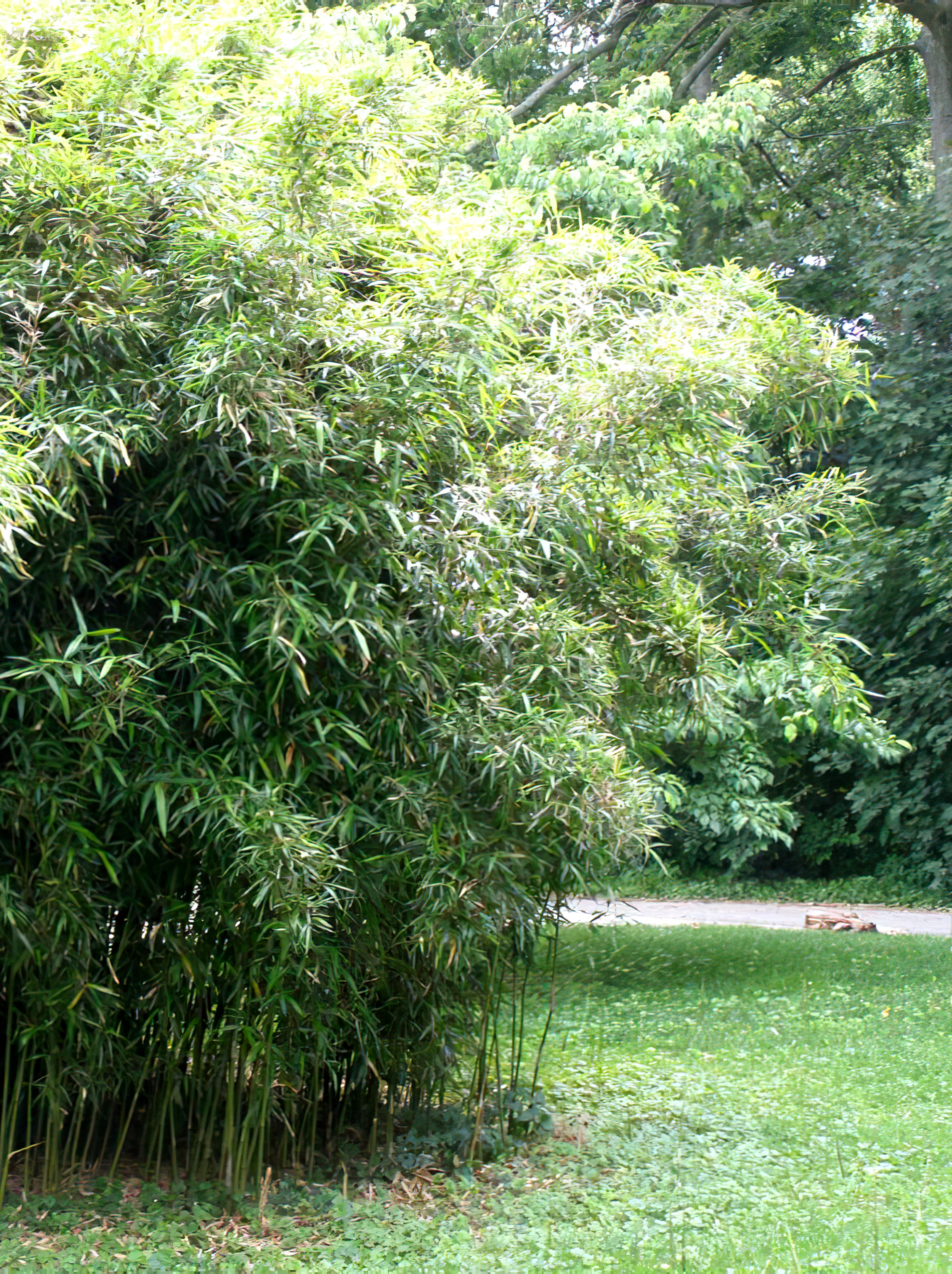
A native bamboo of southeastern US bottomland forests. Once dominant in vast canebrakes; reduced 98%+.
§ Quick facts
§ Encyclopedia
Arundinaria gigantea is a species of bamboo known as giant cane, river cane, and giant river cane. It is endemic to the south-central and southeastern United States as far west as Oklahoma and Texas and as far north as New York. Giant river cane was economically and culturally important to indigenous people, with uses including as a vegetable and materials for construction and craft production. Arundinaria gigantea and other species of Arundinaria once grew in large colonies called canebrakes covering thousands of acres in the southeastern United States, but today these canebrakes are considered endangered ecosystems.
Source: Wikipedia — Arundinaria gigantea Licensed under CC BY-SA 4.0
§ Identification
Field marks. Tall woody perennial grass; jointed stems; long lance-shaped leaves.
Similar species. Switchcane (related; smaller). Other bamboos (introduced).
§ Diet & behavior
Diet. N/A — photosynthesis
Behavior. Only native bamboo in temperate North America. Pre-European cane brakes covered vast areas of southeastern bottomlands; 98%+ has been lost.
§ Range
Southeastern US
§ Habitat
Bottomland forests, riparian zones
§ Threats
Habitat loss, fire suppression.
§ Conservation status
According to the IUCN Red List, the river cane is currently classified as Least Concern.
§ What helps
Support canebrake restoration. Use prescribed fire.
§ Further reading
- Wikipedia — Arundinaria gigantea
- www.nwf.org — authoritative profile of Arundinaria gigantea
- iNaturalist · taxon 75942
- IUCN Red List — search for Arundinaria gigantea
- GBIF occurrence records
- Encyclopedia of Life — Arundinaria gigantea
§ Sources cited
- USDA Plants Database
- The Nature Conservancy


