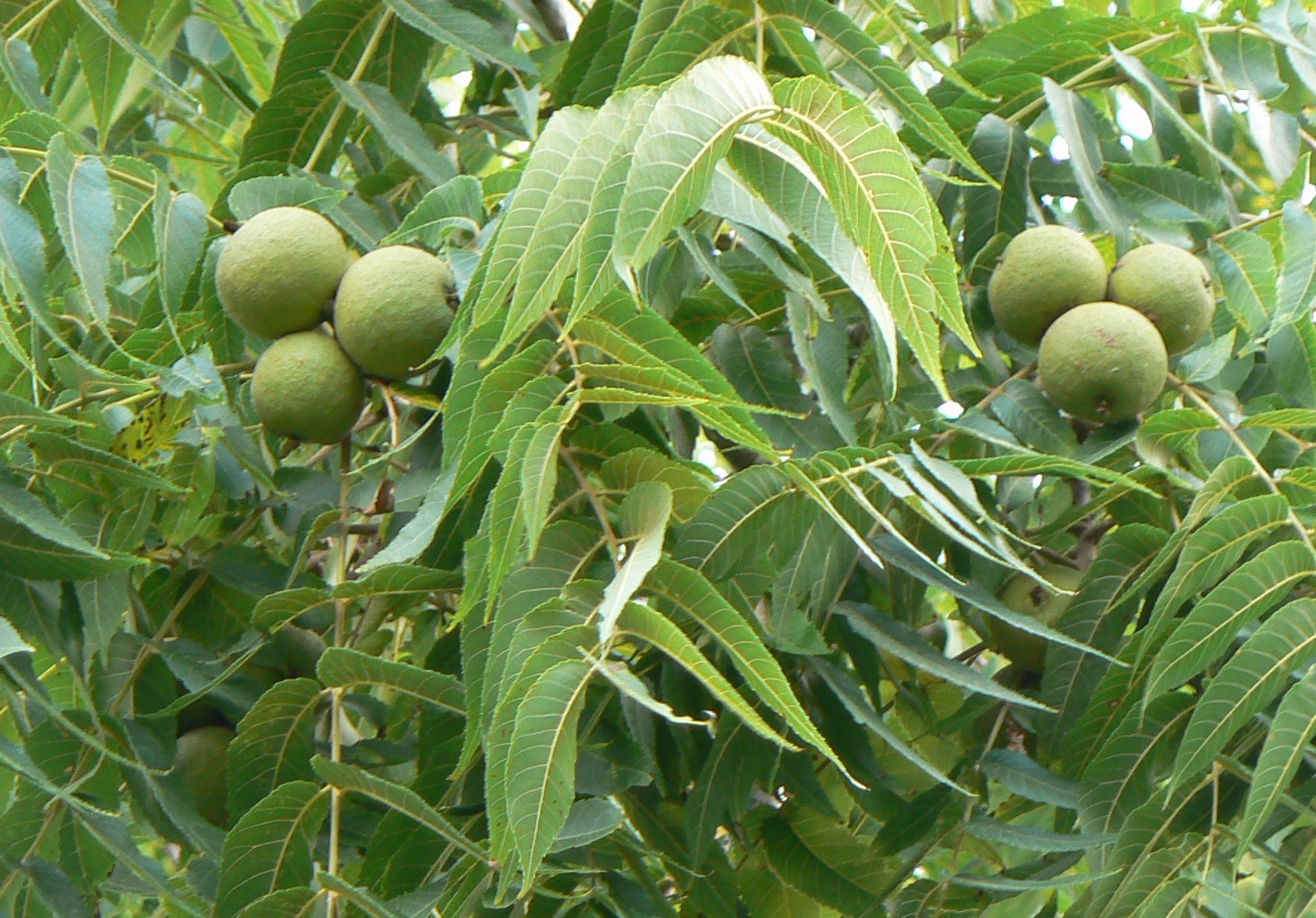
A medium tree with dark wood and edible nuts. Among the most valuable hardwoods in North America.
§ Quick facts
§ Encyclopedia
Juglans nigra, the eastern American black walnut, is a species of deciduous tree in the walnut family, Juglandaceae, native to central and eastern North America, growing mostly in riparian zones.
Source: Wikipedia — Juglans nigra Licensed under CC BY-SA 4.0
§ Identification
Field marks. Tall straight tree with deeply furrowed dark gray-brown bark; pinnately compound leaves with 11–23 toothed leaflets; large round green husks containing dark-brown shell with rich oily kernel.
Similar species. Butternut (J. cinerea — smaller, oval rather than round nuts; declining from canker disease). Hickories (5–9 leaflets, different husks). English Walnut (introduced; thinner husk, easier to crack).
Voice. N/A
§ Diet & behavior
Diet. N/A — photosynthesis
Behavior. Most economically valuable native US hardwood — single large logs can sell for tens of thousands of dollars for veneer use. All parts (roots, leaves, hulls, nuts) produce juglone, an allelopathic chemical that inhibits growth of many other plants within the "drip line" of the tree. Native peoples used the green hulls as fish poison (juglone temporarily stuns fish). Nuts highly nutritious but very difficult to crack; squirrels are the primary natural seed dispersers.
§ Range
Eastern North America
§ Habitat
Open woodlands, fields
§ Threats
Logging for valuable timber.
§ Conservation status
According to the IUCN Red List, the black walnut is currently classified as Least Concern.
§ What helps
Support sustainable forestry.
§ Further reading
- Wikipedia — Juglans nigra
- www.nwf.org — authoritative profile of Juglans nigra
- IUCN Red List · taxon 62019093
- iNaturalist · taxon 51786
- GBIF occurrence records
- Encyclopedia of Life — Juglans nigra
§ Sources cited
- USDA Plants Database
- Walnut Council
- USDA Forest Service Silvics Manual
- IUCN Red List 2017


