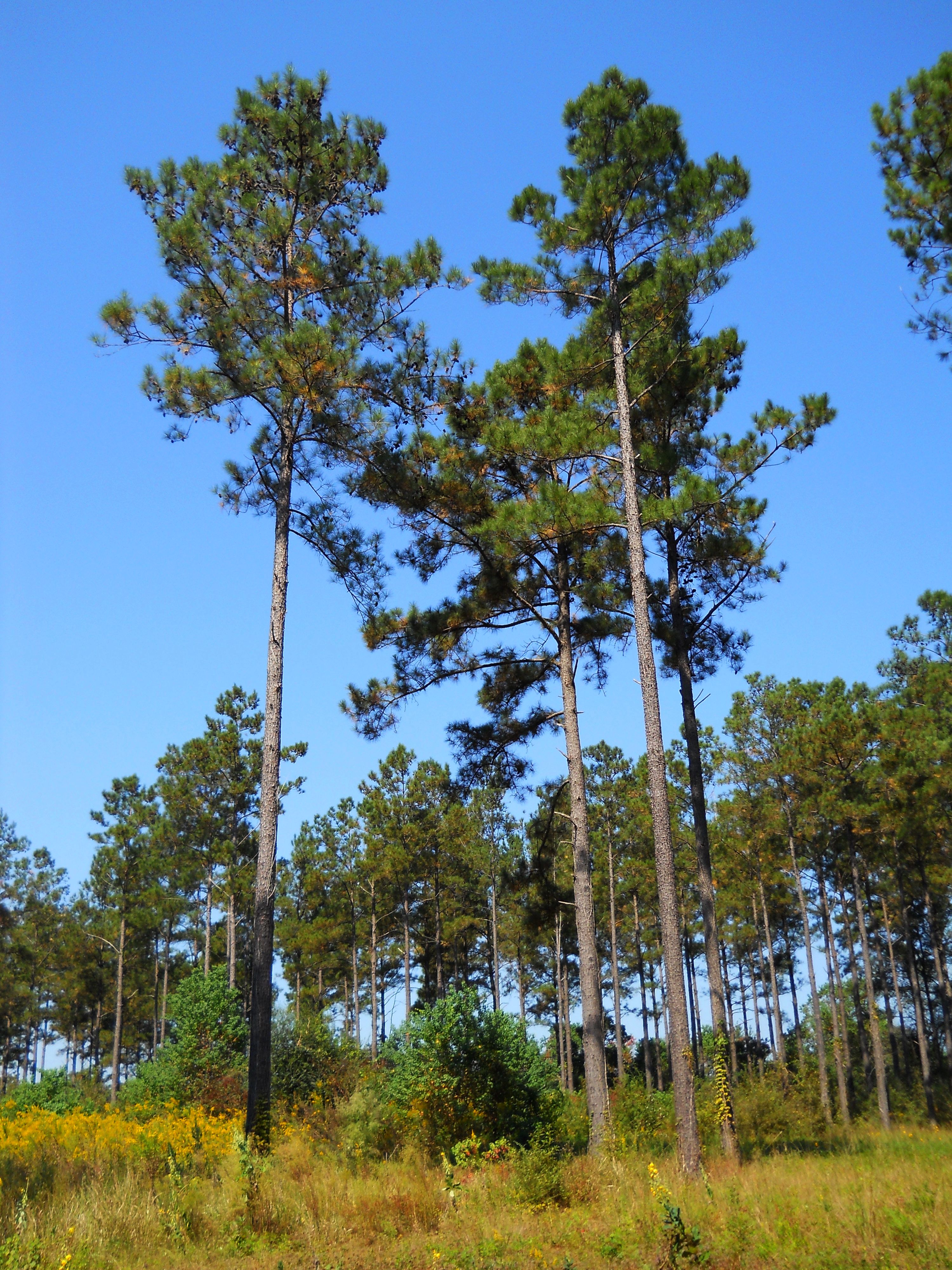
Most economically important pine of southeastern US plantation forestry.
§ Quick facts
§ Encyclopedia
Pinus taeda, commonly known as loblolly pine, is one of several pines native to the Southeastern United States, from East Texas to Florida, up to southern New Jersey. The wood industry classifies the species as a southern yellow pine. U.S. Forest Service surveys found that loblolly pine is the second-most common species of tree in the United States, after red maple. For its timber, the pine species is regarded as the most commercially important tree in the Southeastern U.S. The common name loblolly is given because the pine species is found mostly in lowlands and swampy areas.
Source: Wikipedia — Pinus taeda Licensed under CC BY-SA 4.0
§ Identification
Field marks. Medium-large pine with bundles of 3 long needles; reddish-brown bark; cone-shaped crown.
Similar species. Slash Pine (different cones, range). Longleaf Pine (much longer needles). Shortleaf Pine (different range).
§ Diet & behavior
Diet. N/A — photosynthesis
Behavior. Most economically important pine in southeastern US plantations. Fast-growing; replaces longleaf pine in much of historical range.
§ Range
Southeastern US
§ Habitat
Southern pine plantations
§ Threats
Replaces native diverse forests.
§ Conservation status
According to the IUCN Red List, the loblolly pine is currently classified as Least Concern.
§ What helps
Support diverse native southern forests.
§ Further reading
- Wikipedia — Pinus taeda
- www.nwf.org — authoritative profile of Pinus taeda
- iNaturalist · taxon 126839
- IUCN Red List — search for Pinus taeda
- GBIF occurrence records
- Encyclopedia of Life — Pinus taeda
§ Sources cited
- USDA Forest Service Silvics Manual


