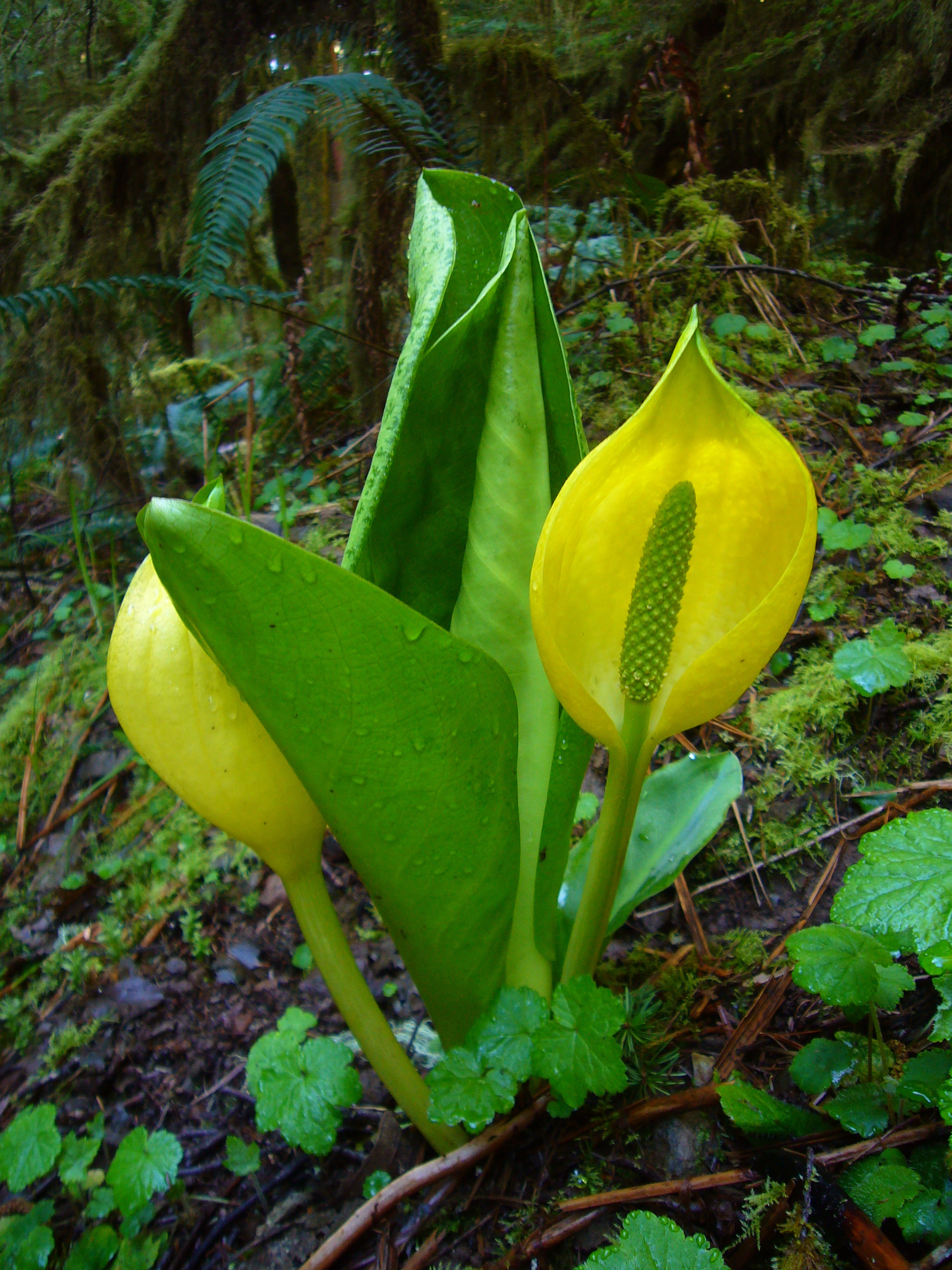
Pacific cousin to eastern skunk cabbage — bright yellow spathe surrounds a club-shaped spadix. Like its eastern cousin, generates heat to melt snow around itself.
§ Quick facts
§ Encyclopedia
Lysichiton americanus, also called western skunk cabbage (US), yellow skunk cabbage (UK), American skunk-cabbage or swamp lantern, is a plant found in swamps and wet woods, along streams and in other wet areas of the Pacific Northwest, where it is one of the few native species in the arum family.
Source: Wikipedia — Lysichiton americanus Licensed under CC BY-SA 4.0
§ Identification
Field marks. Plant with massive bright green leaves; bright yellow tubular spathe enclosing flower spike.
Similar species. Eastern Skunk Cabbage (purple spathe; different range).
§ Diet & behavior
Diet. N/A — photosynthesis
Behavior. Pacific Northwest counterpart to Eastern Skunk Cabbage. Among the first plants to emerge in spring.
§ Range
Pacific Northwest from Alaska to California
§ Habitat
Wet forests, swamps, seeps
§ Threats
Wetland drainage, logging in wet forests.
§ Conservation status
According to the IUCN Red List, the yellow skunk cabbage is currently classified as Least Concern.
§ What helps
Don't fill swampy yard corners. Maintain wet Pacific Northwest forests.
§ Further reading
- Wikipedia — Lysichiton americanus
- www.nwf.org — authoritative profile of Lysichiton americanus
- iNaturalist · taxon 47957
- IUCN Red List — search for Lysichiton americanus
- GBIF occurrence records
- Encyclopedia of Life — Lysichiton americanus
§ Sources cited
- USDA Plants Database
- Pacific Northwest Plant Profiles


